
I saw When We Were Young at The Pavilion and it was Glasgow theatre at its brutally devastating best
A raw visceral portrayal of doomed youth, gang violence, poverty, and the inescapable consequences of growing up in a Glasgow scheme in the 1990s.
Loyal to a scheme, loyal to your friends, tragically doomed by both. When We Were Young by Geez A Break Productions - written, directed, and starring Liam Lambie - is a non-flinching, brutally honest reflection of youth culture in Glasgow.
Although mainly set in Govan, the brutal truth is that the play could be set in almost any working-class scheme, anywhere in Glasgow, anywhere in Central Scotland, with a completely different young team, growing up under the same circumstances, facing the same lingering threat of violence.
The audience is introduced to main characters Mooney, (Liam Lambie), wee brother Tam (Ross McAree), Gee (Joshua Haynes), and Joe (Kyle Martin), as well as Mooney and Tam’s matriarchal mother Mags (Clare Rooney). We’re also soon introduced to Michaela (Dionne Frati), and Sammy (Candace Nicholson), would be girlfriends to Mooney and Gee.
The Govan-based young team of ‘postcode warriors’ who would proudly die defending their ‘scheme’ and each other, are spending Friday night as so many often do, attempting to blag a ‘carry out’. The girls have a shockingly hilarious method of doing so, the teenage boys resort to theft.
From youthful hijinks, the tone instantaneously morphs, and the audience is confronted with the savage violence and danger that generations of teens have faced on the streets of Glasgow.
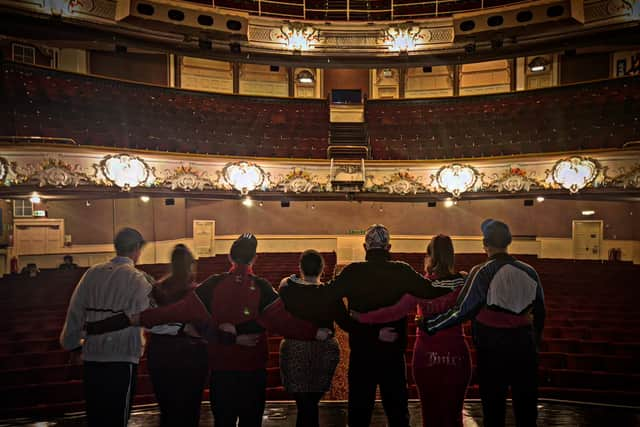

When We Were Young, rather than cast judgement, offers a searingly-honest insight into 1990s Glasgow, on-point references, sharp, witty, realistic dialogue, as well as gallows humour in the face of grim events. Genuine laugh-out-loud moments intertwined with gut-punching tragedy.
Small but important details, such as the changing fashion as the years move on, or the group now older, no longer hiding alcohol while talking to Mags, add to and centralise the true-to-life realism of the group’s day-to-day existence.
The complexity of masculinity and perceived hopelessness of the young men’s circumstances, trapped in a poverty-driven class war, are discussed amongst the group, each resigned to the assumption they live for nothing other than each other, and making sure it’s a rival ‘young team’ on the receiving end of terrible acts.
Michaela and Sammy are hopeful of a better future than their parents had before them. Over the passing-of-time that optimism is eaten away.
The group’s actions and consequences are devastating, and yet the audience is unable to look away. The performances from the cast are to be admired and credited, the intimidating but devastated Mooney, exerts an unwanted stranglehold over his friends and family, unable to change his terminal life direction, as he leads them all, including mum Mags into a heart of violent darkness.
Wishing for peace while standing armed with a blade, cursed to continue on a path already walked by their father and grandad before them…The Curse of No Mean City.
When We Were Young is Glasgow theatre at its brutal devastating best.
Writer, director and lead Liam Lambie on the importance of his production: “When writing When We Were Young I wanted to shine a spotlight on a group of society often under-represented in theatre and look beyond the tabloid stereotype of ‘neds ’ to tell the real and recognisable story of people, behind their facade of ‘masculinity’.
“This play is very much a ‘working class’ piece of theatre that asks audiences to look at some of the harsh truths of society and class politics, still as prominent today as they were in the 90s when the play is set.
“It also raises awareness of the once again rising issue of knife crime and Glasgow's young team mentality, as well as being a good night out at the theatre, watching a play that will lead them on an emotional rollercoaster.”