

From Busby-born Thomas Donohoe who helped arrange Brazil's first organised football match to Alexander Watson Hutton from the Gorbals who is known as the 'the father of Argentinian football' it’s clear that Scotland, Queen's Park and Glasgow shaped the emergence of modern football as a global phenomenon.
Young men, from Perthshire and the Highlands mainly, gathered at Queen's Park in Glasgow in 1867. They obtained a copy of the Football Association laws and changed them to include a blend of running, dribbling and passing. When they invented passing in Glasgow, they invented modern football.
The clearest demonstration came in the first official international match in football history: Scotland v England in 1872. England’s team was largely composed of dribblers. Scotland’s side was almost entirely made up of Queen’s Park players.
Contemporary reports noted the stark contrast in styles. England relied on physical runs and individual attacks. Scotland used coordinated passing and teamwork. Though the match ended 0–0, observers recognised that the Scots had displayed a more sophisticated system. England, despite greater size and athleticism, struggled to cope with the movement and organisation. That match was a tactical turning point in football history that set the scene for every match since.
The Scottish Football Museum explains: “England’s players stated their aim to collect the ball and attempt to dribble past their markers, while the Scottish team took all by surprise; by playing a more passing game, or combination play as its described by some historians. The first of its kind ever seen, a term that would later be christened ‘Tika Taka’ in the 21st century.”
Author and founder of the Scottish Football Museum at Hampden Park, Ged O’Brien, has stated clearly that football didn’t originate in England. His research shows that the modern ‘passing and running’ version of the game has been played in Scotland for 500 years.
He stated: “Glasgow in particular and Scotland in general invented world football and most people are not aware of that. When I hear Three Lions and England saying ‘oh of course we invented football’ it drives me utterly nuts because it’s a flat lie.
“The genius of Scots over the last 500 years and particularly the clan system is what gave us football. It’s entirely a Scottish game and while I’ve still got breath in my body that’s what I am going to be trying to push.
“Football is Scotland’s game. They have been playing passing and running for hundreds and hundreds of years mostly in churchyards after the Reformation where they flattened all the gravestones.
“Glasgow became the fourth largest city in Europe and everybody from Scotland flooded in including all the guys from Aberdeenshire and Inverness with their passing and running game and they set up Queen’s Park Football Club.”
He added: “I don’t have a dog in this fight because I come from an Irish background. I can always turn round and say ‘it’s not like I’m personally insulted here’. I’m just giving the facts.
“No matter where you go if you are watching football you are watching a game that came out of Scotland 500 years ago and I think that’s the greatest thing that Scotland’s got. It didn’t have to invade anyone, just by the sheer brilliance of their sporting culture they took the game to England and thereafter the world.”
In a television documentary, Scottish actor Dougray Scott explored Scotland's pivotal role in shaping the modern game of football and exported it around the world in BBC's Bringing Football Home. He began his journey at Hampden Park before visiting locations in Glasgow and across the UK which helped explain the role which Scotland and in particular Glasgow's Queen's Park Football Club had in shaping the game that we know and love today.
Comedian Kevin Bridges is currently working on the upcoming BBC documentary Kevin Bridges: In Search of the Beautiful Game, which will examine the contemporary state of football and its cultural significance, ahead of Scotland’s return to the World Cup stage after an absence of 28 years.
Travelling to locations including Brazil, Scotland and the USA, the programme explores how football is experienced across different communities and environments.
Here are the places in Glasgow linked to the creation and evolution of modern football that Dougray Scott visited for Bringing Football Home.

1. Hampden Park
Dougray Scott began his journey at Hampden Park as he set out on an adventure to acknowledge the role which Scots played in the origins of football. | BBC
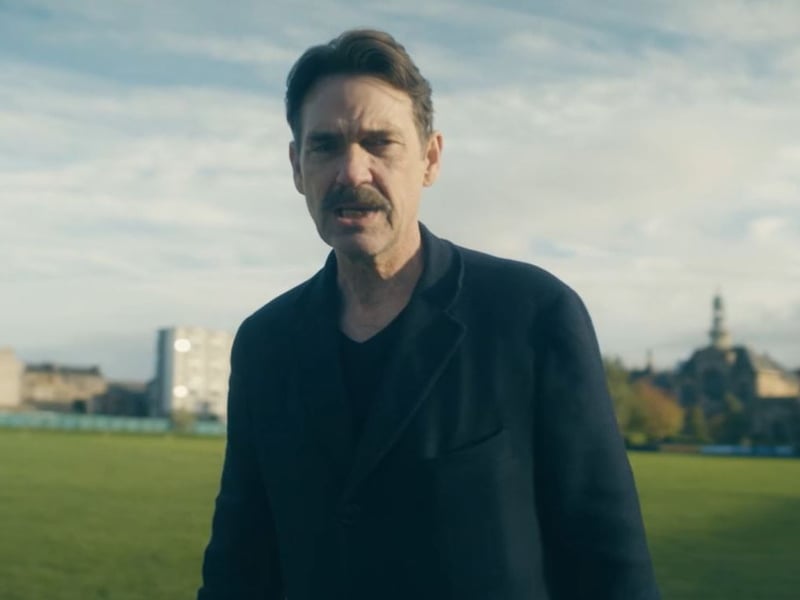
2. West of Scotland Cricket Club
After leaving Hampden, Dougray Scott headed to Partick to visit the West of Scotland Cricket Club where the first international between Scotland and England took place in 1872, the start of organised football. He says: "It's difficult to overstate just how important this moment this was to what would become the most important sporting and social phenomenon the world has ever seen." | BBC
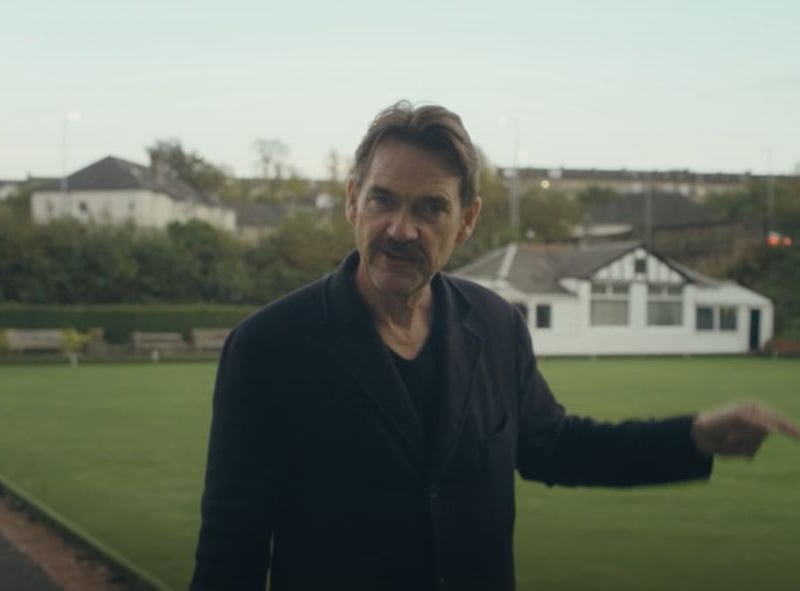
3. Hampden Bowling Club
Only a stone's throw away from the current National Stadium is Hampden Bowling Club which sites on the site of the first Hampden Park. Hailing the influence of Glasgow on the game, Scott says: "On this very spot right here was the world's first purpose-built football ground. The Scots were revolutionaries on the pitch, and this location would revolutionise the way we watch football, too." Since then, the template for every football ground built follows the first Hampden template. | BBC
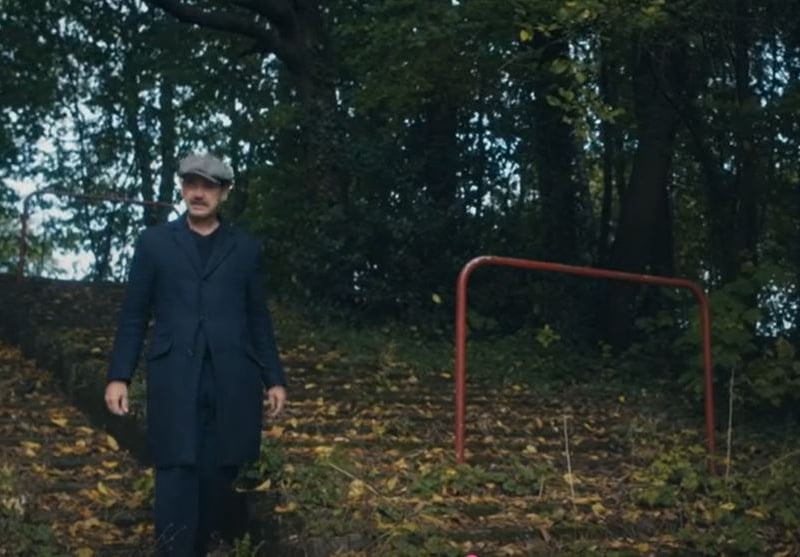
4. Cathkin Park
One of the other locations which Scott visits is Cathkin Park. Speaking about the park, Scott said: "Before it moved to its current location in 1903, the National Stadium was located half a mile away, here at Cathkin Park." When Queen's Park decided to build the world's biggest football ground in 1903, it meant that Glasgow had the three biggest football grounds in the world. | BBC