

The tearooms were first opened in 1903 by Glasgow entrepreneur Miss Catherine (Kate) Cranston. Considered one of Glasgow’s most important contributions to modernism, the venue’s design was highly influential across European art and design from the moment of opening.
Originally known as The Miss Cranston Luncheon and Tearooms and also as The Willow Tearooms, it was renamed Mackintosh at the Willow in 2018 after being restored and reopened by Celia Sinclair Thornqvist MBE and The Willow Tea Rooms Trust, with support from The National Lottery Heritage Fund and others.
The National Trust for Scotland took on the ownership of the tearooms in 2024 to ensure their long-term security. Two years on, the new name makes clear The Mackintosh Tearooms’ place as one of the most important heritage experiences in Glasgow’s city centre and connects it clearly to Charles Rennie Mackintosh and the contribution he and his wife Margaret Macdonald, who produced designs for the interior, made to Scotland and the world.
This step forward in the life of the iconic venue is part of Mackintosh Illuminated, a project launched by the Trust in 2024 to spotlight Mackintosh and Macdonald, sharing, celebrating, and inspiring as many as possible with their creative genius and the beauty of their creations. Awarded £1.1 million in development support from The National Lottery Heritage Fund, the project will also enable the Trust to continue vital conservation work at the Mackintosh-designed Hill House in Helensburgh.
Phil Long OBE, the National Trust for Scotland’s Chief Executive, said: “When these tearooms first opened in 1903, Mackintosh’s radical design simultaneously startled and attracted people to Miss Cranston’s boldest business venture yet. Today they remain that rarest of things, an opportunity to soak up Mackintosh’s original design vision and in the way that was originally intended, by being able to enjoy their famous welcome and hospitality.
“There are many cafes in Glasgow and indeed across Scotland that have taken inspiration from the design of Mackintosh’s famously stylish Glasgow tearooms. We are immensely proud to care for the only one by Mackintosh remaining in situ and still operating from its original iconic location on Sauchiehall Street.
“It is thanks to significant support from The National Lottery Heritage Fund, and from our members and donors, that we brought this special place into our care so we can continue to promote the legacy of Charles Rennie Mackintosh and his wife and professional collaborator Margaret Macdonald across Scotland and around the world.”
The Mackintosh Tearooms are located at 217 Sauchiehall Street in Glasgow and are open daily for lunch and afternoon tea.
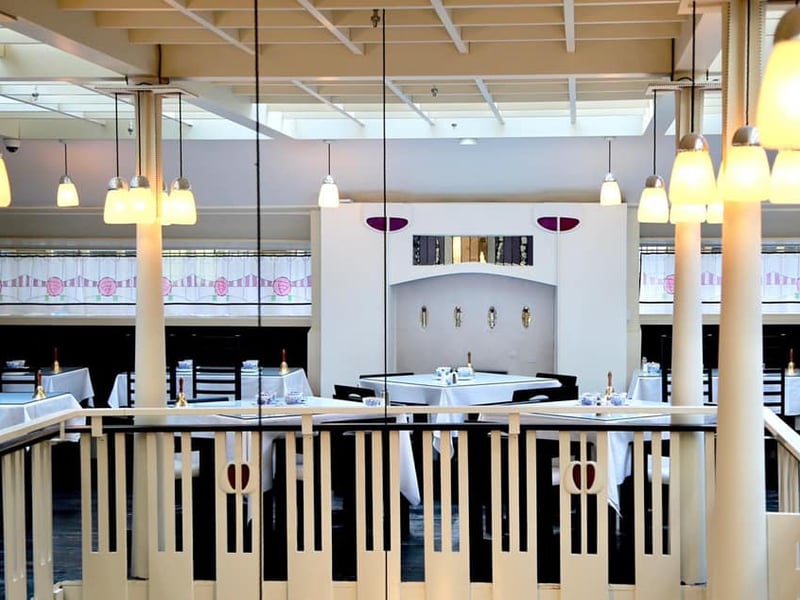
1. The Mackintosh Tearooms
The gift shop and exhibition are also open daily. The exhibition explores the vibrancy of Glasgow in the late 1890s and early 1900s, looking at the collaboration between pioneering entrepreneur Miss Cranston, Mackintosh and Macdonald through interactive audio and visual displays. The Mackintosh Tearooms also regularly host community events for people of all ages, and the venue is available for private functions. More information is available on the website. | Supplied
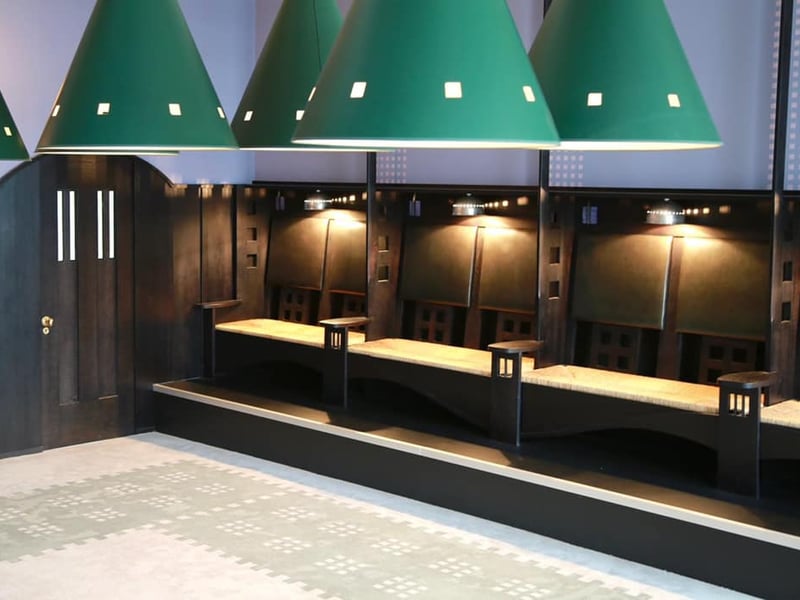
2. The Mackintosh Tearooms
The Mackintosh Tearooms on Sauchiehall Street stands as one of the most complete expressions of early 20th-century Art Nouveau in Britain. Conceived as a total work of art, the interiors were designed between 1903 and 1904 by Charles Rennie Mackintosh in collaboration with his wife Margaret Macdonald. | Supplied
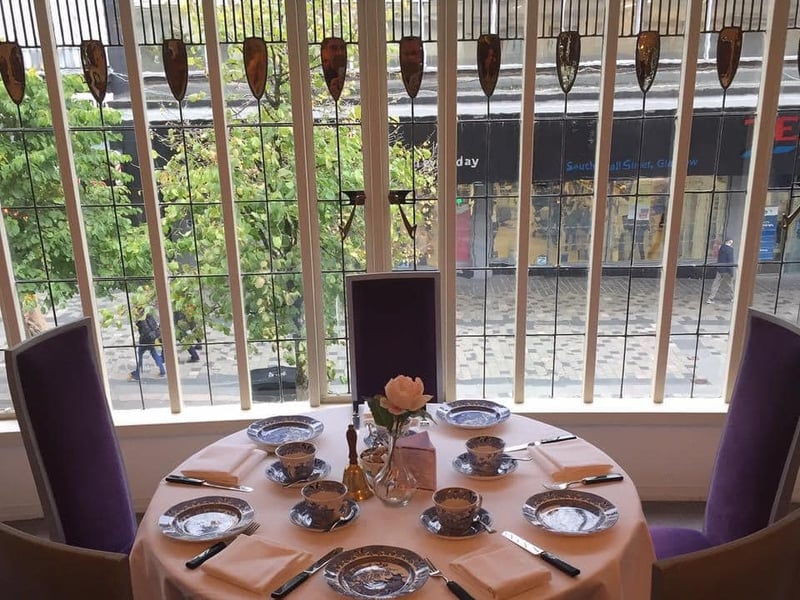
3. The Mackintosh Tearooms
The commission offered Mackintosh and Macdonald the opportunity to control not only architecture and interior decoration, but furniture, textiles, lighting, metalwork, and decorative panels. The result is a magnificent, unified artistic environment. | Supplied
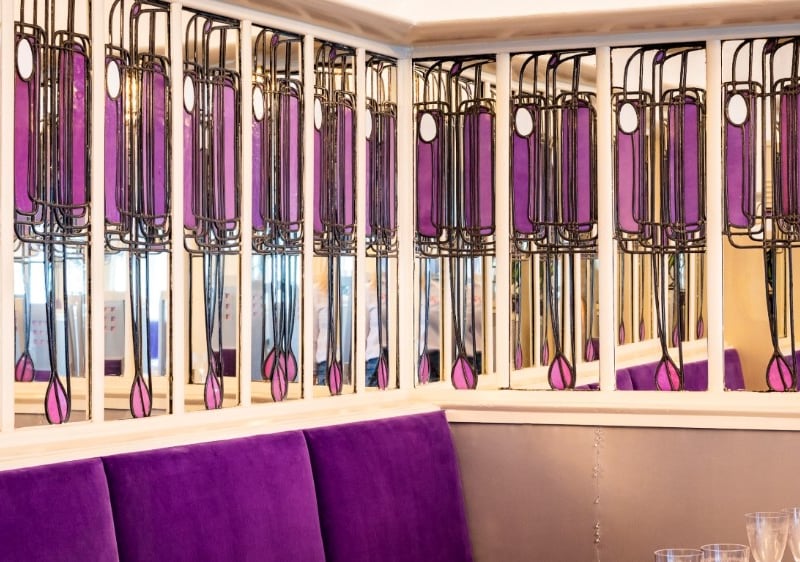
4. The Mackintosh Tearooms
Charles Rennie Mackintosh was trained as an architect and draftsman in Glasgow and became a leading figure of what came to be known as the Glasgow Style. His work brings together Scottish Baronial traditions Japanese spatial minimalism and Art Nouveau expression. High backed chairs and the stylised Mackintosh Rose motif feauture throughout, with stained glass, metal grilles and textiles. | Supplied