
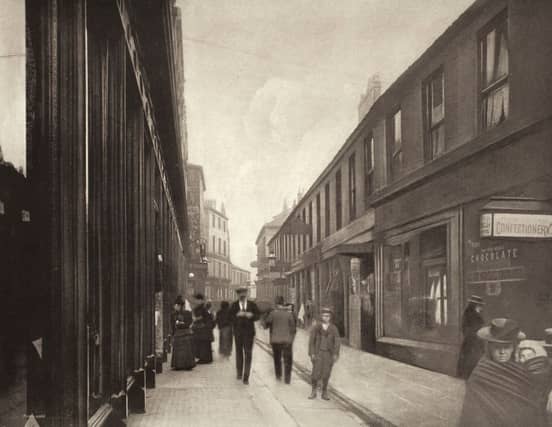


Annan’s photographs are not only important as historical documents but also as early examples of photography used for social commentary and artistic expression. Born in Dairsie, Fife, Annan originally trained as a lithographic printer before turning to photography in the early 1850s. In 1857, he established his own photography business in Glasgow, producing portraits, landscapes, and architectural studies.
It was his commission from the Glasgow City Improvement Trust in the 1860s that cemented his legacy. The Trust, formed to address the city’s appalling living conditions, hired Annan to document the old closes and wynds of central Glasgow - narrow alleys and tenement courts notorious for poverty, disease, and overcrowding.
Between 1868 and 1871, Annan produced a series of photographs collectively titled The Old Closes and Streets of Glasgow. This body of work represents one of the earliest examples of documentary photography. Using the albumen print process from glass negatives, Annan meticulously captured the decaying urban fabric of Glasgow’s inner city. His images show crumbling buildings, damp courtyards, and shadowy passageways, often devoid of human presence but powerfully suggestive of the lives lived within them. The photographs convey both the dignity and the desolation of these environments.
While Annan’s assignment was largely practical - to record the areas destined for demolition as part of slum clearance - his artistic sensibility elevated the work beyond mere documentation. The compositions reveal a mastery of light, shadow, and perspective. He often photographed at times of day when the contrast between light filtering into dark closes was most dramatic, lending his scenes a haunting, almost painterly quality. This sensitivity has led many art historians to view Annan as a bridge between early technical photography and later traditions of social realism.
Annan’s images were first published in a limited edition in 1878 and later reissued with photogravure prints in 1900 by his son, James Craig Annan, who was himself an accomplished photographer and member of the Pictorialist movement. Through these later reproductions, Thomas Annan’s work gained renewed attention, influencing generations of photographers concerned with the urban environment, from documentary realists to modern photojournalists.
The importance of The Old Closes and Streets of Glasgow lies not only in its aesthetic achievement but also in its social significance. At a time when photography was often used for portraiture or picturesque landscapes, Annan turned his camera toward subjects of poverty and neglect. His work anticipates later documentary traditions exemplified by Jacob Riis in New York or the photographers of the British documentary movement in the twentieth century.
Today, Thomas Annan’s photographs stand as both art and evidence, testimonies to a vanished Glasgow.
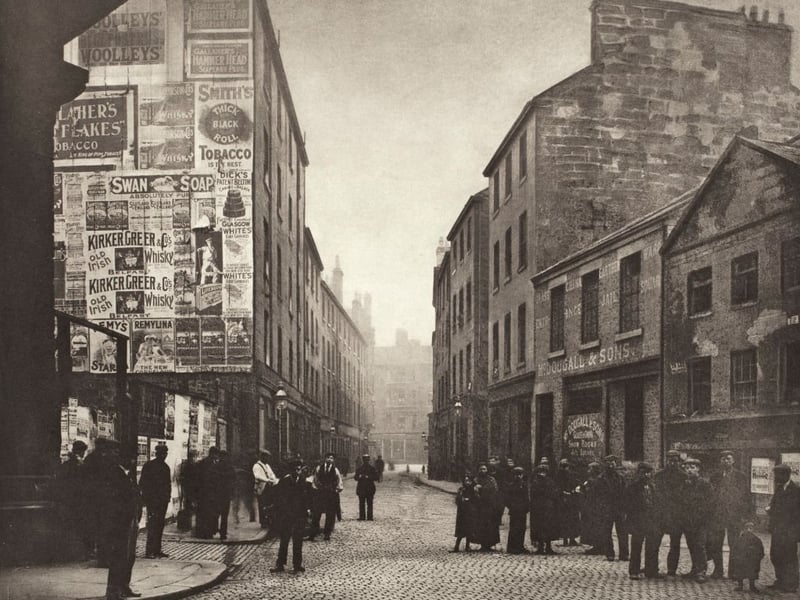
17. The Back Wynd near Trongate
Printed 1900. Creator: Thomas Annan. Photo by Heritage Art/Heritage Images via Getty Images | Getty Images