

In the 1970s, Glasgow was a city standing at a crossroads. For generations Glasgow’s reputation was built on shipbuilding, heavy engineering and manufacturing that connected Scotland to the wider world. Along the banks of the River Clyde, vast shipyards had once employed tens of thousands of workers, while factories, chimney stacks and warehouses dominated much of the city’s landscape. By the beginning of the decade, however, the industries that had defined Glasgow’s identity were beginning to disappear. Global competition, economic recession, and industrial decline led to widespread unemployment, leaving many communities facing uncertainty and hardship for the first time in decades.
The effects of this decline could be seen across the city. Traditional working-class districts suffered from overcrowding and poor housing conditions, while large-scale redevelopment projects dramatically altered the urban landscape. Thousands of Glaswegians were moved from old inner-city tenements into newly built housing estates and tower blocks on the outskirts of the city, including areas such as Easterhouse and Drumchapel. These schemes were intended to provide modern living conditions, yet many residents found themselves isolated from jobs, transport, and established community networks. The social consequences of these changes became one of the defining stories of Glasgow during the decade.
Despite these challenges, Glasgow in the 1970s was far from a city in defeat. Strong local communities continued to shape everyday life, and the city’s resilience and humour remained deeply rooted in its people. Trade unions and political activism were highly influential, with strikes and protests reflecting wider tensions across Britain during the period. Football remained central to the city’s identity, with the fierce rivalry between Celtic and Rangers continuing to dominate weekend conversations in the pub.
At the same time, Glasgow’s cultural life was evolving in new and exciting ways. The rise of punk music, independent arts, and local theatre gave younger generations a voice amid economic and political frustration. Music venues and dance halls remained at the heart of social life, while television programmes and films increasingly portrayed elements of Glasgow life.
Out of industrial decline emerged a stronger cultural identity, laying the foundations for the modern Glasgow that would later reinvent itself as one of Europe’s leading centres of culture, music, and creativity.
Have a look back at this era though this collection of photographs.
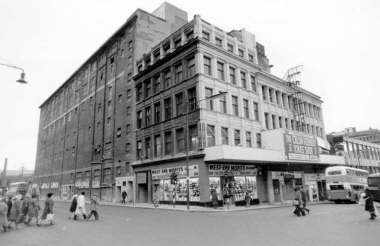
1. The Apollo
The top of Renfield Street with The Apollo pictured in 1975 with acts such as Wings, The Who and the Sensational Alex Harvey band playing the venue that year. | Virtual Mitchell
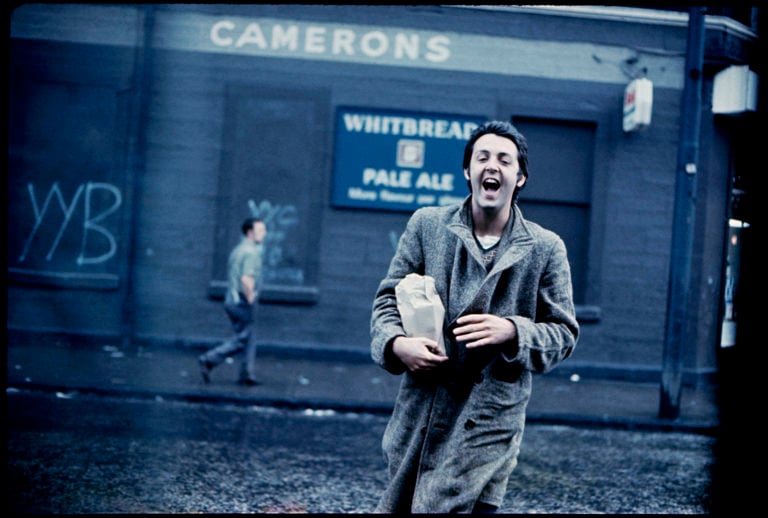
2. Camerons
Former Beatle Paul McCartney crosses the road outside Camerons bar in Glasgow which is now The Carnarvon Bar. | Paul McCartney, Glasgow, 1970 © Paul McCartney / Photographer: Linda McCartney.
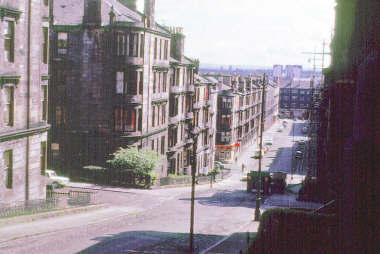
3. Gardner Street
Looking down Gardner Street, Partick in June 1975. | Virtual Mitchell
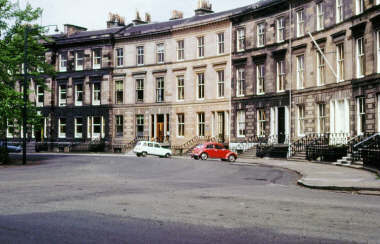
4. Park Circus
Park Circus remains one of Glasgow’s most exclusive areas to live with it being pictured here in 1974. | Virtual Mitchell