
Everything you need to know about Rogano restaurant UK Supreme Court showdown in Glasgow this week

The long-running legal battle over Glasgow’s famous Rogano restaurant will reach the UK Supreme Court on Wednesday, when the country’s highest court sits in Glasgow for a rare hearing outside London.
The UK Supreme Court is sitting in Glasgow this week for a rare four‑day session, during which one of the headline cases is the long‑running legal dispute over Rogano, the city’s oldest restaurant. The hearing, scheduled for Wednesday as part of the court’s May 18–21 sitting in the City Chambers, will examine a complex appeal involving the restaurant’s owners, Forthwell Ltd, and its landlord, Pontegadea UK Ltd, a company owned by Spanish billionaire Amancio Ortega.
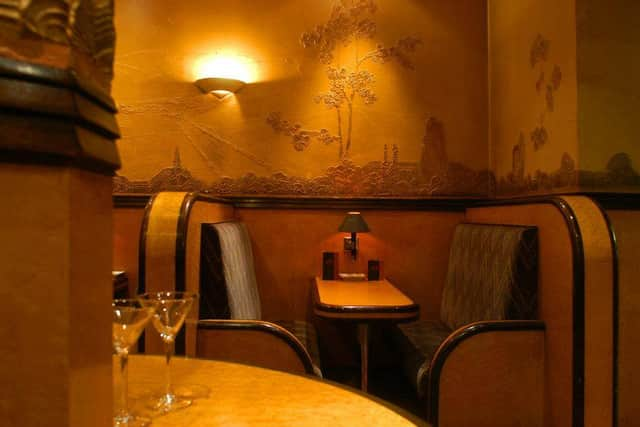
Rogano, famed for its 1930s Art Deco interior and decades of celebrity clientele, has been closed since March 2020. What began as a temporary pandemic shutdown evolved into a prolonged closure after the restaurant suffered three major flooding incidents between December 2020 and January 2021, causing extensive damage.
At the heart of the dispute is who is responsible for repairing the flood damage and who should bear the financial losses caused by Rogano’s continued closure.
Forthwell Ltd, a company run by the Mortimer family, are the owners of Rogano. They argue that Pontegadea, as landlord, breached its obligation to maintain the premises. Their case claims that the flooding constituted an “insured risk,” meaning the landlord should have ensured repairs were carried out.
The hearing seeks a Supreme Court ruling compelling Pontegadea to complete repairs so the restaurant can reopen. The claim also seeks £789,000 in loss‑of‑profits compensation, representing income lost during the prolonged closure.
Pontegadea’s position argues that Forthwell cannot claim such losses because the restaurant was operated under a licence agreement by a subsidiary, Lynnet Leisure (Rogano) Ltd, another Mortimer family business, for a nominal fee of £1 per year.
The landlord claims that any losses would therefore be limited to that nominal amount. At a previous hearing, they sought to have the compensation claim struck out, but the Court of Session in Scotland allowed it to proceed, prompting this appeal to the UK Supreme Court.
The Supreme Court will now consider these competing interpretations of contract and insurance law, which have significant implications not only for Rogano but for commercial landlord‑tenant relationships more broadly.
Commercial property leases often involve separate companies for property ownership and trading operations. A Supreme Court decision clarifying when one company can recover another company’s losses could affect future disputes involving landlords, tenants, insurers and hospitality businesses across the UK.
Wednesday’s hearing is expected to last one day. A final judgment will come later, potentially months after the hearing.
Depending on the ruling, Rogano could move closer to reopening after six years of closure, or face further delays if responsibility for repairs remains contested. The Supreme Court’s decision will not immediately reopen the restaurant. Instead, it will determine who is responsible for repairs. Once this appeal is resolved, further hearings in Scotland will address the practical question of reinstating the restaurant to a condition fit for reopening.
In 1935, as the Queen Mary took shape on the Clyde, Rogano restaurant was fitted out in the same Art Deco style as the great Cunard liner and a classic of Glasgow hospitality was created. On Friday 20th March 2020, 84 years of uninterrupted trading came to an end when the restaurant closed alongside other hospitality venues in the city for what was anticipated to be a pause, in line with government guidance at the time. It has been closed since that date with the outside of the restaurant sealed and hidden from view.