
Awaab's Law: Will new legislation help Glasgow's tenants battle damp and mould?

As legislation comes into force in Scotland, will it help Glasgow's tenants battle damp and mould?
Glasgow’s landlords will be required to investigate reports of damp and mould within 10 working days as new legislation comes into force today.
The Investigation and Commencement of Repair (Scotland) Regulations 2026, better known as Awaab’s Law, will require landlords across the country to investigate a report of damp or mould within 10 working days, provide written findings within 3 working days of the investigation concluding and then begin any necessary repairs within 5 working days of the investigation concluding.
The legislation was lodged in memory of two-year-old Awaab Ishak who died as a result of a severe respiratory condition due to prolonged exposure to mould in his home in Rochdale. It has been in force in England since October 2025.
In advance of the legislation coming into force, GlasgowWorld analysed the figures for the 164 social landlords that reported damp and mould figures in the Scottish Housing Regulator's 2025/26 Annual Return on the Charter, published on 31 August 2026.
Those figures show Glasgow's social landlords held 1,399 unresolved damp and mould cases at 31 March 2026 – 13.8 for every 1,000 homes, against a Scottish rate of 11.3.
Three indicators were reported for the first time: the average time taken to resolve cases, the proportion of resolved cases reopened, and cases still open at the year end. Landlords report these for their whole organisation rather than by council area, so figures for landlords operating beyond Glasgow are not Glasgow-only. Rates per 1,000 homes use each landlord's total stock from the same return.


Because this is the first year of collection, the regulator has said it will review whether the indicators are useful and did not include them in its national report. All figures are as reported by landlords.
Speaking ahead of the introduction of the bill, then Social Justice Secretary Shirley-Anne Somerville said: “Introducing timescales and expectations for repairs aims to make sure this never happens to a child or their family ever again.
“Everyone in Scotland deserves the right to live in a warm, safe and secure home, free from disrepair. We already have a strong set of rights and standards that have been improving in Scotland.
“However, these measures will go even further and give power and confidence to tenants that any issues identified and repairs started in a timely manner, so any issues do not have a detrimental impact on their health.
“Our Housing Bill already contains proposals to improve tenants’ rights, and these measures will strengthen those even further to make sure their home is safe for them and their families.”
What became apparent from conversations with the social landlords we contacted is that there is an appetite to address the issues.
Wheatley Homes Glasgow was one of the landlords that responded to our enquiries. It said it takes reports of damp and mould seriously and investigates "every concern raised", and that around 98% of reported cases are resolved within 15 working days. It said it had also "significantly invested" in its specialist damp and mould teams to meet all of the requirements.
Wheatley had the highest number of open cases in the first release, at 964 – 13% of the Scottish total, and 22.8 for every 1,000 homes, double the national rate. It also reopened 11.5% of the cases it resolved, against 8.3% across Scotland.
Its return to the regulator records 6,365 cases resolved over the year at an average of 18.5 working days, faster than almost any landlord in Scotland and well inside the national average of 25.7. It also logged more than twice as many cases per 1,000 homes as the Scottish figure.
It is unclear how the 98% figure related to that 18.5-day average, whether it covered damp and mould cases specifically, and how many of the 964 cases remain open.
NG Homes reported the second-slowest average in Scotland, a figure it attributes to the nature and complexity of the cases, external factors, detailed investigation, works and coordination with specialist contractors. The association says damp and mould sensors have been installed in 3,000 of its properties to support earlier intervention.
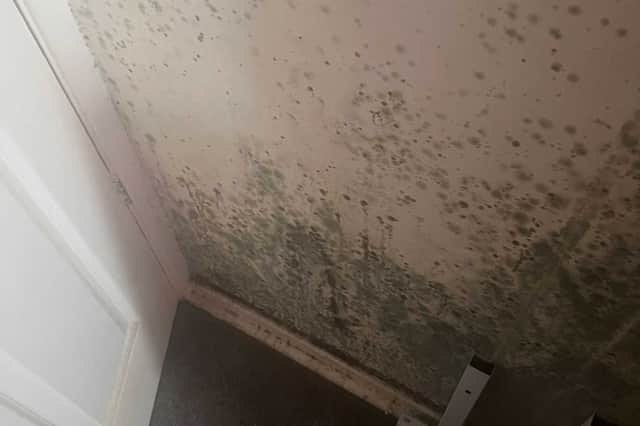
Its own return, though, records condensation cases taking an average of 89.14 working days and structural cases 89.29, against the national average of 25.7. Across the 60 landlords with at least ten of each, the median structural case takes 21 per cent longer than a condensation one.
A spokesperson said: “Ahead of Awaab's Law coming into force on 6 October, we have reviewed and strengthened our processes to ensure they align with the new statutory requirements. This includes arrangements to support timely investigations, clear communication with tenants and the prompt progression of any repairs or remedial works identified.
“The health, safety and wellbeing of our tenants remains our priority, and we are committed to continually improving our response to damp and mould issues and ensuring tenants live in safe, warm and healthy homes.”
In the figures, New Gorbals Housing Association reported the highest open-case rate of any social landlord in Scotland: 52 per 1,000 homes, more than four times the national rate, and a backlog of 130 against 135 resolved all year.
New Gorbals Housing Association confirmed that none of the 130 cases it had open at 31 March remain open.
According to the housing association, the figure is largely driven by a “proactive approach” to damp and mould management, with trade operatives asking every tenant a mandatory damp, mould and condensation question after each repair and each annual gas service. It means any concern automatically opens a case.
A spokesperson said they welcomed the “additional clarity provided through the Awaab's Law guidance” and the nuance allowed by the legislation.
They continued: “However, we will assess each case individually and take all reasonable steps to protect tenants and minimise delays. Depending on the circumstances, this may include providing alternative accommodation where appropriate, undertaking interim measures, or considering whether works should proceed at the Association's own cost while legal advice is obtained regarding the recovery of costs from owners.
“Ultimately, our priority will be ensuring the health and wellbeing of tenants and responding to damp and mould concerns as quickly as possible.”
The association also said its internal process during 2025/26 closed cases only after a post-inspection, rather than at the point repairs were finished, meaning homes had been fixed while cases remained open on its system. It has since changed that.
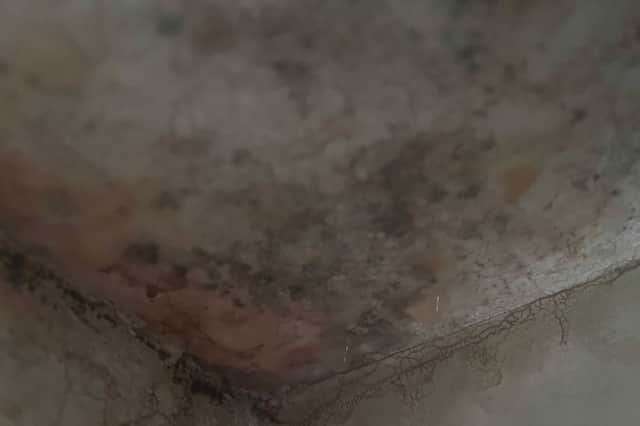
Queens Cross was the only social landlord in Scotland with 100 or more cases to attribute every single one to condensation.
All 149 of its cases were recorded that way, with none put down to structural or other issues. Across Scotland, 59 per cent of resolved cases were attributed to condensation and 12 per cent to structural problems. Queens Cross resolved its cases in an average of 6.5 working days.
A spokesperson said: “The Association has delivered damp, condensation and mould (DCM) awareness training to all frontline staff with maintenance officers also receiving more in-depth training, and we have developed a process to manage our DCM cases. We implemented our process in August 2026 and have been working to the timelines set out in Awaab's Law. The Association uses an app to record photographs of DCM cases, the work instructed and the report that is issued to tenants.”
Asked what action it typically takes on a condensation case, the association described tenant education: two tenant advisors who visit tenants at home, leaflets covering ventilation and proper heating, referrals to an energy advisor where a tenant is in fuel poverty, and follow-up visits at six and 12 weeks. Asked whether the age and type of its homes, 37 per cent of which are high-rise flats, and 45 per cent built between 1965 and 1982, had any bearing on how cases arise or are classified, it answered: "No."
But whilst the legislation may have been welcomed by some, Stella Rooney, Chair of Living Rent Glasgow, said it is “unlikely to change the reality for most tenants”, in its current form.
Ms Rooney said: "Social, council and private tenants have had years of being ignored by their landlords, forced to live in mouldy and damp homes that make them sick, while their landlords tell them that it's their fault. It's time that this changes, but the legislation coming in on 6 October doesn't go far enough. This government needs to introduce proper penalties and better mechanisms so that mould and damp will not be part and parcel of any tenant's living experience.
"At the moment, tenants face ongoing delays, gaslighting and minimisation of the issue. We've heard landlords say that tenants are living with mould because they don't know how to boil potatoes, wash their dishes or dry laundry correctly, but we know this is not the case.
"The issue is not condensation or 'lifestyle choices', it's poor quality housing. Condensation is an easy excuse, but what we see in reality is ongoing poor ventilation or insulation issues. Landlords need to tackle this and make proper repairs.”
Ms Rooney said tenants sometimes “don’t even report damp”, adding that they “feel scared and hopeless after reporting time and time again, with no action from the landlord”.
She added: “Unfortunately, this new law will not make a dent in the culture of blame and ‘just a lick of paint’ approach. We don't see any of this changing until landlords actually face consequences in terms of strict monitoring and high penalties for leaving their tenants in mouldy and damp homes.
“Fundamentally, this legislation needs to ensure that if tenants report mould and damp, action will be taken. We need clear mechanisms to ensure repairs happen, fair compensation for tenants and penalties for landlords if repairs are not completed in time. The government needs to put the responsibility firmly back where it belongs, at the door of the landlords."