
'Today's crisis point is worse than yesterday's crisis point' - industry body calls on more nightlife support

An industry body supporting Scotland’s nightlife has unveiled a manifesto designed to drive “growth, inclusion, creativity and recovery”.
The Night Time Industries Association (NTIA) Scotland today unveiled Northern Lights: A Manifesto for Scotland’s Night Time Economy 2025. The police document lays out 31 recommendations designed to “safeguard and transform the country’s night time economy (NTE)”.
The document calls for the immediate introduction of six actions including - the creation of a National Night Time Economy Strategy and Strategy Board and the appointment of a dedicated Minister for the Night Time Economy
Mike Grieve is the NTIA Scotland Chairperson and founder of Glasgow’s legendary Sub Club. He said what the association is asking for is not a new idea - but one that has been adopted and trialled elsewhere.
He said: “We're looking for the Scottish Government to adopt a night time economy strategy, that's not revolutionary by any stretch of the imagination. Lots of countries all around the world have them - including some of our near neighbors, Ireland, being a close example of it.”
The idea of a Minister for the Night Time Economy may sound like a “disco minister”, but according to Mike, it is about creating accountability for night time economy specifically.
He explained: “We've suggested that the Scottish Government should appoint a Minister for the Night Time Economy. I think that's the bit that people have jumped on. ‘Oh, a Minister for the Night Time Economy, Disco Minister, sort of chat’.
“But in actual fact, I think it's more important that we concentrate on the Night Time Economy Strategy. But the point with the Minister is that this should fall firmly into someone's portfolio as a minister, which, at the moment, it doesn't. The night time economy is just swallowed up in a much broader brief.”
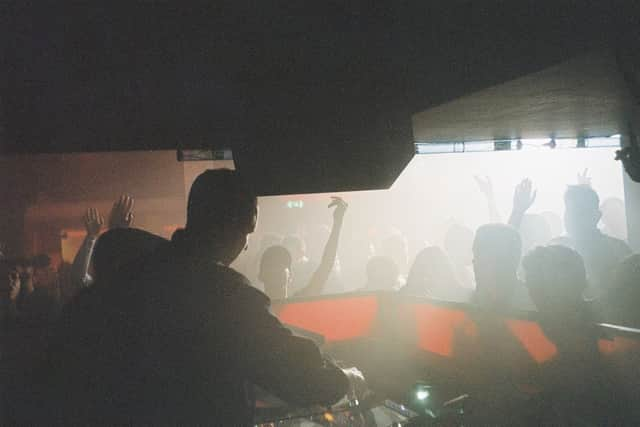
The association said that while national governance is important, it is equally important that there is coordinated, strategic intervention at both national and local levels to avert further decline. This would mean national governments and local authorities working together to create better conditions for the industry.
Mike said: “All our major cities and towns, all our local authorities, should have regard for the national strategy when you know when they're exercising relevant functions. Creating that local Night Time Economy Strategy is the important bit. The idea is that a national Night Time Economy Strategy cascades down into the local governance one, so there's a natural synergy between how local authorities are dealing with night time economy and an overarching national strategy piece.”
The night time economy has been hit with a number of setbacks in recent years - not limited to just the COVID lockdown. Having watched Sub Club become an important part of the Glasgow scene over the last 30 years, Mike has seen his fair share of crisis points.
He said: “Today's crisis point is worse than yesterday's crisis point. It's not getting better. The real issue is that we've seen a continual degradation of the whole ecosystem of the night time economy over the last number of years, particularly since COVID, but it is not limited to COVID. The lockdown definitely had a significant impact.
“But there's other factors. And as we know in Glasgow, the transport network is a big part of this. You know, the LEZ (low-emission zones) have an impact. The very expensive parking charges in Glasgow have an impact. So we've seen a hollowing out of the city centre of Glasgow.”
The cost of doing business is another issue that the industry is facing. Recent changes to minimum wage and national insurance contributions have made
Mike said: “No matter how much we want to support our workers it has inevitably led to price increases right across the board, supplier level and retail level, so the wholesalers are charging more, and then we're having to charge more.
“On top of that, the National Insurance contribution has been a big hit for employers in our sector, because we employ so many part time workers, and that's where the changes in the NI system have really hit. It's in the £5000 to £10,000 a year wage area, which is particularly applicable to part time workers.
“Employers are bearing much more significant costs than they were, and it's very difficult to pass that one to customers, and if you don't make profit, you can't employ people.”
Despite this, Mike said there are positives on the horizon. Glasgow City Council is working closely with businesses as part of the Glasgow City Centre Taskforce. Established in November 2020, it aims to address disproportionate pressures being faced by businesses in Glasgow city centre.
Mike said: “As the eternal optimist, I'd like to think that we will see this turnaround over the next couple of years. Our sector is historically very, very resilient, I think, particularly the area that I work in the kind of the underground music and grassroots music scene. People are resilient and you have people that are passionate about what they do and are prepared to get stuck in for not much in the way of rewards, but that can only go on so far.
“What we need is the support of the Scottish Government getting behind the suggestions that we're making in this manifesto document, and give us a platform that we can build on.”
What else is the NTIA calling for:
- Creation of a National Night Time Economy Strategy and Strategy Board to provide a cohesive vision and framework for the sector.
- Appointment of a dedicated Minister for the Night Time Economy to champion the industry at the highest level of government.
- Statutory duty for all local authorities to develop their own NTE strategies, ensuring consistent support and localised solutions across Scotland.
- Establishment of Offices for Nightlife in major cities and regions to drive coordination, innovation and inclusion at a local level.
- Financial and regulatory reforms, including business rates relief for venues and a cultural protection fund to safeguard Scotland’s creative spaces.
- Initiatives to enhance transport, safety, inclusion, and late-night services, ensuring the NTE is accessible, safe and welcoming for all.