
Plans submitted for former Glasgow primary school to be transformed into 24 homes

A former Glasgow primary school will be transformed into 24 new homes if plans are approved.
The former primary school has been vacant since Glasgow City Council’s Health and Social Care Partnership housing social welfare facilities such as alcohol and drug recovery services was relocated in 2024.
The building will be redesigned into 24 new homes for mid-market rent across three levels. Plans submitted to Glasgow City Council have been prepared by Grant Murray Architects Ltd on behalf of applicant Wheatley Group.
The site is located on the western side of Springfield Road south of Parkhead Cross. The building is described by the applicants as being “a sound base for residential conversion”.
According to proposals: “The 24 dwellings will then be arranged within the former classrooms around the central atrium. This allows all dwellings to work within the confines of the existing window arrangement without excessively deep floor plans and minimise the extent of down takings and structural interventions. The two central stairs will be retained allowing access to all areas and second means of escape from each level.”
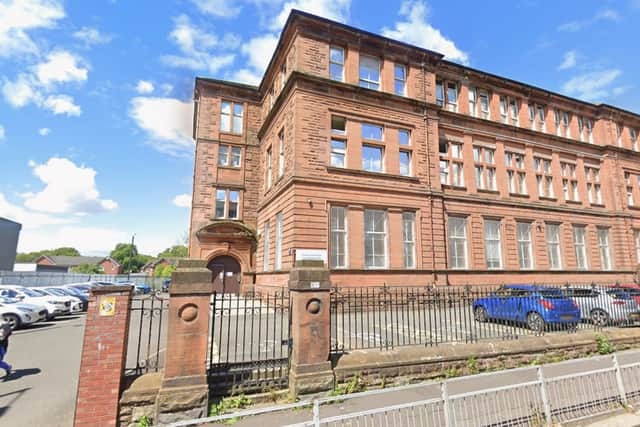

The former playground and car park areas of the former school building will be transformed into diverse green spaces featuring trees, planting and walking paths.
The design statement states: “In summary, the building appears to provide a sound base for residential conversion supported and indeed encouraged by relevant planning policy. There is oportunity to preserve the historic building fabric of the area and repurpose a significant building to local community. The proposals provide a secure, costed, and sustainable future for the building which otherwise may have been lost to deteriortion and ultimately dereliction.”
Built in 1895, the school was constructed on land donated by Lord Newlands under the instruction that a public school would be built on the site. It is one of the oldest buildings in the area. The building served the area until its closure in the 1970s.