
Buildings of Glasgow: Grant on offer for potential Egyptian Halls developers of £150,000
The preferred developer for the proposed renovation of Glasgow’s Egyptian Halls could be granted £150,000 by the council — if the compulsory purchase of the building goes ahead.
Glasgow City Council is considering buying the rundown A-listed halls — by architect Alexander ‘Greek’ Thomson — on Union Street, where the upper floors have been lying empty for decades.
It is investigating a possible compulsory purchase order (CPO), which could then see the celebrated property transferred to a developer to bring it back into use.
Council officials are preparing a development brief which will seek proposals from interested parties. It was previously revealed a consortium, including the publisher of the List magazine, with plans for a food market and hotel are keen to take on the halls.
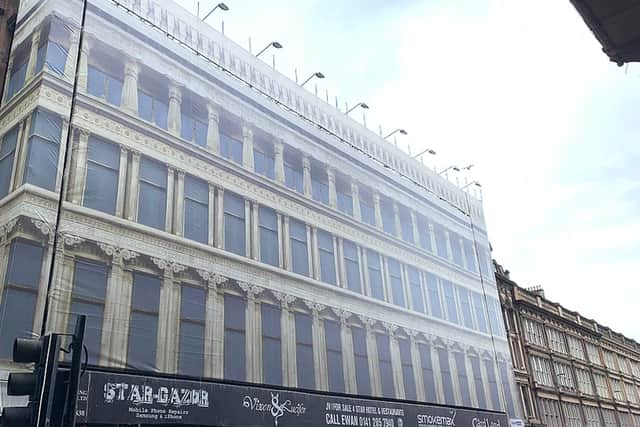

The building is currently owned by two companies — Union Street Developments and Union Street Properties — both run by Dundee businessman Derek Souter and his partners.
They will also be invited to submit proposals to the council — and are able to sell the property voluntarily at any point. Council officials previously reported a bid from an “interested party at a figure in excess of an independent valuation” had not been accepted.
Cllr Ruairi Kelly, SNP, the council’s convener for built heritage, is set to present a report to the city administration committee on Thursday which asks councillors to approve a £150,000 grant.
It states an “initial grant” of £150,000 towards the costs incurred by the developer would be made available in “recognition of the importance of the Egyptian Halls to the fabric of the city centre” and the council’s commitment to “the built heritage of the city”.
The money would be paid at “the appropriate point” based on agreed milestones during the renovation, refurbishment and re-use of the halls.
Cllr Kelly’s paper comes after councillors supported a recommendation to investigate the use of CPO powers in February. The development brief is expected to be issued this month, and will give a period of 12 weeks for proposals to be submitted.
Officials will then evaluate proposals against a criteria which will include how they intend to retain and use the building, previous experience, timeframe and deliverability and funding. A preferred proposal could then be selected, with the council promoting a CPO to buy the building for the chosen party.
According to a council report from February, the plan would be for the council to enter a “back to back agreement” with the developer, which would include obligations to have planning permission, show reasonable attempts to voluntarily buy the property and an undertaking to “meet all of the council’s costs including compensation payable as a consequence of the CPO”.
Cllr Kelly previously said CPOs can be “lengthy and complex” but it would be “the first major step towards the repair and reuse of this beautiful building”.