
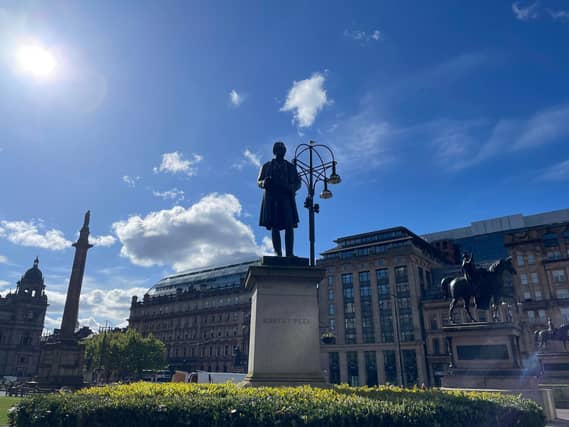


The statue was unveiled in 1854 to mark Queen Victoria's visit to the city some five years prior, and depicts the young monarch riding side saddle - it first stood in St Vincent Place before arriving in George Square in 1866. The statue was placed alongside a matching statue of Prince Albert on the west side of the square.
George Square opened in 1787 and was named after King George III. There was going to be a statue of him in the centre of the square, but after America declared independence from Britain in 1776, and Glasgow's tobacco trade was lost, the plan was quietly dropped. Glasgow Corporation bought the square in 1876, and the private gardens were opened to the public.
George Square is now shut as an 17 month project is underway to change the main civic space in Glasgow. The space is closed off by barriers and boards have beeen added to block it off for the first phase of the work. This will include adding new seating, feature lighting, a raised lawn and informal play areas for children. There will be a paved area for events and space will be created for outside seating for cafes. A planned water feature has been removed from the project due to insufficient funding.
Work will be carried out over two phases, with George Square, St Vincent Place and West George Street due for completion by August 2026. Cochrane Street and sections of George Street and North Hanover Street are set to be finished in spring 2027.
The 11 bronze statues have been removed between for conservation and restoration. They are expected to return to the square in 2026 with their future position in the square’s new layout yet to be decided. A video from Glasgow City Council gives an indication of how specialist processes will restore the statues to their original condition.
You can read more about the history behind the 11 statues of George Square below.
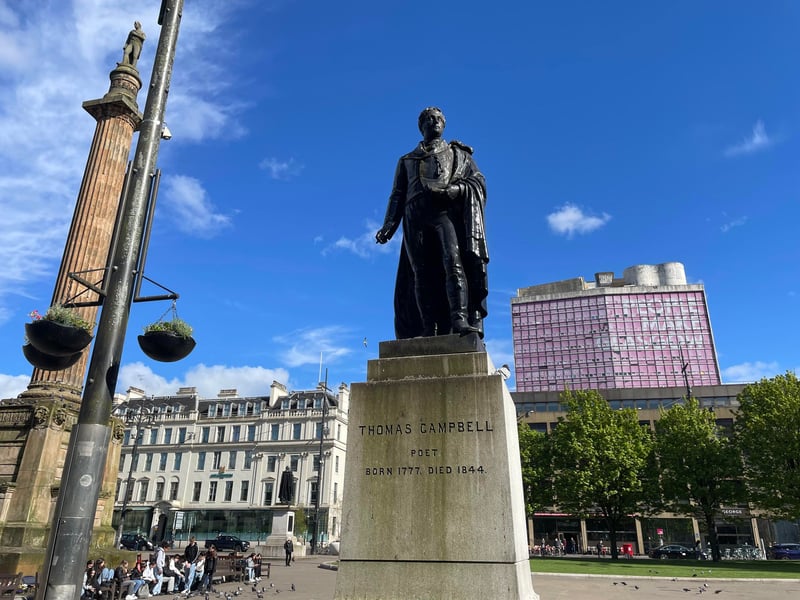
5. Thomas Campbell
Scottish poet, historian and political commentator Thomas Campbell was born in Glasgow in 1777 and was educated at Grammar School. In November 1826, Campbell was elected to the Lord Rectorship of Glasgow University. The unveiling was performed by Dr James A. Campbell on the centenary of the poet’s birth. | Declan McConville
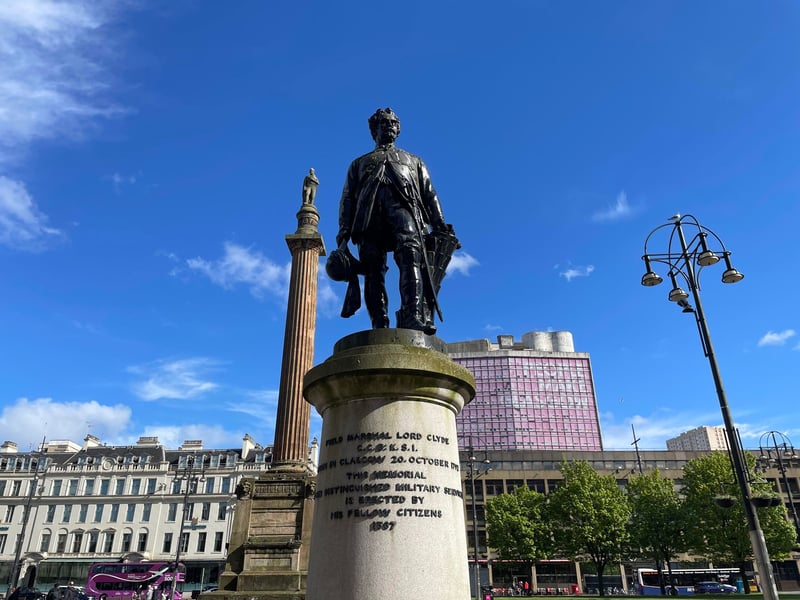
6. Lord Clyde
Military leader Lord Clyde was the eldest son of Glasgow carpenter John MacLiver but was given his mother's maiden name. Sir Colin Campbell’s most famous exploit being his command of ‘Thin Red Line’ of the 93rd Highlanders, which repulsed the Russians at the Battle of Balaclava in October 1854. His statue, by John Henry Foley, was unveiled in George Square in 1868 but prompted mixed reactions. | Declan McConville
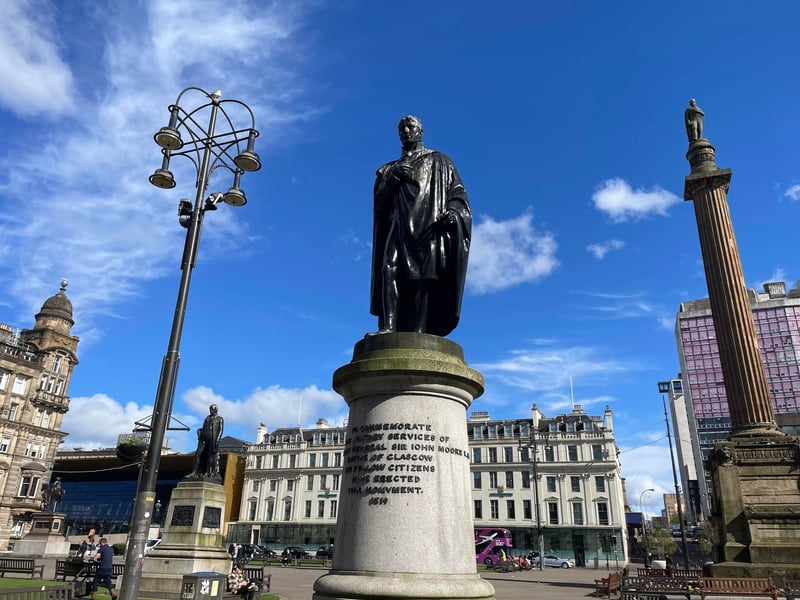
7. Sir John Moore
Sir John Moore was brought up in ‘Donald’s Land’, in the Trongate. Moore served as captain-lieutenant in the Duke of Hamilton’s regiment in America (1778-83) followed by a short period as MP for the united burghs of Lanark, Selkirk, Peebles and Linlithgow. His statue was unveiled on George Square in August 1819. | Declan McConville
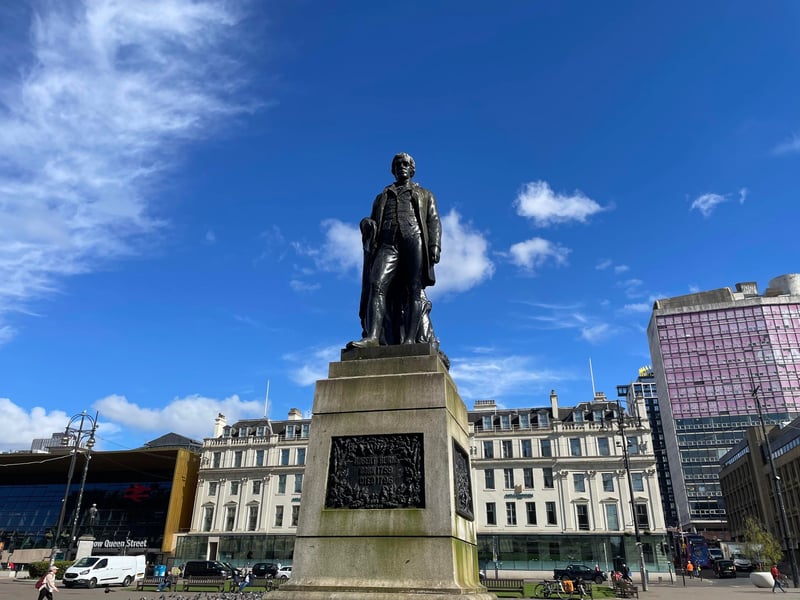
8. Robert Burns
Scotland's national poet Robert Burns' statue was designed by George Ewing and was erected in George Square in 1877. The monument was first under the care of the Dennistoun Burns Club, and was by them lovingly decorated on the anniversaries of the poet’s birth. | Declan McConville