
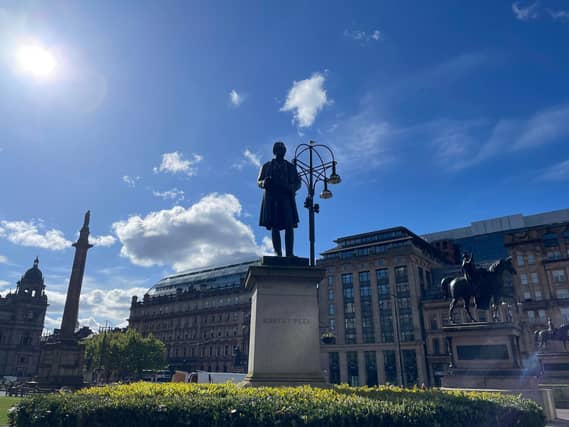

Statues in Glasgow’s George Square are set to be removed from April in order for the transformation of the public space to go ahead. The civic site is due to be fenced off with hoarding in March and April – to allow work to get under way. Plans include a water feature, a raised lawn, sheltered seating and feature lighting as well as play areas for children.
The 11 statues will undergo restoration before being returned to the finished square from July 2027 while work on George Square itself is expected to be completed by August 2026.
A spokesman for the council said: “In anticipation of the start of work on the redesign of George Square, we aim to erect hoarding around the square in late March, early April with the intention of statues being removed on a temporary basis from late April, early May for maintenance and restoration.
“The redesign of George Square is based on significant public consultation and will reflect the ambition to respect the history of Glasgow’s foremost civic space while meeting the future needs of the city.
“The works will deliver high-quality stone throughout the square, informal play areas for children in sensory gardens to the east of the square, a water feature, a raised lawn platform, sheltered seating and feature lighting.”
Here’s the story behind each of the square’s statues.
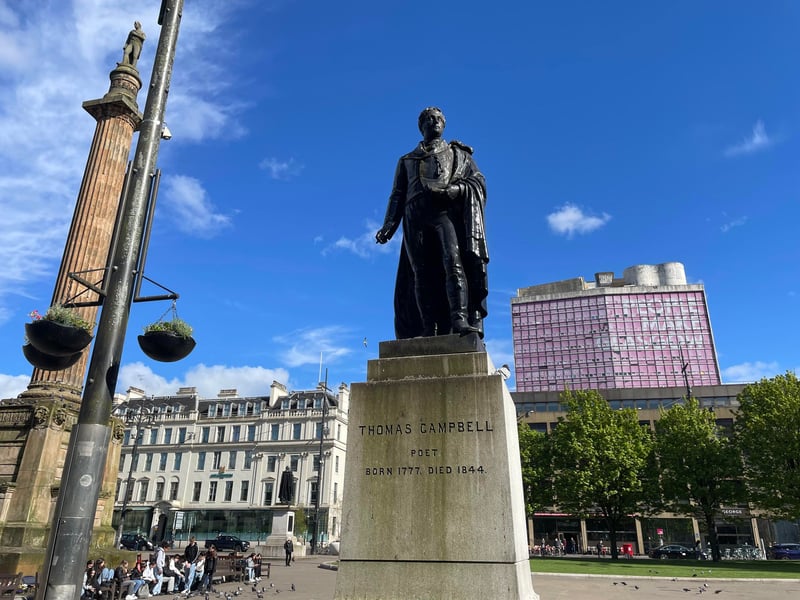
5. Thomas Campbell
Scottish poet, historian and political commentator Thomas Campbell was born in Glasgow in 1777 and was educated at Grammar School. In November 1826, Campbell was elected to the Lord Rectorship of Glasgow University. The unveiling was performed by Dr James A. Campbell on the centenary of the poet’s birth. | Declan McConville
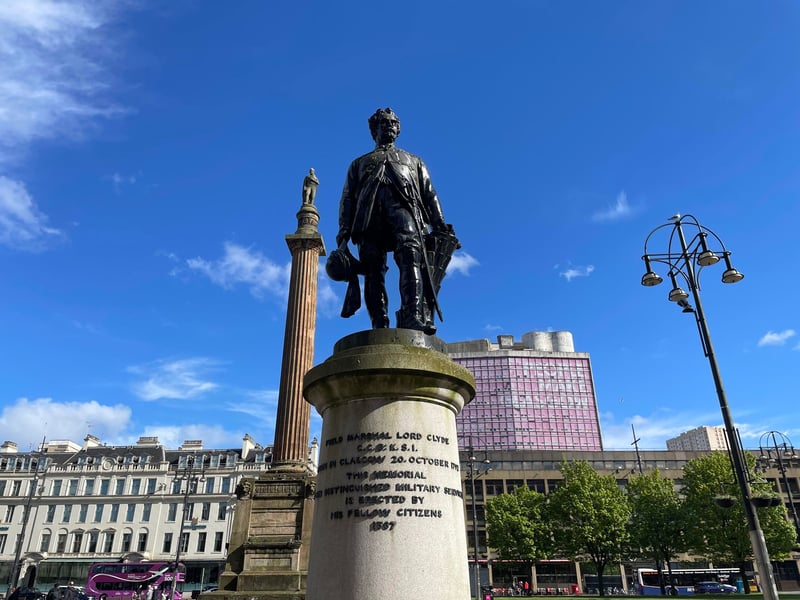
6. Lord Clyde
Military leader Lord Clyde was the eldest son of Glasgow carpenter John MacLiver but was given his mother's maiden name. Sir Colin Campbell’s most famous exploit being his command of ‘Thin Red Line’ of the 93rd Highlanders, which repulsed the Russians at the Battle of Balaclava in October 1854. His statue, by John Henry Foley, was unveiled in George Square in 1868 but prompted mixed reactions. | Declan McConville
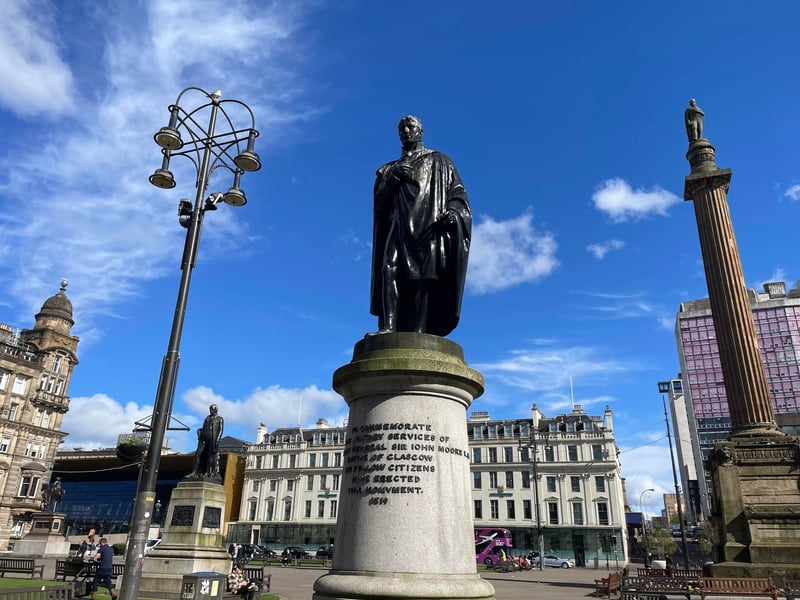
7. Sir John Moore
Sir John Moore was brought up in ‘Donald’s Land’, in the Trongate. Moore served as captain-lieutenant in the Duke of Hamilton’s regiment in America (1778-83) followed by a short period as MP for the united burghs of Lanark, Selkirk, Peebles and Linlithgow. His statue was unveiled on George Square in August 1819. | Declan McConville
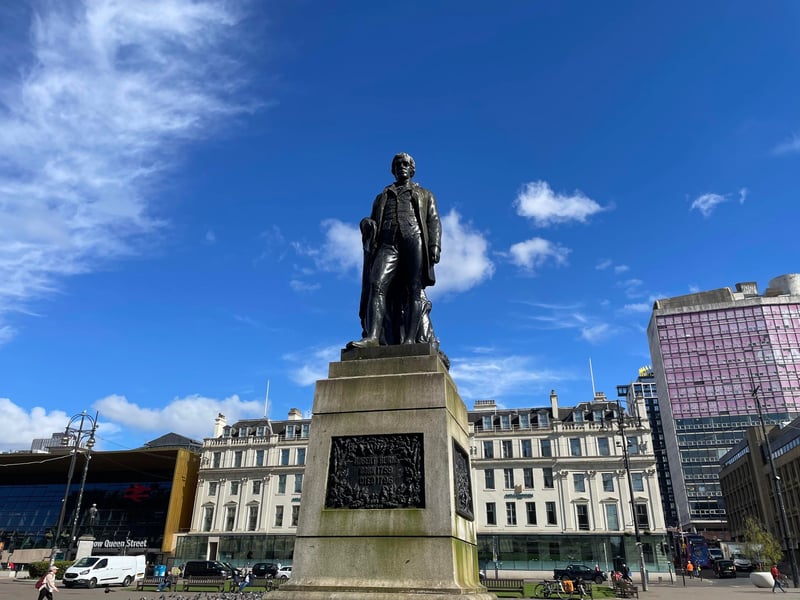
8. Robert Burns
Scotland's national poet Robert Burns' statue was designed by George Ewing and was erected in George Square in 1877. The monument was first under the care of the Dennistoun Burns Club, and was by them lovingly decorated on the anniversaries of the poet’s birth. | Declan McConville