
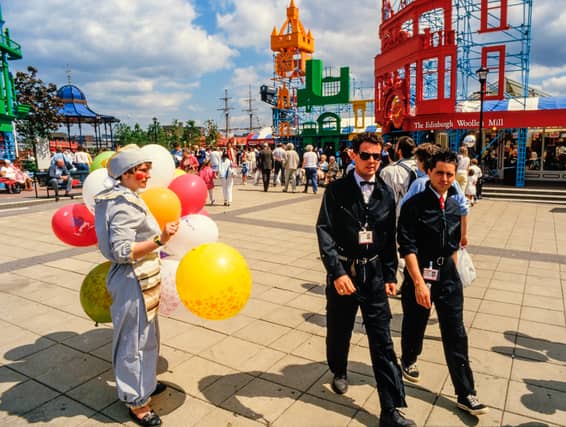


The 1980s was a decade like no other in Glasgow - from the new and trendy nightlife scene opening up, to the sub-cultures emerging that have been a long-standing feature of Glasgow ever since.
As glamorous and glitzy as the decade was - it was also a time of great civil unrest for Glasgow, quite possibly it was the largest period of mass civil disobedience in the city since Red Clydeside in the early 20th century.
Industries were dying out across the UK, Thatcher came to power, and for many Glaswegians it felt like the final nail in the coffin for the city. Despite the anxiety, uncertainty, and righteous anger - there was certainly some good times as well, the burgeoning world of synth music influenced the Glasgow nightlife - with the cities first gay club opening at the start of the decade.
Protests, riots, and even Glaswegians openly fighting with police at picket lines was becoming more and more common throughout the decade as Glaswegians grew increasingly frustrated with the Conservative Government of the time led by Margaret Thatcher.
The scene was set for the decade in its very first year - 1980, an eventful year to say the least. The Singer sewing machine factory at Clydebank was shut-down, and rioting began after the 1980 Scottish Cup Final.
At the same time, marginalised groups in the city began to come into their own - finding and creating their own spaces - women were permitted to drink at the University of Glasgow’s bar for the first time ever and Colin Barr opened Bennett’s, Glasgow’s first ever gay bar.
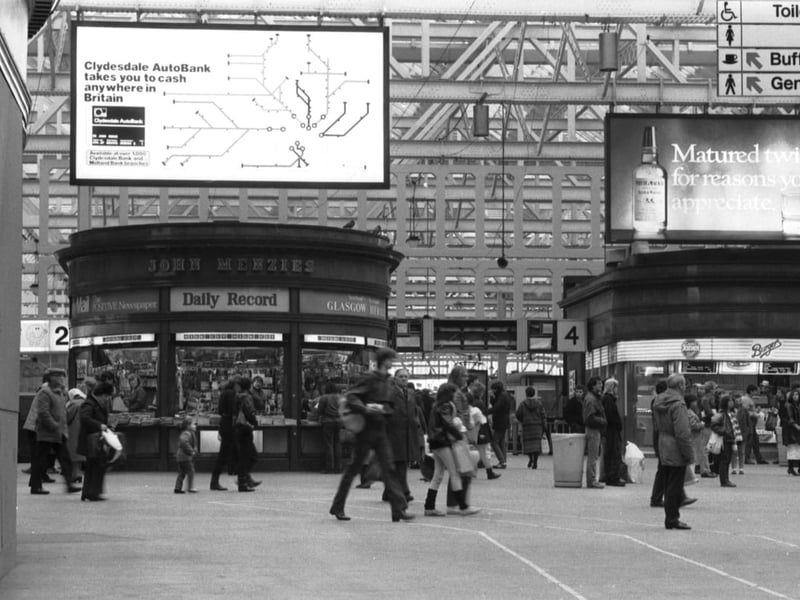
9. Glasgow Central Station in 1985
The Victorian kiosk at Glasgow Central was due to be moved to make way for the electronic departures/arrivals board in January 1985. | Allan Milligan
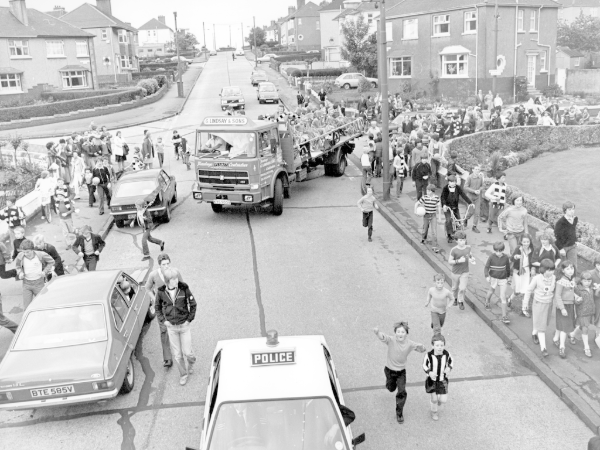
10. Children's Parade
The Garrowhill children's parade in 1980. | Glasgow City Archives
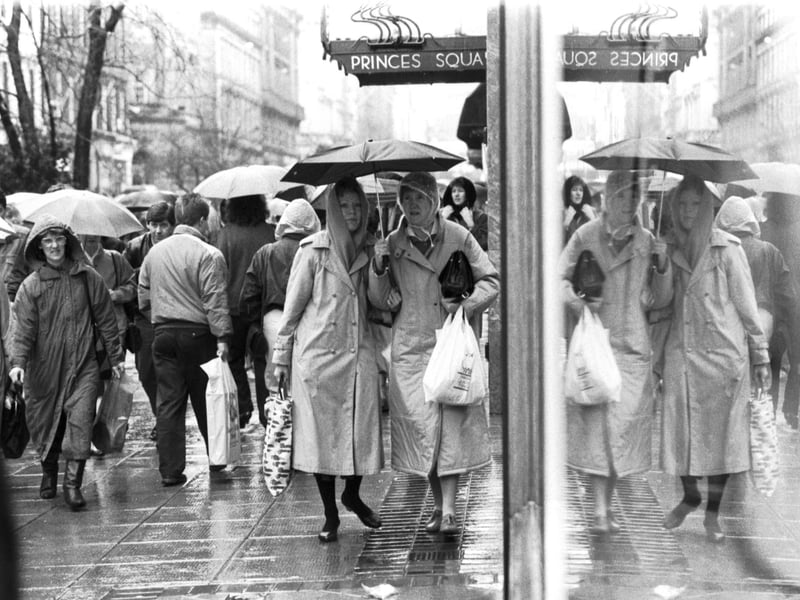
11. Glasgow shopping in 1987
Heavy rain failed to stop the Glasgow bargain hunters outside Princes Square in Buchanan Street, December 1987. Photo: Allan Milligan