

In the spring of 1988, Glasgow burst back into the limelight with the Glasgow Garden Festival, held from 28 April to 26 September on 120 acres of derelict docklands at Plantation Quay, Govan, along the River Clyde. This was the third national garden festival in the UK—and notably the only one staged in Scotland. It marked Glasgow’s first major exhibition event in 50 years, recalling the Empire Exhibition of 1938, and commemorated the centenary of the International Exhibition of Science, Art and Industry in 1888.
The festival was a runaway success, drawing 4.3 million visitors across 152 days—by far the largest attendance of the five UK Garden Festivals. This outpouring of public interest helped to reshape perceptions of Glasgow, reasserting the city’s cultural and economic vitality and contributing significantly to its being named European City of Culture in 1990.
The site’s attractions blended horticulture, heritage, and spectacle. The 240 ft Clydesdale Bank 150th Anniversary Tower, featuring a revolving glass gondola, dominated the skyline. Visitors experienced thrills aboard the Coca-Cola Roller roller coaster, which later relocated to an amusement park in Suffolk. A charming miniature railway, boat rides, a marina, and restored vintage Glasgow trams - including five historic trams - offered nostalgic journeys around the site.
Pedestrian access was enhanced by the construction of Bell’s Bridge, a rotating swing bridge that connected the festival site to the SEC Centre across the Clyde. The festival also featured sculptures - from a giant yellow teapot and floating head to artistic pavilions - infusing the festival site with charm, intrigue and creativity.
For many Glaswegians, 1988 remains “probably Glasgow’s greatest ever summer.” Relive the days of the garden festival with the pictures below.
Here are 16 nostalgic images celebrating Glasgow's landmark 1988 Garden Festival.
1. Glasgow Garden Festival
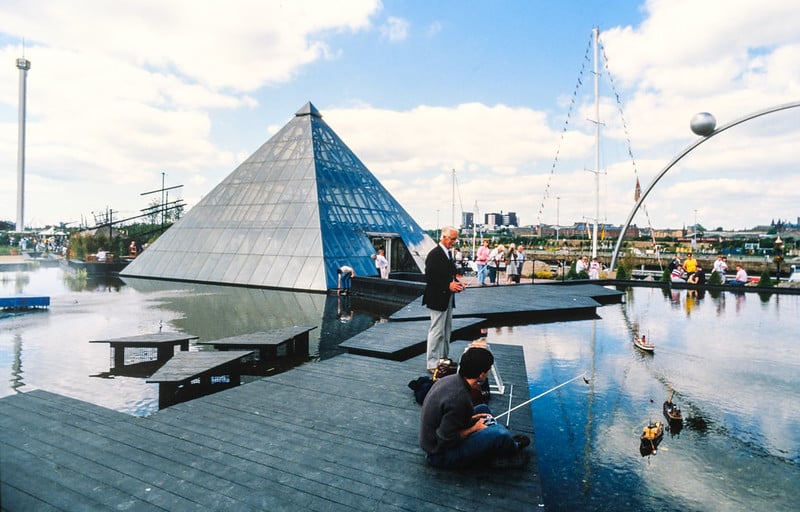
Prince’s Dock, once integral to Clyde shipbuilding, had fallen into disuse. Vast sheds, contaminated ground, and redundant infrastructure dominated the riverfront west of the city centre. The festival’s preparatory works involved large-scale landscaping, converting brownfield terrain into themed gardens, exhibition halls, and leisure spaces. | Alh1 via Flickr Photo: Alh1 via Flickr
2. Garden Festival from the river
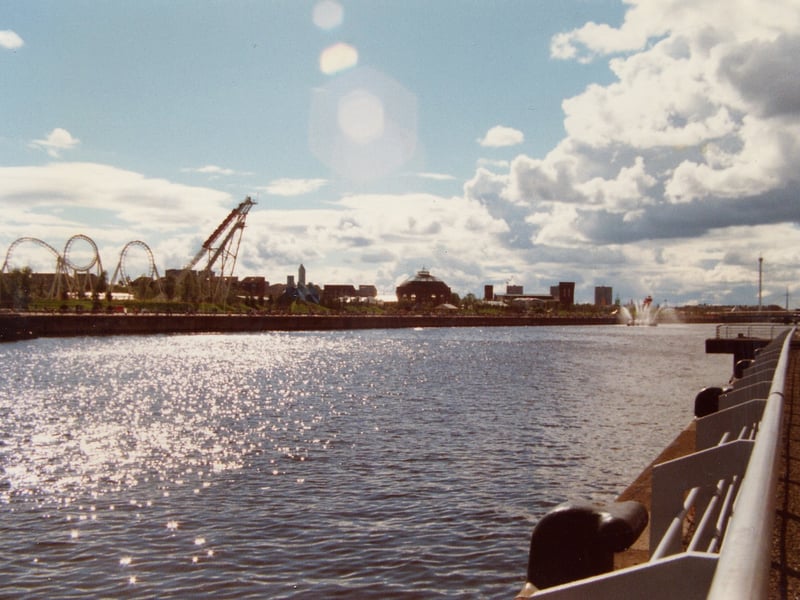
This physical reclamation was itself symbolic: it demonstrated that Glasgow could repurpose industrial wasteland and reintegrate it into the city. | Phyllis Buchanan
3. Glasgow Garden Festival
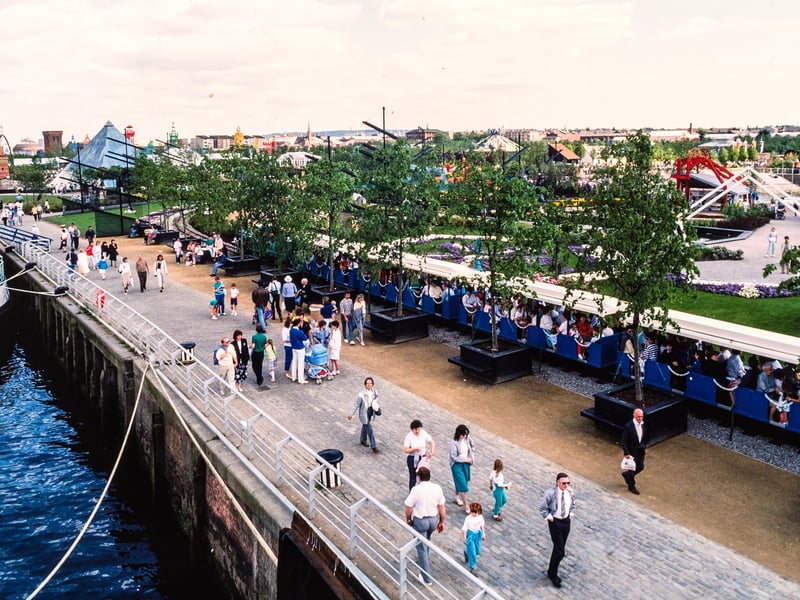
Design of the festival balanced horticultural display with spectacle and entertainment. More than forty show gardens represented regions, nations, and corporate sponsors, ranging from traditional planting schemes to avant-garde landscape installations. Water features, terraces, and riverfront promenades reconnected a section of the riverside long inaccessible. | Alh1 via Flickr Photo: Alh1 via Flickr
4. Trams at Garden Festival
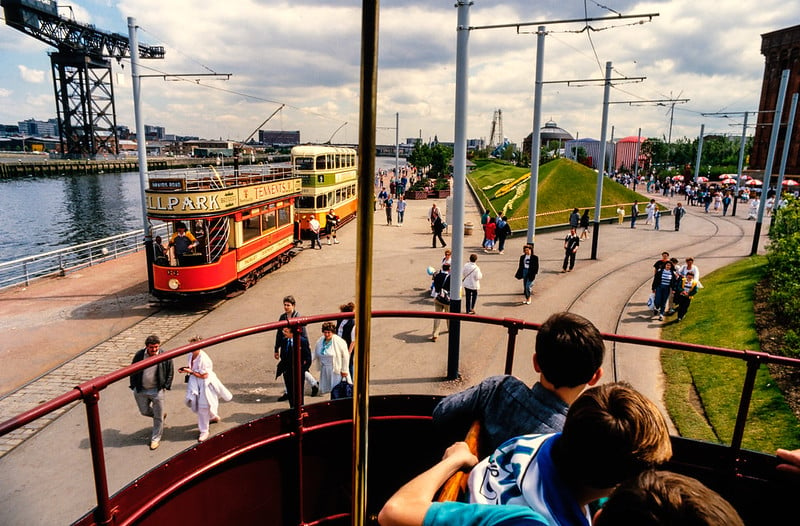
Trams returned to Glasgow for the Garden Festival. The number of visitors at the event surpassed the target set by organisers by 40%. Glasgow council reported that an estimated £100 million was injected into the local economy during the summer of 1988. | alh1