
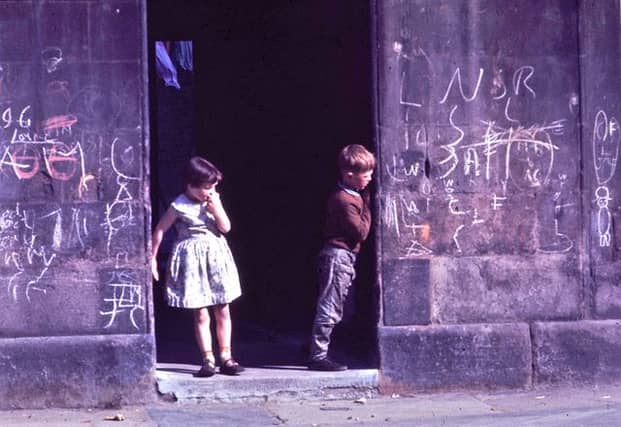


The Gorbals on the south bank of the River Clyde began as a small rural village in the 18th century. Initially known for its open fields and industrial workshops, it gradually transformed as Glasgow expanded during the Industrial Revolution.
The area became home to a growing working-class population, drawn by jobs in nearby factories, shipyards, and railways. By the late 19th century, the Gorbals was densely populated, with tenement housing rising to accommodate waves of Scottish rural migrants and later, significant Irish immigrants escaping famine.
By the early 20th century, the Gorbals had developed a reputation for overcrowding and poor living conditions. Tenements were often dilapidated, lacking proper sanitation, ventilation, and access to basic amenities. Despite these hardships, the community developed a strong cultural identity, with churches, local shops, and social clubs serving as centres of support and social life. The Gorbals became emblematic of Glasgow’s working-class resilience and communal spirit during a period of rapid urbanization.
From the mid-20th century onward, the Gorbals underwent large-scale redevelopment. Post-war slum-clearance programs demolished many of the old tenements, and new housing schemes, including high-rise tower blocks, were constructed in an effort to modernize the area. While these efforts improved living conditions, they also disrupted long-standing community networks.
Here are 17 nostalgic pictures that perfectly capture the spirit of the Gorbals.
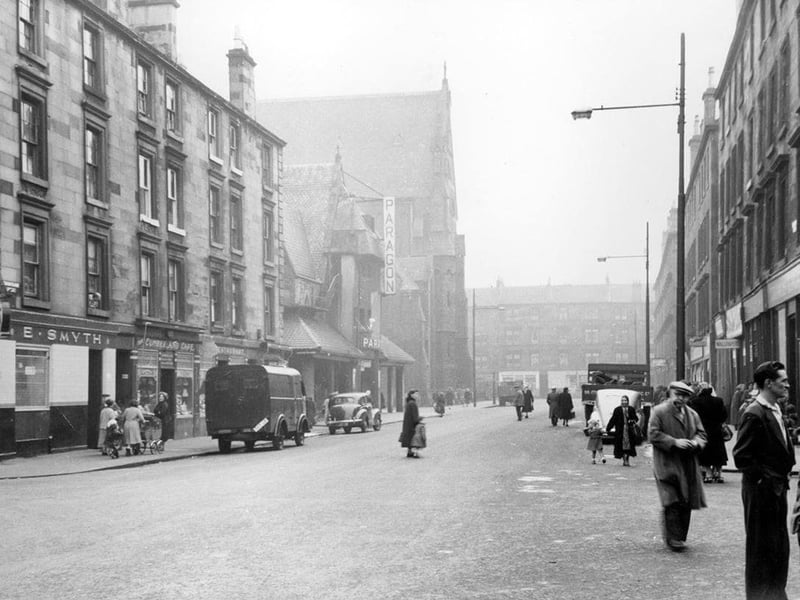
9. Cumberland Street (1955)
A look down Cumberland Street in 1955. | Glasgow City Archives
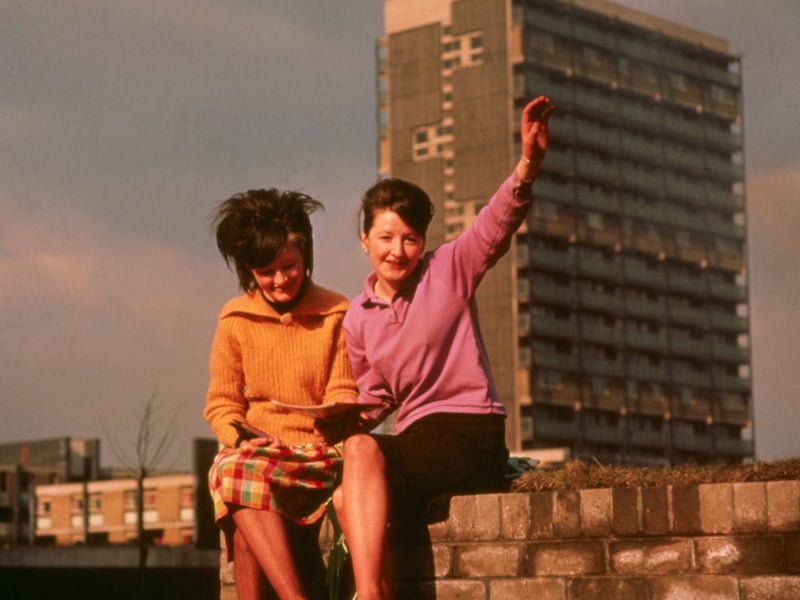
10. Gorbals (1960s)
Two pals in the Gorbals | Getty Images
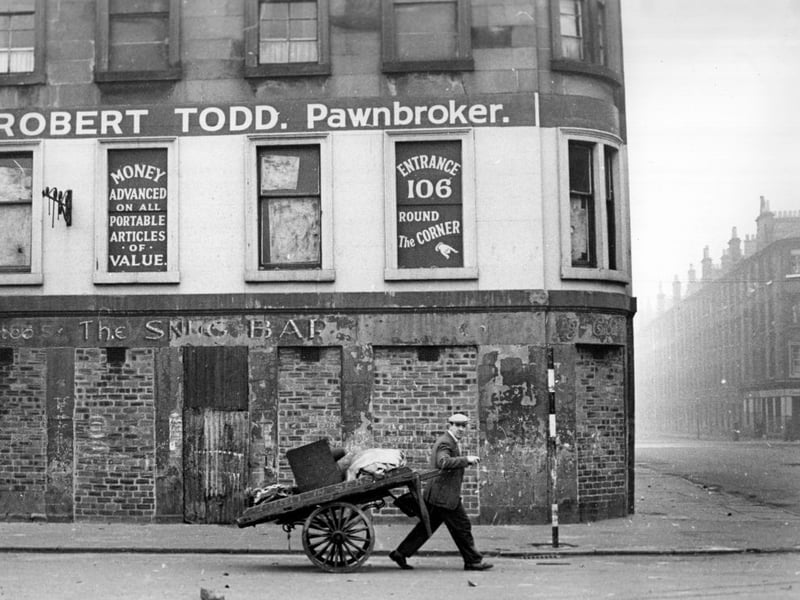
11. Gorbals (1960s)
A man pulling a hand cart past a closed-down pawnbroker's shop in the Gorbals. | Getty Images
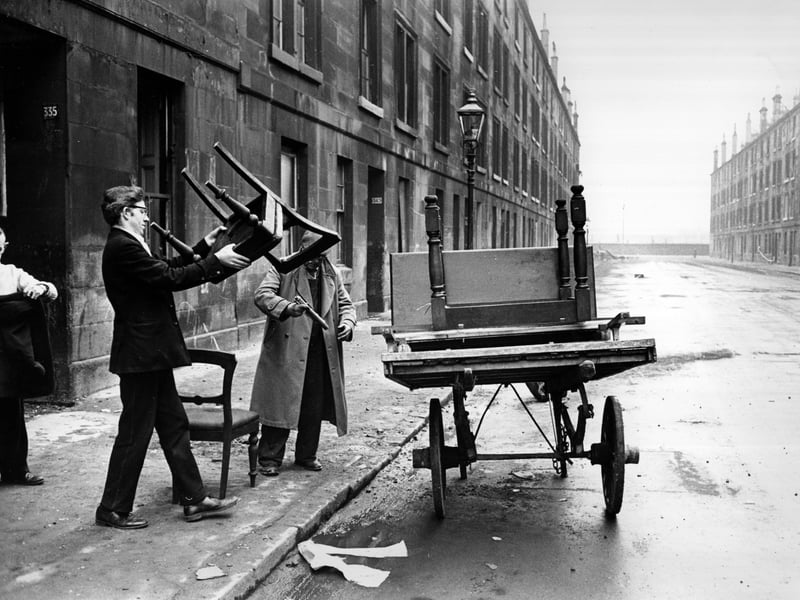
12. Gorbals (1960s)
A man piling furniture onto a cart in a street of soon-to-be-demolished tenements in the Gorbals in 1960. | Getty Images