
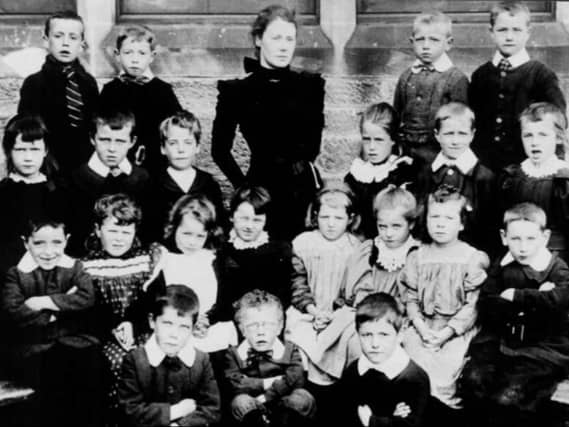


Bishopbriggs — a town variously claimed by Glasgow and East Dunbartonshire over the course of its long, shifting history — is the focus of our look today as we explore its heritage through a selection of old photographs.
Originally part of Lanarkshire, the area also encompassed the small village of Cadder, which was eventually absorbed into the growing town. Bishopbriggs takes its name from the Bishop of Glasgow, who was granted the land by King William the Lion in 1180; the “brigs” element refers to the bridges in the area. In the 18th century, the town was even recorded as “Bishopbridges.”
But the story stretches back even further. Cadder was once the site of a Roman fort on the Antonine Wall. The earliest known reference to the name Bishopbriggs itself appears in 1568, describing a route north of Glasgow as the “common passage to Bishopis Briggis.”
During the Industrial Revolution, Bishopbriggs was slow to industrialise, raising concerns that it might be swallowed by the rapidly expanding city of Glasgow. Although the town eventually developed its own manufacturing, publishing, and other industries, Glasgow did absorb 2,000 acres of land around Cadder in 1926 — an area that would later become Milton from the late 1940s onward.
These pictures were supplied via the East Dunbartonshire Council archives and collections - to find more old pictures and stories from your local history, check out their online catalogue of historic images.
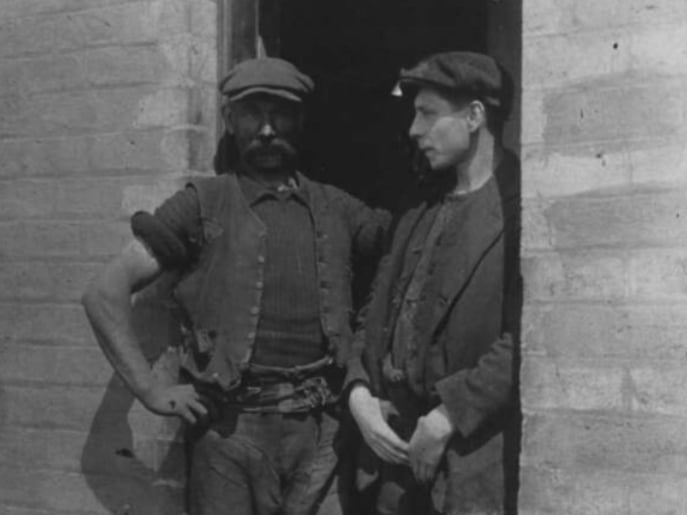
5. Cadder Miners (Circa. 1915)
James Neilly and his son, William Neilly, Cadder miners who lived in cottages at Jellyhill near Bishopbriggs. | East Dunbartonshire Council
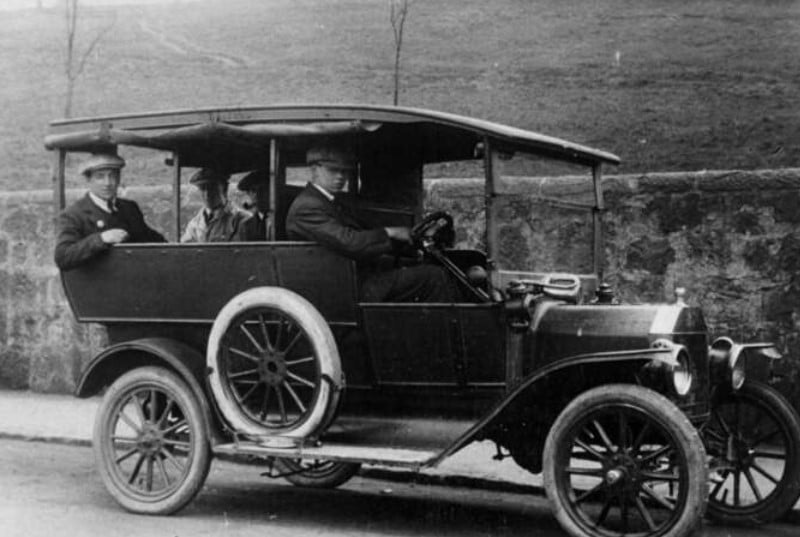
6. Graham’s (1916)
Graham’s early passenger vehicle - pictured waiting at foot of West High Street for passengers from Bishopbriggs. The driver is Duncan Nicol. | East Dunbartonshire Council
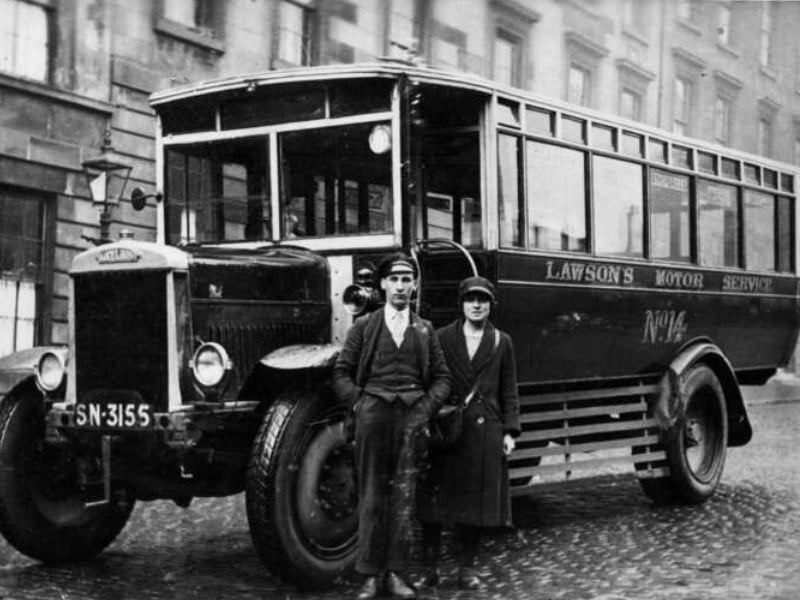
7. The No.14 to Glasgow (Early to mid 20th century)
Lawson’s Leyland No. 14, the Glasgow-Bishopbriggs-Kirkintilloch service, pictured is driver W Carson. Before the days of switchboards on the front of the vehicle, buses were entirely dedicated to single routes - you can see that in the embossed No.14 on the side of this old motor bus. Given a few decades or so, advancements in motor technology would lead to the bus overtaking the tram as the preferred method of public transport. | East Dunbartonshire Council
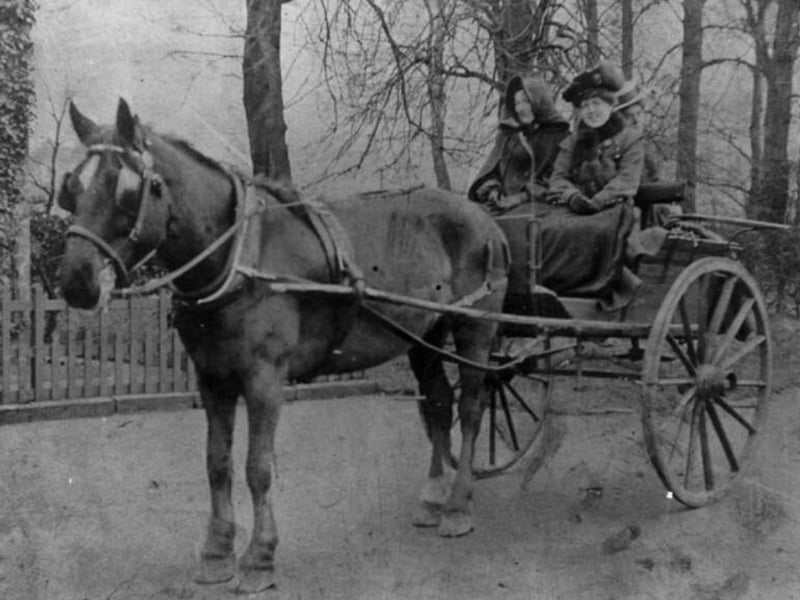
8. Dog Cart (Early 20th century)
Other modes of transport before the likes of so-called ‘motor vehicles’ included the dog cart (drawn by a horse, we promise the animal pictured isn’t just a big dog) which had two wheels, space for 4 passengers, and a whopping 1 horsepower. | East Dunbartonshire Council