
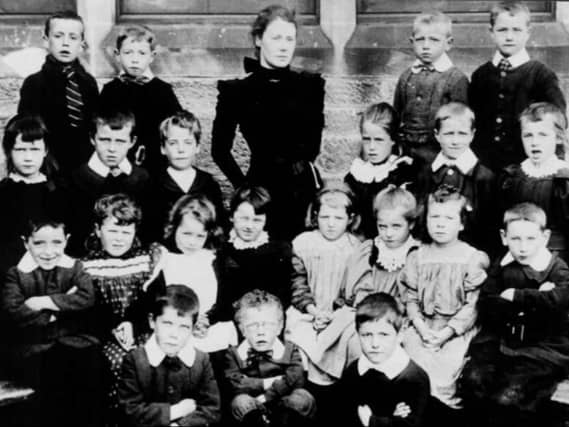


Bishopbriggs — a town variously claimed by Glasgow and East Dunbartonshire over the course of its long, shifting history — is the focus of our look today as we explore its heritage through a selection of old photographs.
Originally part of Lanarkshire, the area also encompassed the small village of Cadder, which was eventually absorbed into the growing town. Bishopbriggs takes its name from the Bishop of Glasgow, who was granted the land by King William the Lion in 1180; the “brigs” element refers to the bridges in the area. In the 18th century, the town was even recorded as “Bishopbridges.”
But the story stretches back even further. Cadder was once the site of a Roman fort on the Antonine Wall. The earliest known reference to the name Bishopbriggs itself appears in 1568, describing a route north of Glasgow as the “common passage to Bishopis Briggis.”
During the Industrial Revolution, Bishopbriggs was slow to industrialise, raising concerns that it might be swallowed by the rapidly expanding city of Glasgow. Although the town eventually developed its own manufacturing, publishing, and other industries, Glasgow did absorb 2,000 acres of land around Cadder in 1926 — an area that would later become Milton from the late 1940s onward.
These pictures were supplied via the East Dunbartonshire Council archives and collections - to find more old pictures and stories from your local history, check out their online catalogue of historic images.
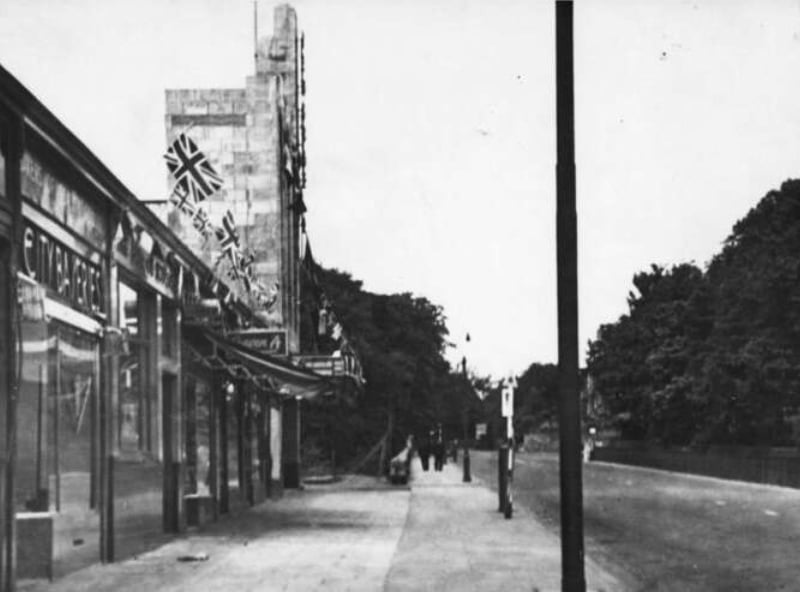
13. Kenmure Cinema (Circa. 1938)
Kirkintilloch Road looking east, showing Kenmure Cinema on left. The cinema opened in 1938 with a seating capacity of over one thousand. The frontage of the cinema is typical thirties’ architecture. | East Dunbartonshire Council
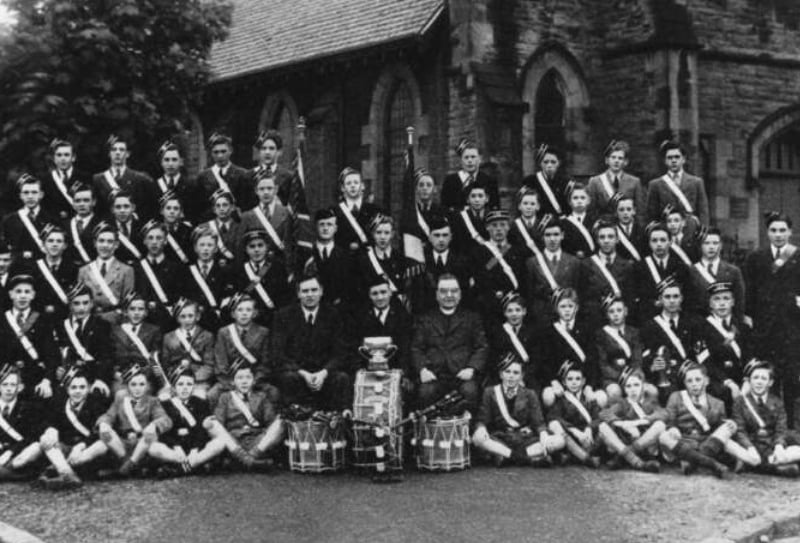
14. Boys Brigade (Circa. 1950)
The young men of the boys brigade pose for a picture outside Kenmure Church, circa. 1950. | East Dunbartonshire Council
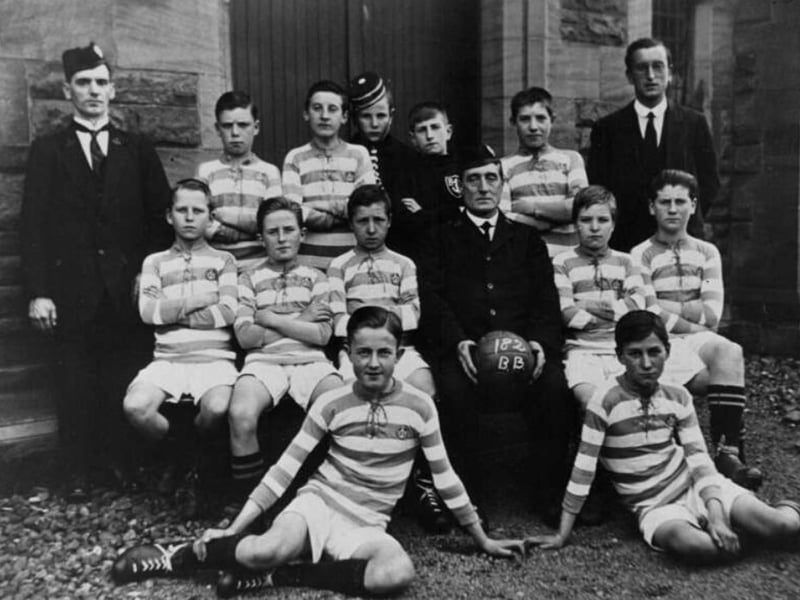
15. Boys Brigade Football Team
The Bishopbriggs Boys Brigade Football team pose for a team picture | East Dunbartonshire Council
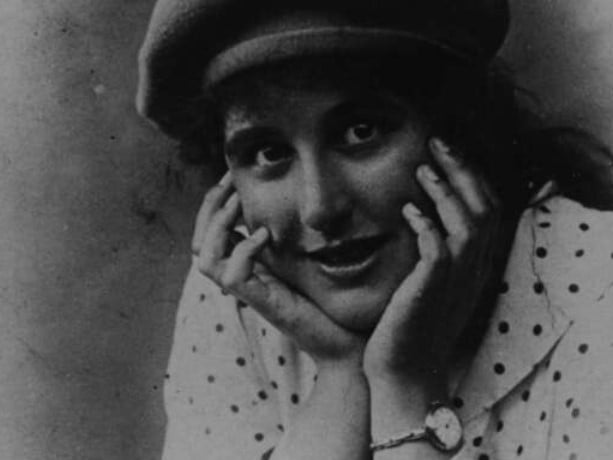
16. Rita McIver, local hero (1916)
A portrait of Rita McIver, a well-respected member of the community in the early 20th century. She was championed as a local hero when in 1916, she saved the vets daughter, Babs Irvine, from drowning in the quarry behind Cairnview Terrace. | East Dunbartonshire Council