

The Merchant City’s origins lie in the 12th century, when Glasgow grew around the Cathedral and the High Street. Merchants lived and traded close to the Trongate and Saltmarket, areas that formed the commercial heart of early Glasgow. The area’s name reflects the buildings and streets that sprang up in the 18th century, during Glasgow’s rise as a global trading power.
Wealthy merchants profited enormously from trade with the Americas, particularly in tobacco, sugar, and cotton. They built grand townhouses, warehouses, and counting houses, giving the area a distinctive architectural character. Streets such as Virginia Street and Jamaica Street were named after colonial trading connections.
In the late 18th and early 19th centuries, the Merchant City was a fashionable residential area for Glasgow’s elite. As the Industrial Revolution progressed, many wealthy residents moved westwards to newly created suburbs. The Merchant City increasingly became a centre for wholesale trade, warehousing, and industry.
By the mid-20th century, the area had suffered significant decline. Post-war redevelopment, population loss, and neglect left many historic buildings derelict or underused. From the 1980s onwards, however, the Merchant City experienced major regeneration. Historic structures were restored and repurposed, while new developments introduced housing, cultural venues, and public spaces.
Today, the Merchant City is a vibrant cultural and social hub within the city centre, known for its cafés, restaurants and nightlife. Its streets remain a visible reminder of Glasgow’s mercantile past and its lasting impact on the city’s identity.
Here are 19 nostalgic pictures that perfectly capture the spirit of the Merchant City.
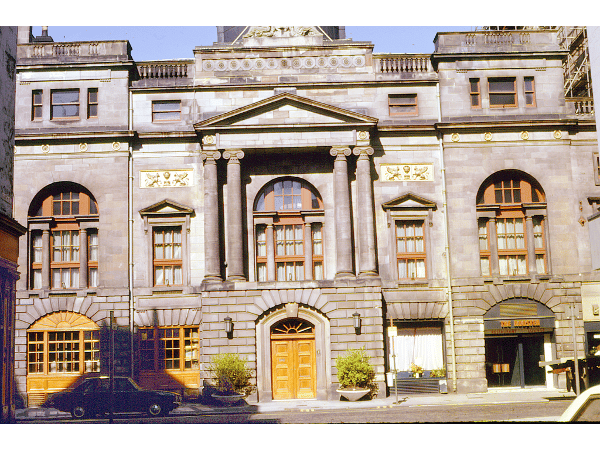
1. Trades House
Trades House pictured on Glassford Street in 1974. | Virtual Mitchell
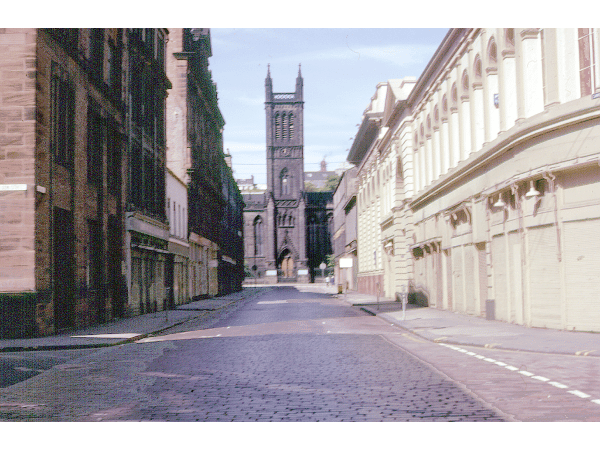
2. The Ramshorn
St Paul's and St David's Ramshorn Church pictured from Candleriggs in April 1975. | Virtual Mitchell
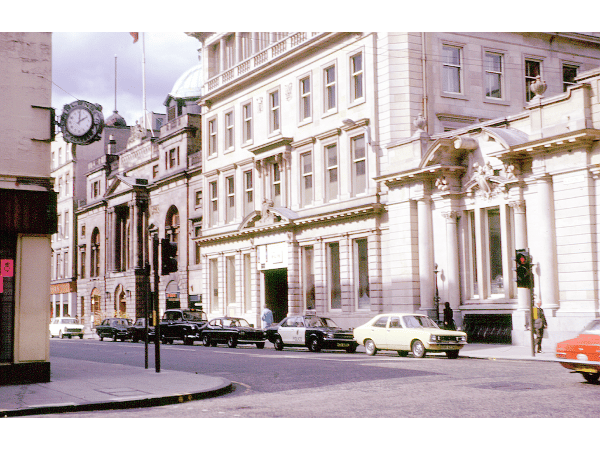
3. Savings Bank
The Savings Bank pictured on the corner of Ingram Street and Glassford Street in 1975. | Virtual Mitchell
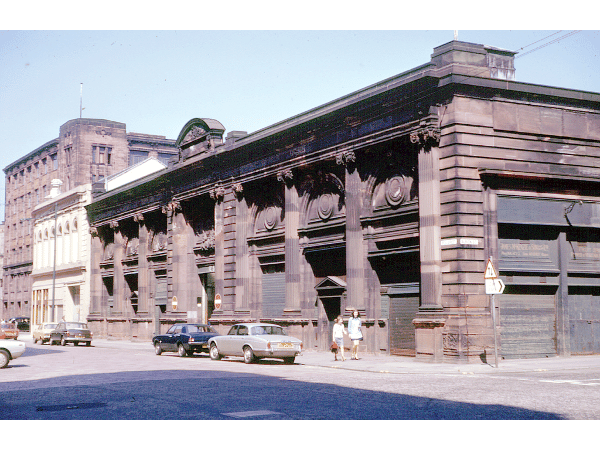
4. Bell Street
The corner of Bell Street and Albion Street captured in August 1975. The corner is now home to O'Neills. | Virtual Mitchell