
In 1990, Glasgow was named European Capital of Culture, a title that marked a major turning point in the city’s modern history.
Once widely associated with heavy industry, Glasgow used the designation to showcase its rich artistic heritage, architectural grandeur, and vibrant creative scene. The award helped shift international perceptions and positioned the city as a leading cultural destination in Europe.
The programme of events throughout the year highlighted Glasgow’s strengths in visual art, music, theatre, and design. Institutions such as the Scottish Opera and the Glasgow School of Art played important roles, alongside community-led projects that ensured culture was celebrated at every level of the city. Major exhibitions, performances, and public events attracted visitors from across the UK and beyond.
The impact of being European Capital of Culture extended well beyond 1990. It stimulated long-term investment in cultural infrastructure, boosted tourism, and strengthened civic pride. Glasgow’s successful year became a model for how culture could drive urban regeneration, helping transform the city’s image and laying foundations for its continued reputation as one of Europe’s most dynamic cultural centres.
Here are 22 brilliant nostalgic pictures of 1990 when Glasgow was European Capital of Culture.
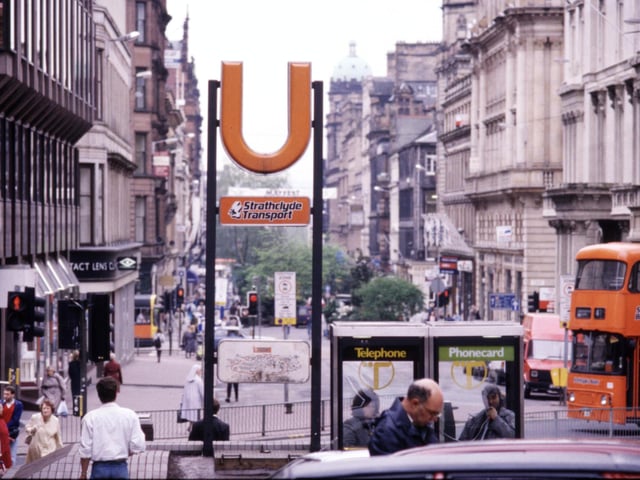
21. Glasgow Underground sign 1990
The U sign for Strathclyde Transport's underground station in Buchanan Street, August 1990. | JPIMedia Photo: Allan Milligan
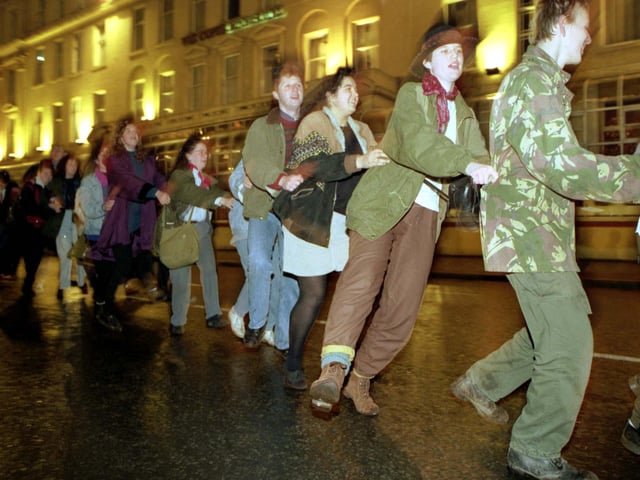
22. Glasgow Hogmanay conga line 1990
Glaswegians celebrate the end of Glasgow Year of Culture with a street party and conga line in George Square on Hogmanay 1990. | JPIMedia Photo: Stephen Mansfield