
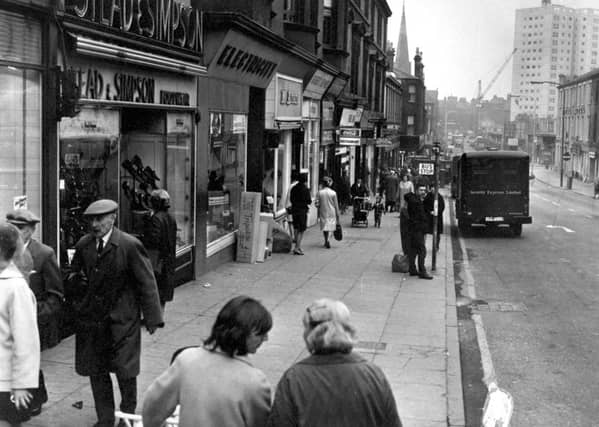


Motherwell, located in North Lanarkshire, began as a small rural settlement clustered around a ford on the River Clyde. Its name is often linked to a medieval religious well dedicated to the Virgin Mary, suggesting the area’s significance long before industrial expansion.
Until the 18th century, Motherwell remained largely agricultural, marked by scattered farms and small hamlets.
The town’s transformation accelerated during the Industrial Revolution. The arrival of the railway in the 1840s and the growth of coal mining helped Motherwell develop into a major industrial hub. Most notably, the establishment of the Colville steelworks in the late 19th century made Motherwell one of Scotland’s centres of heavy industry. For much of the 20th century, the city’s identity was shaped by the massive Ravenscraig steel plant, which became a symbol of Scottish steel production.
Following the decline of heavy industry in the late 20th century and the closure of Ravenscraig in 1992, Motherwell underwent significant economic and social change. The town shifted toward service industries, education, and commerce, with efforts to regenerate areas once dominated by industry.
Here are 27 nostalgic photographs that capture the changing face of Motherwell and everyday life in the town throughout the years.
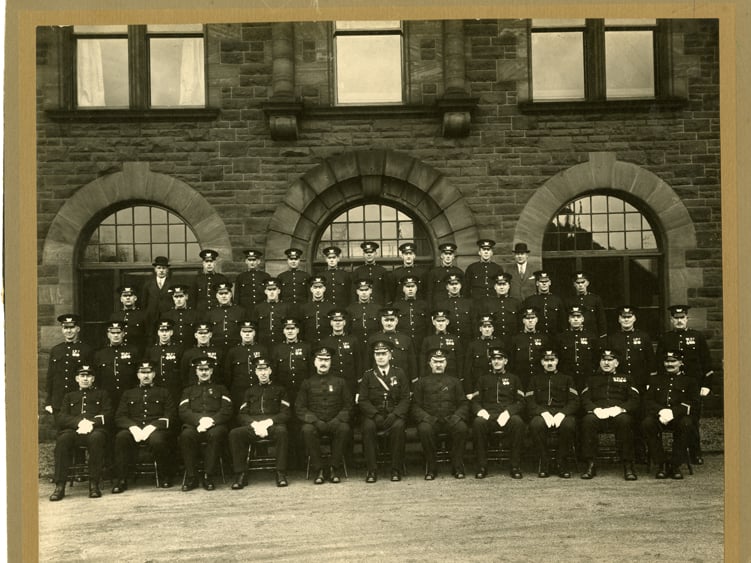
17. Motherwell Police (1930)
Pictured at the old Police Station on High Road are the Motherwell Police Force. The gentlemen pictured above in their Sunday best were commemorating Motherwell Police moving from the wider Lanarkshire Constabulary and establishing their own force, the Motherwell & Wishaw Burgh Police which was officially established in 1930. They would later be modernised into Strathclyde Police, and then into the national Police Scotland network that we know today. | CultureNL
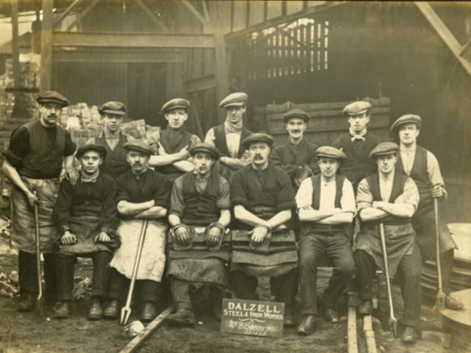
18. Dalzell Steel & Iron Works (1920)
Group portrait of the workers on No 8 Shears at Dalzell Steel & Iron Works. David Crabb, who later became Motherwell Bathsmaster, is pictured second from left on the back row, aged just 17. | CultureNL
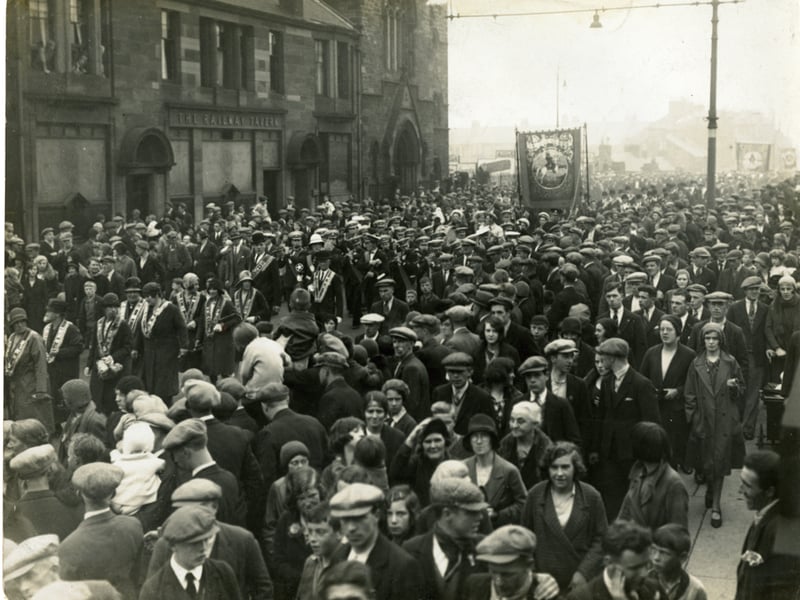
19. Orange Walk (Circa.1920~)
A large crowd gathers outside the Railway Tavern in Motherwell during an Orange Walk. The Railway Tavern is still operating on the same spot on Merry Street under the same name today! A march of this size would imply the date to be around July 12. The Orange Order continue to have a large presence in Motherwell - with several Orange Halls around the town. The Orange Order even planned to renovate a building on Milton Street for their headquarters, but opted to sell the building this year instead. | CultureNL
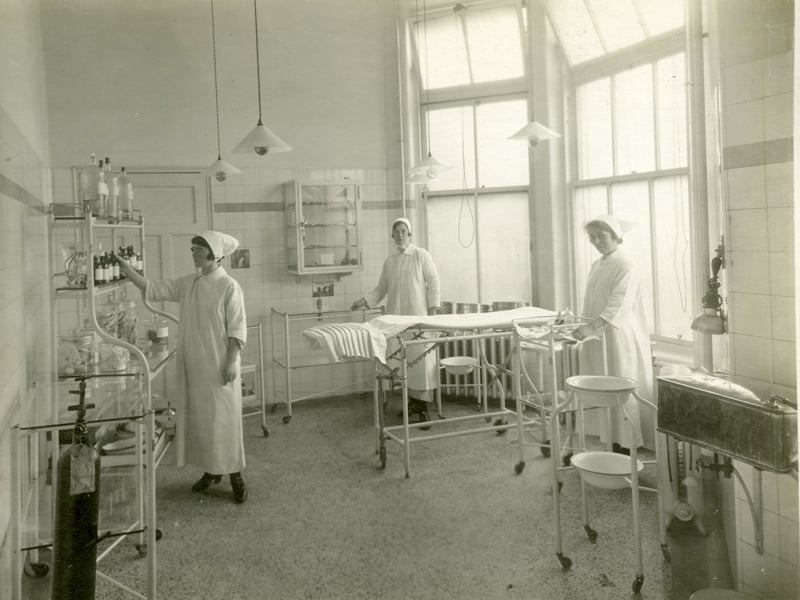
20. County Fever Hospital (Circa.1920’s~)
County Fever Hospital (now known as Cleland Hospital) - a rare look into hospitals before the NHS was formed after WW2. Back when this picture was taken in the 1920’s, the Education Act of 1908 made the medical inspection of school children compulsory - while the health of adult male workers was addressed with the National Insurance Act of 1911; workers in trades who were earning less than £160 per annum were included in the scheme and for four pence a week they were allowed access to a doctor and treatment. Hospitals remain one of the biggest employers in Motherwell & Wishaw, with University Hospital Wishaw being the end-goal for many young men and women in the town. | CultureNL