
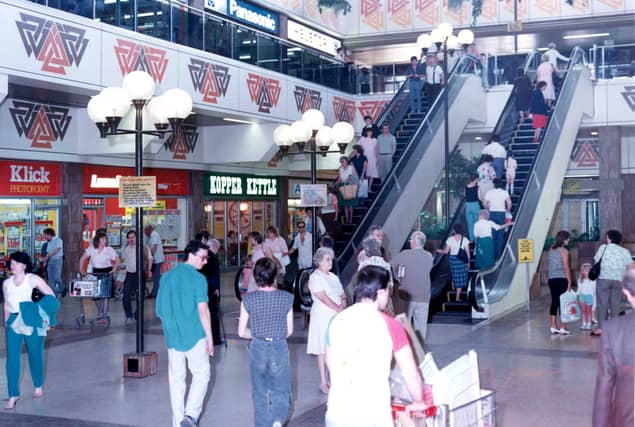


Cumbernauld began life as a small village, with weaving as its main industry, later followed by mining as the Industrial Revolution reached North Lanarkshire alongside the construction of the Forth and Clyde Canal.
The town’s name is thought to come from the Gaelic comar nan allt, meaning “meeting of the burns or streams”. However, this interpretation is still hotly debated among local historians, and the true origin of the name remains uncertain to this day.
It wasn’t until 1955—almost a decade after the Second World War—that Cumbernauld was designated a “new town”. It was one of the first in Scotland to receive this status, following East Kilbride in 1947 and Glenrothes in 1948. Other new towns would follow, including Livingston in 1962 and Irvine in 1966. These new towns were built in response to the post-war baby boom, at a time when Glasgow was facing a severe housing shortage.
Cumbernauld was designed around the idea of an elevated, futuristic, almost indoor town centre—an approach that was as innovative as it was controversial. Around this central hub, satellite neighbourhoods were planned to cluster. The town’s architecture and urban planning went on to pioneer the widespread use of underpasses and footbridges across Britain.
Here are nine nostalgic pictures that perfectly capture the spirit of Cumbernauld.
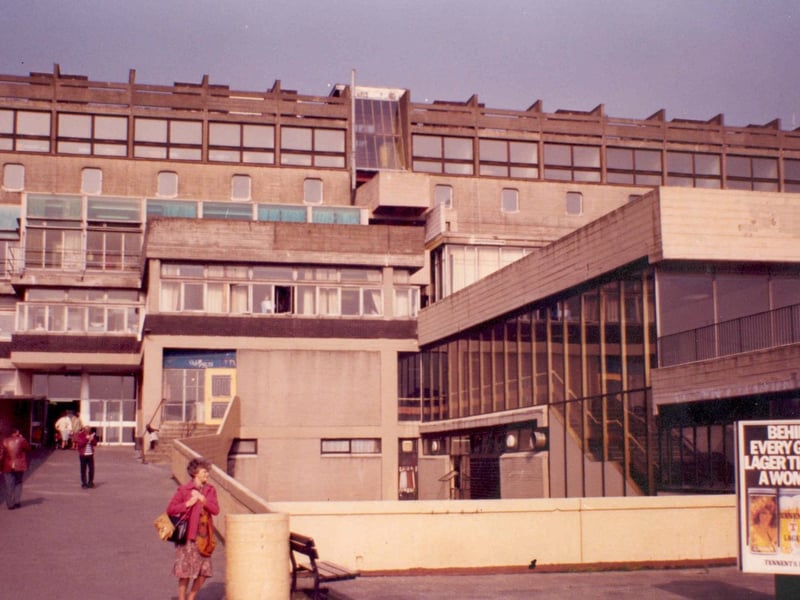
9. Cumbernauld Town Centre in the 80’s (1982/83)
This view is from the southern pedestrian approach. | CultureNL