
Glasgow Necropolis: Corlinda Lee and the fascinating life of the Queen of the Gypsies

Glasgow’s Necropolis is filled with stories from across the centuries and across the classes, but few are like that of Corlinda Lee.
Buried within the Necropolis is Corlinda Lee who was known as the Queen of the Gypsies. Born in 1831 she originated from Epping Forest in Essex, she along with her husband George Smith, were frequent visitors to Glasgow during the winter months.
Lee came from a family of prominent gyspies and so her marriage to George, who also came from an important gypsy family, in 1856 was the chance to merge two of the culture’s great families.
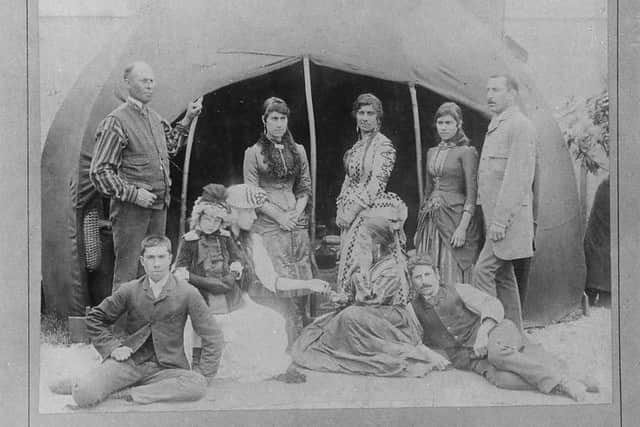

George would soon become the head of 10 other gypsy families, something that would see him become the King of the Gypsies and Corlinda become Queen of the Gypsies and they would embark on tours of the Victorian Britain.
Annette Mullen, chair of Friends of Glasgow Necropolis, said “The Victorians loved anything that was exotic, you know a bit different. He used to take the whole family, the caravans, everything all around the United Kingdom and Ireland. He would open up at a farmer’s field and they’d have a gypsy ball and you could come and pay the money and see what it was like.”
The family, which would eventually include eight children, 4 sons & 4 daughters (Charles, Frederick, Ernest, Patrick, Midora, Alice, Margaret, and Cecilia), saw Glasgow as a key stopping point.
Annette: “The Forge Retail Park used to be called Vinegar Hill, the travellers would come and pitch over the winter at the Eastern Necropolis which is the cemetery right across the road from the Forge and behind Parkhead.”
Corlinda was not however a Queen that was content to merge into the shadows. At the Royal Epping Forest Gypsy balls at Knockenhair Park in Dunbar on August 1878 she would have an encounter that would bring her her own fame.
Annette said: “Her claim to fame is that she actually read the hand of Queen Victoria. Although, it’s not recorded what she said.”
That sparked a huge interest in Corlinda and her readings, with her services coming into demand.
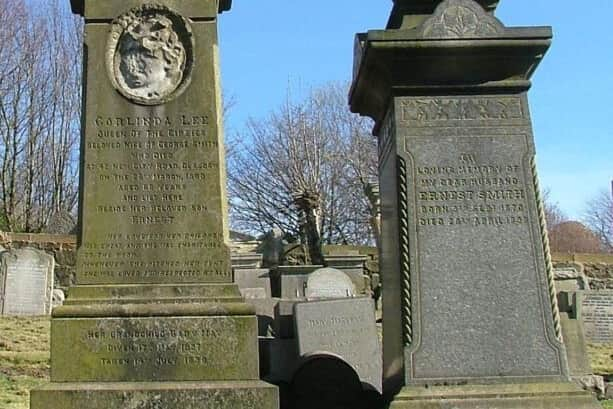
But perhaps her legacy is what is now written on her stone, which sits next to that of her son Ernest, in Glasgow Necropolis.
Annette said: “What’s really lovely about Corinda Lee’s stone is what’s written on it; ‘Her love for her children was great and she was charitable to the poor. Wherever she pitched her tent she was loved and respected by all.’
“And where they pitched their tent originally was the New City Road in Glasgow, which is where the art school is.”
Corlinda Lee died on 28th March 1900 aged 68 years at 42 New City Road in Glasgow