
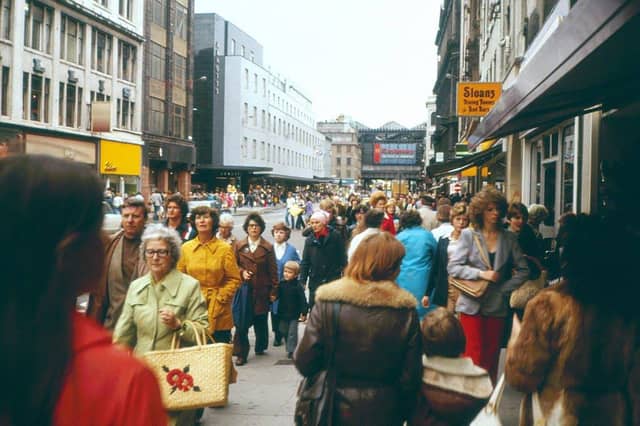


Over the past century, the city has undergone transformations that reflect not only local ambitions but also wider social, economic, and cultural shifts. From the post-war years of rebuilding and renewal to the bold modern developments of the late 20th century and the more recent focus on regeneration and public space, Glasgow’s urban landscape tells a powerful visual story.
Photographs offer a unique window into this evolution. They capture moments that might otherwise fade into memory: bustling streets lined with trams, the gradual disappearance of historic tenements, the rise of concrete office blocks, and the reimagining of public squares. Through these images, we can trace how the city centre has adapted to changing needs—whether shaped by industrial decline, retail expansion, or efforts to create a more pedestrian-friendly environment.
This article brings together a series of striking images that chart Glasgow’s journey across eight decades. Each photograph not only documents physical change but also invites reflection on how people have experienced the city at different points in time. Familiar landmarks appear in unfamiliar forms, while some places have vanished altogether, replaced by new visions of urban life.
Together, these pictures reveal a city that is constantly evolving yet deeply connected to its past. By looking back, we gain a clearer understanding of how Glasgow’s identity has been shaped, and how it continues to change in the future.
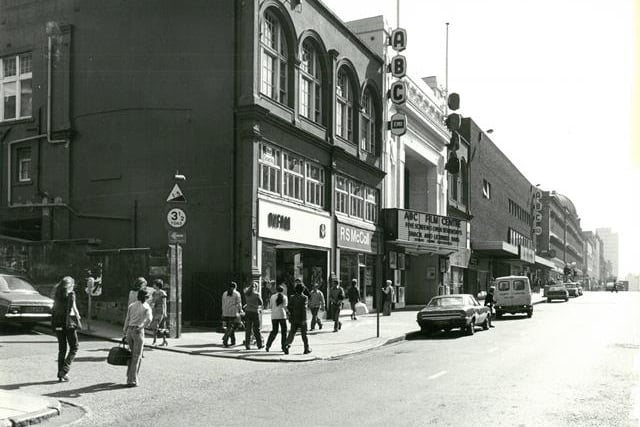
9. Sauchiehall Street (1975)
The former ABC cinema pictured on Sauchiehall Street in the mid seventies. | Glasgow City Archives
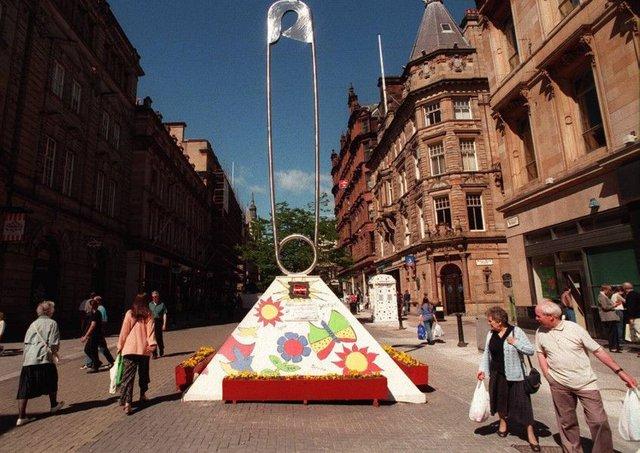
10. Buchanan Street (1996)
George Wylie’s sculpture the Big Safety Pin was unveiled in Buchanan Street in 1996. It was permanently moved to Rottenrow Gardens in 2004. Photo: TSPL
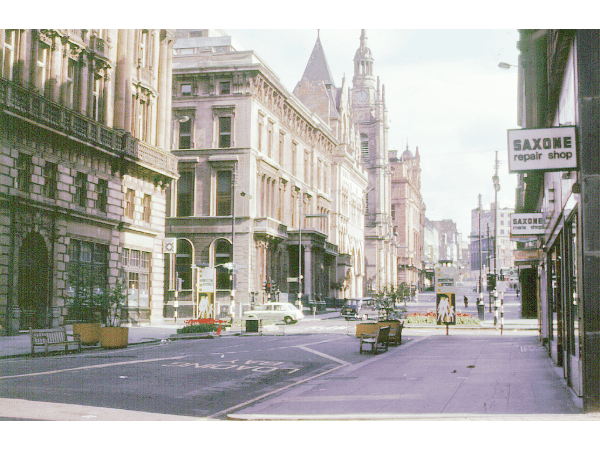
11. Buchanan Street (1974)
A view up Buchanan Street in May 1974. | Glasgow City Archives
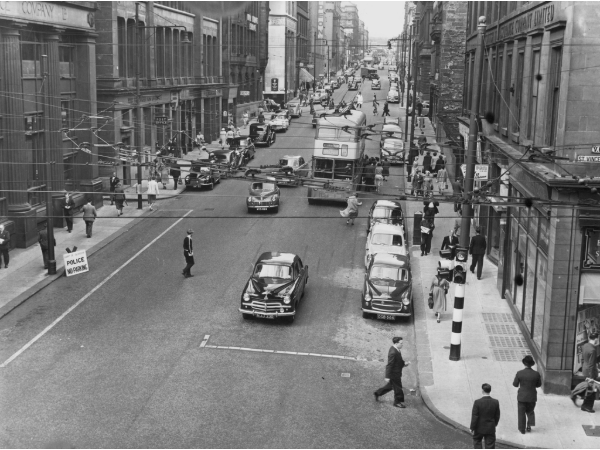
12. Renfield Street (1950)
Looking north up Renfield Street in 1950. | Glasgow City Archives