

For centuries, Hamilton Palace stood not merely as a family home, but as a political symbol, a cultural storehouse, and ultimately a cautionary tale of aristocratic ambition colliding with industrial reality. The seat of the powerful Dukes of Hamilton, its origins trace back to a defensive medieval tower house dating from the 14th century. The Hamilton family’s rise was tightly bound to the region’s fortunes. The barony of Cadzow was granted to them during the Wars of Independence era, and by the mid-15th century the family’s status had become firmly entrenched in Scotland’s noble hierarchy.
The building and its occupants were drawn into Scotland’s 16th-century politics. The Hamiltons’ support for Mary, Queen of Scots brought attention in the most destructive form: siege and repeated damage. Yet the house endured, rebuilt and extended repeatedly. By 1591, a new residence on a quadrangular plan had risen and was increasingly referred to with the title of Palace.
The true transformation into a palatial showpiece came in the late 17th century. Anne, 3rd Duchess of Hamilton, and her husband commissioned a major rebuilding programme from 1684 to 1701. The project, remembered as The Great Design, reshaped the residence into a grand U-plan Baroque mansion with a courtyard. The architect credited with directing this work was James Smith, a leading figure in Scotland’s classical building tradition.
The palace’s setting was equally calculated. It was placed at the centre of an expansive designed landscape in the Low Parks, with an impressive tree-lined Great Avenue stretching for miles, connecting the palace visually and symbolically to the wider Hamilton estate.
By the early 19th century, Hamilton Palace was poised for its most dramatic enlargement. In 1819 Alexander, 10th Duke of Hamilton succeeded to the title and, crucially, to the expanding wealth derived from the Lanarkshire coalfields. The Duke wanted a residence worthy not just of Scotland’s premier noble house, but of a European court.
Between 1824 and 1832, the Glasgow architect David Hamilton undertook a major remodelling and enlargement of the palace’s north front, producing a colossal neoclassical façade with an imposing Corinthian portico. The building’s appearance signalled a confident message: industrial wealth had become aristocratic splendour.
Inside, Hamilton Palace became famous for its scale and its collections. It housed major libraries and an extraordinary accumulation of paintings, furniture, porcelain, and decorative art.
By the late Victorian period, Hamilton Palace was increasingly expensive to maintain. The estate’s rebuilding programmes and high-living by its occupants contributed to serious financial strain. Despite the family’s immense landholdings and prestige, debt mounted and hard decisions followed.
In 1882, one of the great aristocratic sales of the century took place at Christie’s: thousands of items, paintings, tapestries, sculpture, and rare books were sold to relieve the burden.
The early 20th century offered brief reminders of Hamilton Palace’s former status. King George V and Queen Mary visited in July 1914, and during the First World War parts of the palace were used to house injured servicemen.
Yet the palace’s fate had already been sealed beneath the ground. Coal workings below the structure created subsidence risks that threatened the building’s integrity. In 1915 authority was granted for mining beneath the palace, and within a few years of that fateful decision the trustees petitioned for permission to sell its contents and demolish the structure.
The final auctions in 1919 scattered the remaining furnishings and fittings, and demolition began in 1921. The destruction proved slower than expected - Hamilton Palace was built on a heroic scale, with walls reportedly several feet thick - but the end was inevitable. By 1932, the palace was gone.
Today, its site is occupied by sport grounds and parkland. But fragments survive: the nearby Hamilton Mausoleum still stands, and important architectural elements were preserved and relocated, including notable interiors that found new homes in museums. Meanwhile, the traces of the Great Avenue still mark the landscape, offering a clue to the immense axis on which the palace once sat.
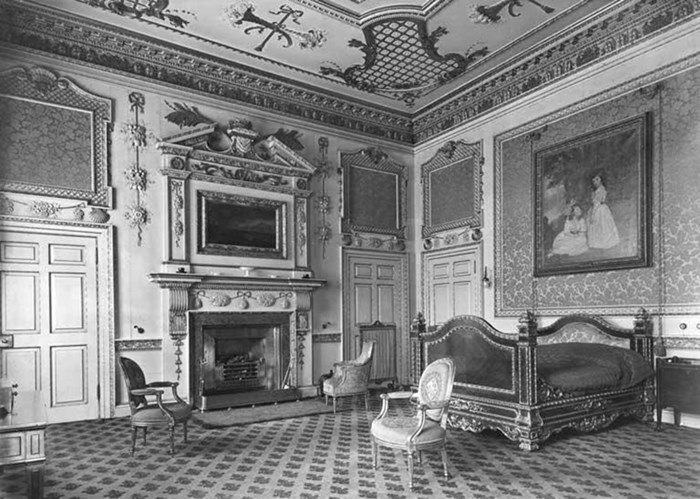
1. Duchess' bedroom
The Duchess' bedroom photographed for Country Living magazine in 1919 | Country Life Picture Library
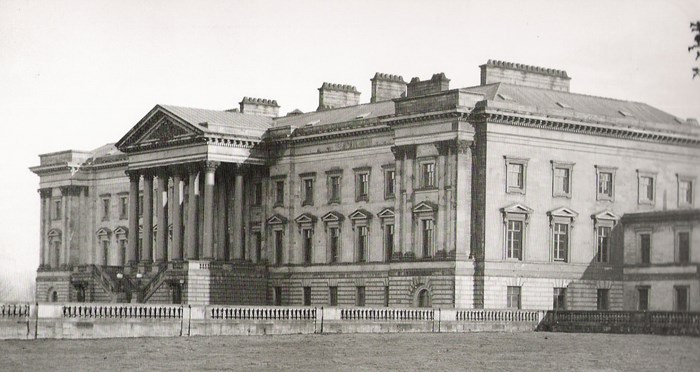
2. Hamilton Palace
The facade of Hamilton Palace in the early 20th century | Country Life Picture Library
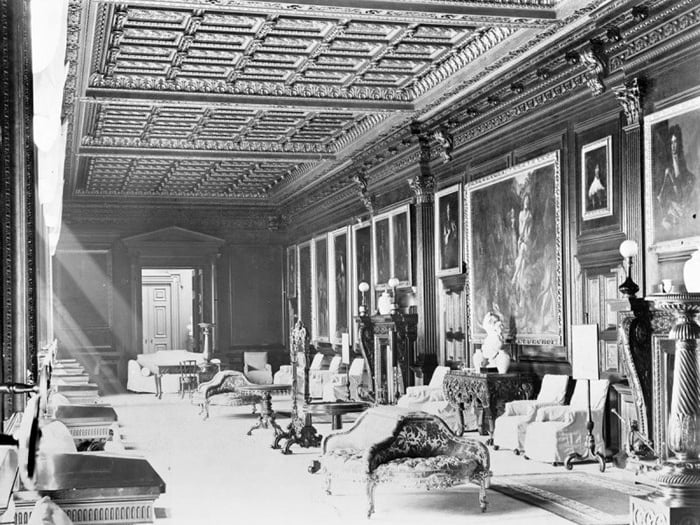
3. The Long Gallery
The Long Gallery ran the entire length of the first floor, showcasing the Palace's finest acquisitions. | Contributed
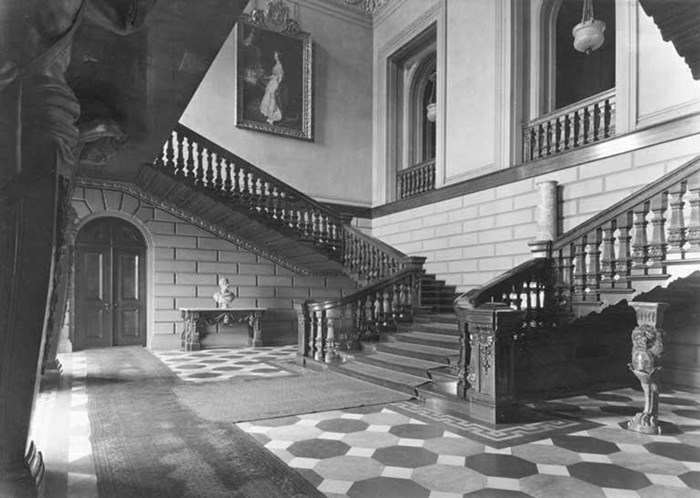
4. The Black Marble Staircase
The black marble staircase photographed for Country Living in 1919 | Country Life Picture Library