

Glasgow’s tramway era began in 1872 with horse-drawn carriages running along rails set into the city’s expanding streets. At the time, Glasgow was a booming industrial centre, and the need to move workers efficiently between densely packed tenements and factories was acute.
The early network was operated by private companies under municipal franchise, with routes radiating from the commercial centre toward growing suburbs, including Partick, Govan, and Dennistoun. Though slow and labour-intensive - each tram required multiple horses per day - the system quickly proved indispensable.
By the 1890s, pressures mounted for electrification. Horse traction struggled on Glasgow’s steep gradients and long distances, and cities across Europe were adopting electric traction. Glasgow Corporation, increasingly assertive in municipal services, resolved to modernise.
In 1894, Glasgow Corporation took control of the tramways, part of a broader municipal socialism movement that also encompassed gas, water, and housing. Electrification began in 1898, replacing horses with overhead-wire electric trams.
The transformation was rapid and comprehensive. New depots, power stations, and workshops were built; tracks were relaid; and distinctive double-deck electric tramcars, many constructed in Glasgow workshops, entered service.
By the eve of World War I, Glasgow operated one of the largest tramway systems in Europe. The network extended beyond beyond the city boundaries, linking Glasgow to towns and communities including Clarkston, Airdrie, Clydebank, Rutherglen and Coatbridge.
After the war, tramways reached their zenith. Glasgow Corporation Tramways ran hundreds of cars over dozens of routes, carrying millions of passengers annually. Tenement blocks and shopping streets grew along tram corridors as the footprint of the city grew.
Buses began supplementing tram services in the 1920s. Rising car ownership and road traffic slowed tram operations. Urban planning shifted in the 1950s with wider roads and motorways being seen as the future for transport and Glasgow was reshaped to accommodate more cars.
Maintaining track and overhead infrastructure began to be seen as a drain on municipal budgets. Depots closed, track mileage shrank and new tram construction ceased as Glasgow Corporation buses became more prevalent.
On 4 September 1962, Glasgow’s last tram ran from Dalmarnock to Auchenshuggle. Crowds gathered to witness the final journey of a system that had served generations. Glasgow became the last major Scottish city to abandon trams. You can still see some of the tramcars at the Riverside Museum of Transport.
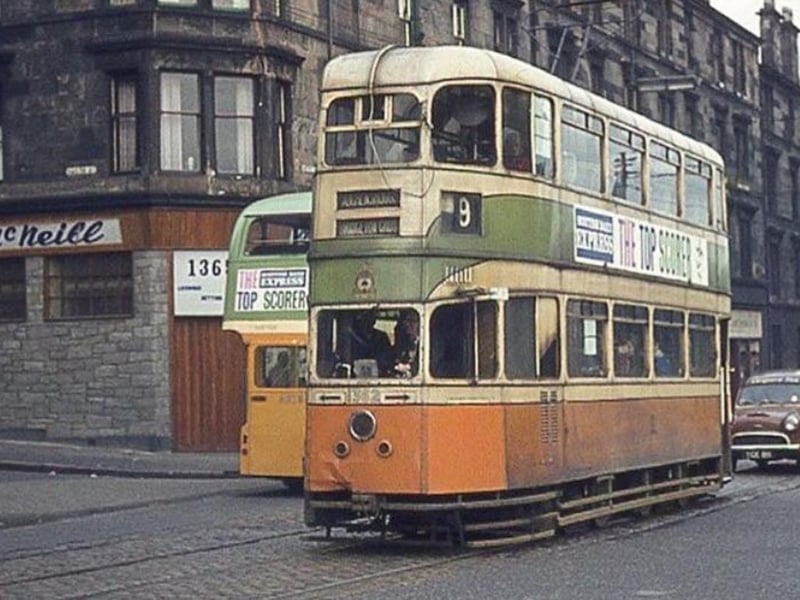
1. Glasgow trams
For many Glaswegians the Glasgow trams are still remembered with pride. | Supplied
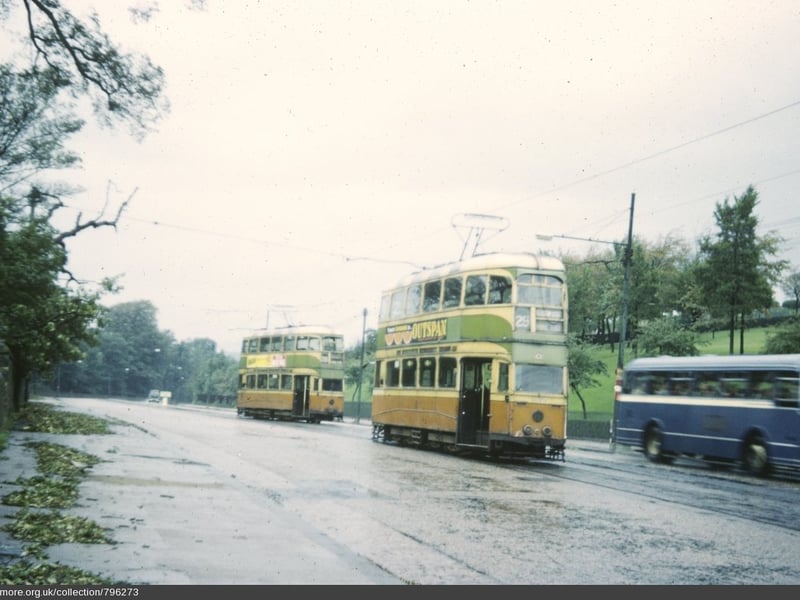
2. Maryhill Road
Glasgow Corporation tramcar in Maryhill Road. This view from the south-south-east, taken on 17 September 1961, shows two tramcars operating on the No 29 service from Maryhill to Tollcross. | © Copyright: HES (Reproduced courtesy of J R Hume)
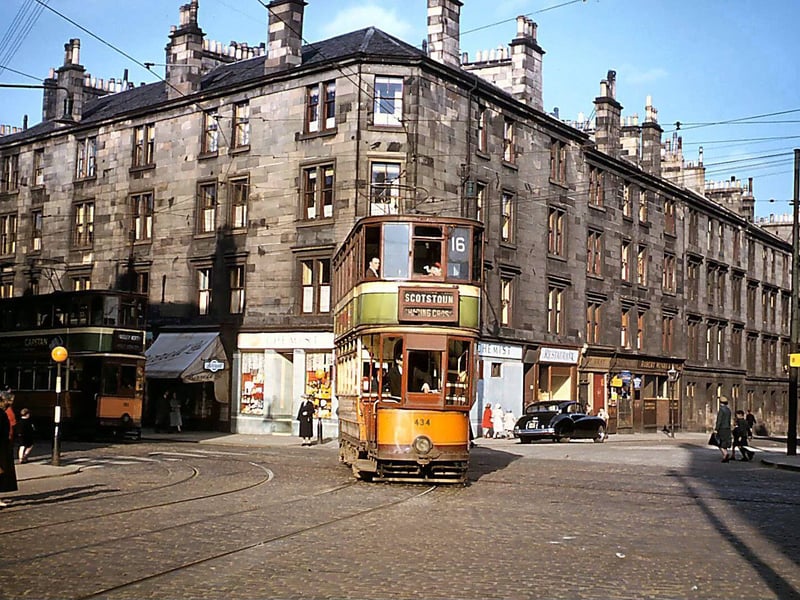
3. Glasgow Trams
Tramlines were a familiar part of Glasgow streets. | Ian Semple
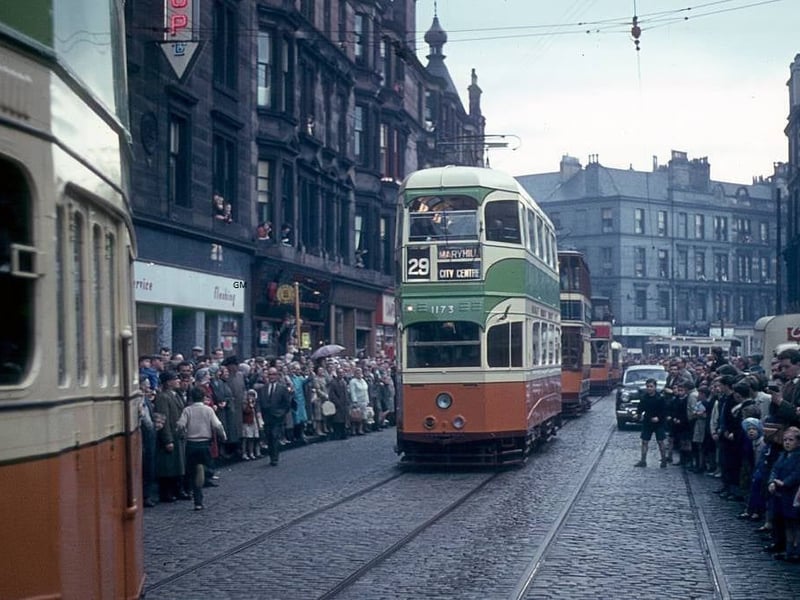
4. Bridgeton
Some of the last Glasgow trams in Bridgeton in 1962 | Glasgow Corporation Trams