
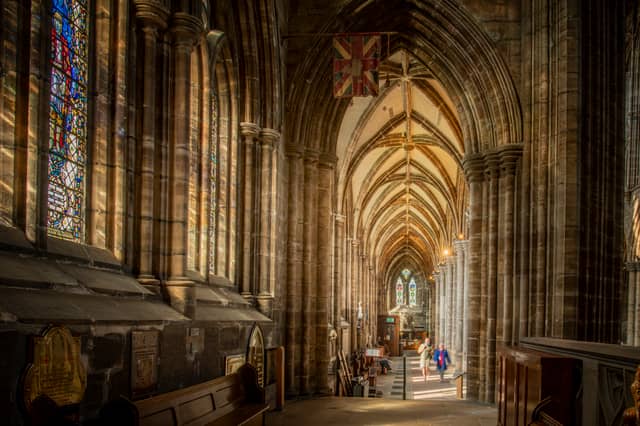


Long before shipyards, red sandstone tenements, and Victorian grandeur defined its streetscape, Glasgow was a modest settlement on the banks of the River Clyde, surrounded by neighbouring villages. The story of the city’s oldest buildings offers an opportunity to step back into these earlier centuries.
The origins of the city are closely tied to the figure of St Kentigern - better known as St Mungo - who, according to tradition, founded a church on the Molendinar Burn in the 6th century. Over time, this sacred site evolved into Glasgow Cathedral, the most enduring monument of the medieval city and one of the few Scottish cathedrals to survive the Reformation intact. Around it grew a bustling town, with merchants, craftsmen, and clergy shaping the streets of the High Street and Saltmarket. The medieval burgh was small in scale compared to Edinburgh or Stirling, but its location on a navigable river gave it long-term importance.
Surprisingly, despite centuries of urban expansion and demolition, several buildings from these formative centuries still survive. The likes of Provand’s Lordship (1471), a modest stone house once linked to St Nicholas’s Hospital, and Provan Hall (mid-15th century), a fortified residence tied to the bishops of Glasgow, provide rare glimpses into medieval domestic life. Crookston Castle, built around 1400 by the Stewarts of Darnley, was embroiled in turbulent periods of Scottish history.
These buildings are not just architectural curiosities; they are fragments of continuity linking present-day Glasgow its medieval past. The survival of such structures is remarkable given Glasgow’s transformation in later centuries. From the 18th-century mercantile boom through the 19th-century industrial revolution, vast swathes were rebuilt to accommodate new wealth and population growth. What little remains of the medieval and early modern city should be valued.
In exploring Glasgow’s oldest buildings, we encounter the foundations of a city whose identity has always been one of reinvention.
Sloans is included as it is assumed the network of buildings includes elements from the original structures that were here in the late 1700s. Curlers Rest has a history as a tavern that stretches back to the 1600s, the present building was built sometime in the 1800s. Similarly, The Finnieston on Argyle Street is housed in an old Drovers Inn, said to have been frequented by Rob Roy Macgregor, that was built in the early 1800s. The Saracen’s Head has a name that dates back to 1775 but the present day pub is not at the same location - you can read more about that here.
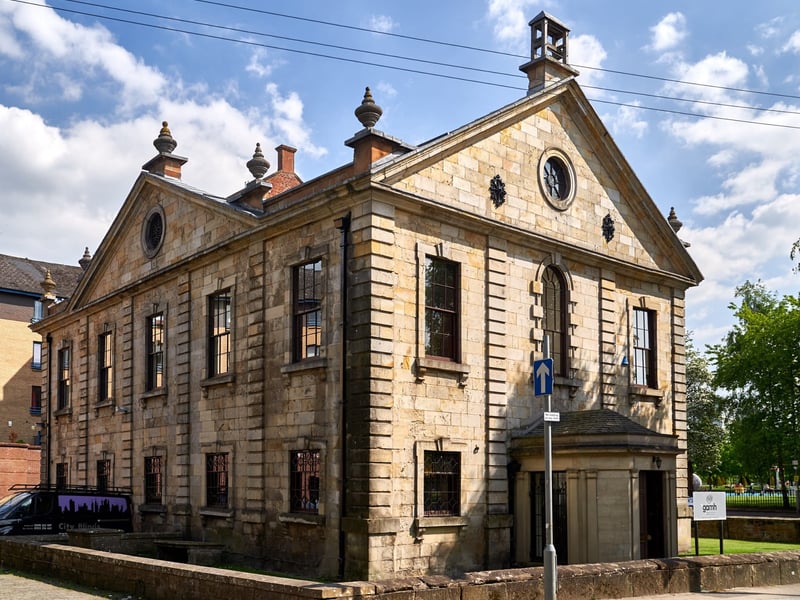
9. St Andrew's by the Green (1751)
This Georgian-style church was the first Episcopal congregation in the city and supported the Jacobite cause. St Andrews was nicknamed the "Whistlin' Kirk" or "Kist o' Whistles" for being the first church in Glasgow to have an organ for public worship. | Toshiepix
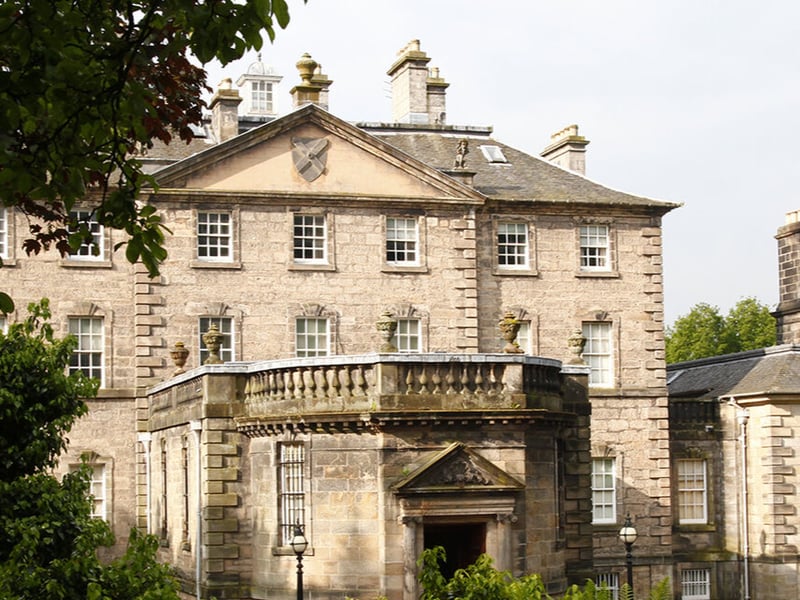
10. Pollok House (1752)
Pollok House was the family seat of the Stirling-Maxwell family until 1966, when it was gifted to the City of Glasgow. It is now managed by the National Trust for Scotland. The land had been family-held for centuries, but the current house was built in 1752, replacing earlier castles. The house and its significant collections were accumulated over generations and were eventually opened to the public after being bequeathed by the last family member, Dame Anne Maxwell Macdonald. | National Trust for Scotland
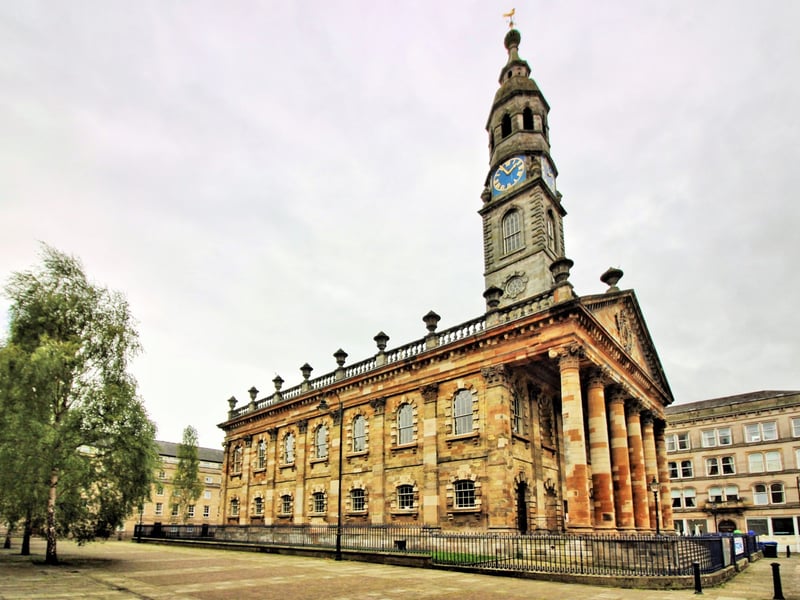
11. St Andrew's in the Square (1756)
Built between 1739 and 1756, the church became the centrepiece of the fashionable St Andrew's Square, which was home to Glasgow's wealthiest merchants in the 18th century. The building's design was inspired by St. Martin-in-the-Fields in London and features a facade of Corinthian columns and a tall tower. In December 1745, before the church's completion, the Jacobite army, led by Bonnie Prince Charlie, camped around the site, and within its semi-built walls, on its return from their failed battles in England. | Supplied
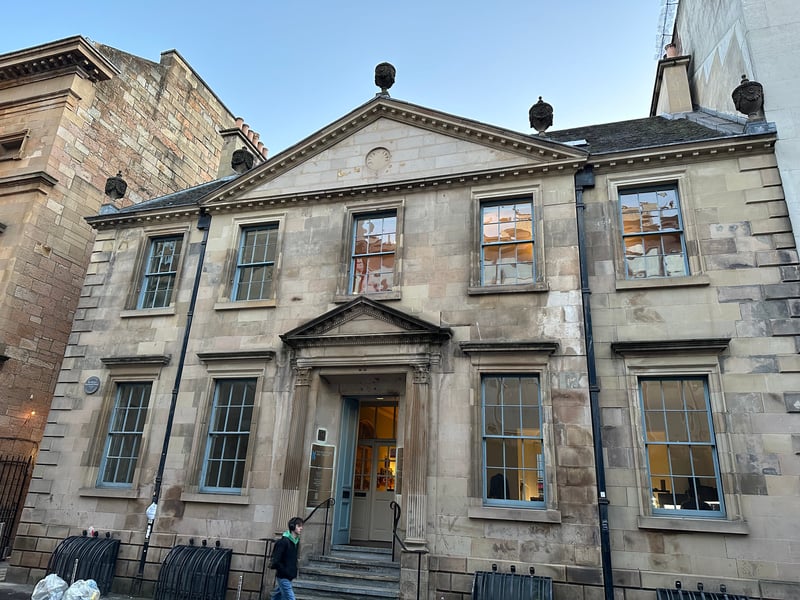
12. Baillie Craig’s House (1775)
The house known as Tobacco Merchants’ House, or Baillie Craig’s House, was originally designed by John Craig in 1775 as his own home, on land previously owned by John Miller, a wealthy maltman and namesake of the street. He had decreed strict building regulations on property built on Miller Street. In 1782 John Craig sold the property at 42 Miller Street to the family of Robert Findlay, a leading Glasgow tobacco merchant involved in the Trades House. | GW