

Held in Bellahouston Park, the exhibition was conceived both as a celebration of unity across the British Empire and as a catalyst for civic renewal during a period of social uncertainty in Scotland’s largest city. For six months, from May to October 1938, over 12 million visits were recorded.
The exhibition occupied roughly 175 acres of parkland transformed into a meticulously planned “Empire city.” Its layout combined modernist architectural principles with theatrical staging. Buildings were arranged along axial boulevards radiating from a central ceremonial zone, punctuated by water features, gardens, and plazas designed for processions and mass gatherings.
The dominant structure was the Tower of Empire, a 300-foot steel-framed observation tower that became the exhibition’s defining landmark. Illuminated at night and visible across much of Glasgow, it symbolized technological optimism and imperial reach. Though dismantled after the exhibition closed, it remains embedded in the city’s visual memory.
Architecturally, the exhibition showcased a distinctive fusion of Art Deco and streamlined modernism, reflecting international trends that informed events such as the Paris Exposition of 1937. Pavilions representing Britain’s dominions and colonies—Canada, Australia, New Zealand, India, South Africa, and others, were created in clean geometric forms, decorated with national motifs.
Entertainment zones included popular attractions: amusement rides, concerts, sporting events, and nightly illuminations that drew large crowds. The Tait Tower was the centrepiece of the 1938 Glasgow Empire Exhibition at Bellahouston Park. Designed by Scottish architect Thomas S. Tait, it embodied the exhibition’s modernist aesthetic and its message of technological progress.
In retrospect, the exhibition can be seen as a final flourish before geopolitical transformation: within a decade, decolonisation movements would accelerate across the empire.
Today, Bellahouston Park retains only subtle traces of the 1938 spectacle, a moment of civic gathering before global conflict would change the narrative of empire and modernity, for the city and for the world.
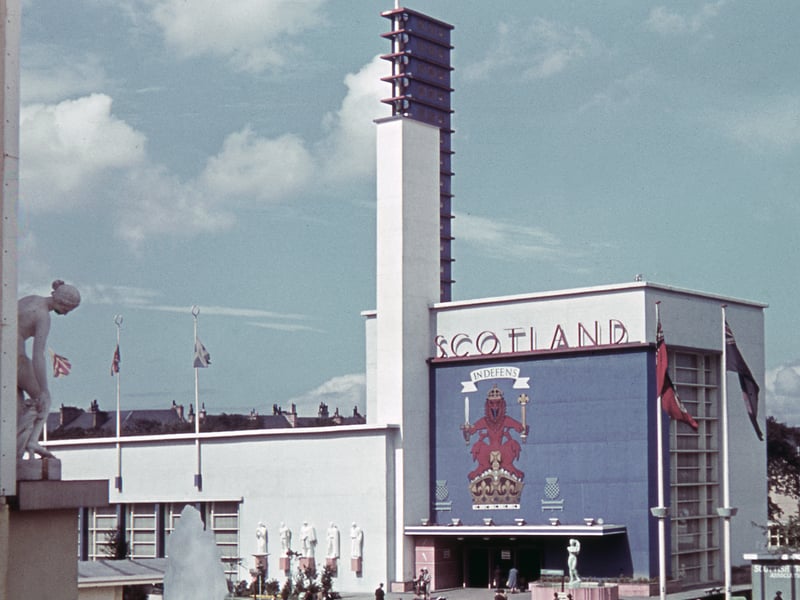
1. Scotland Pavilion
Scotland Pavilion, Empire Exhibition, Glasgow. Thomas S Tait of Sir John Burnet, Tait & Lorne, 1938 | Courtesy of Ian Johnston
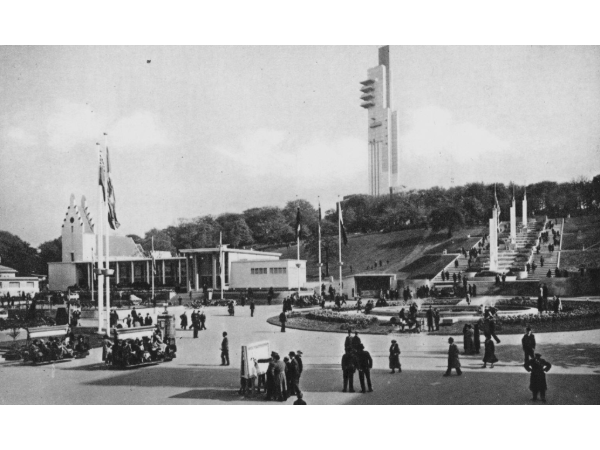
2. Tait Tower
The art-deco Tower of Empire, also named Tait Tower after its architect, Thomas S. Tait, was Scotland’s tallest building when it was built for the 1938 Empire Exhibition held at Bellahouston Park. It had three observation decks and could be seen from more than 100 miles away, But it was demolished within a year. | Glasgow City Archives
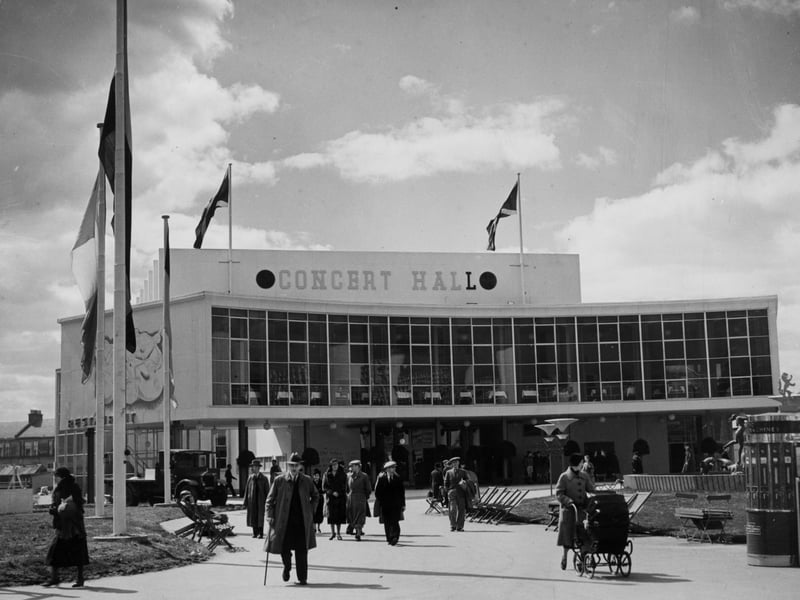
3. The Empire exhibition at the Concert Hall in Bellahouston Park, Glasgow, in Scotland.
The Concert Hall in Bellahouston Park as part of the Empire Exhibition. | Getty Images
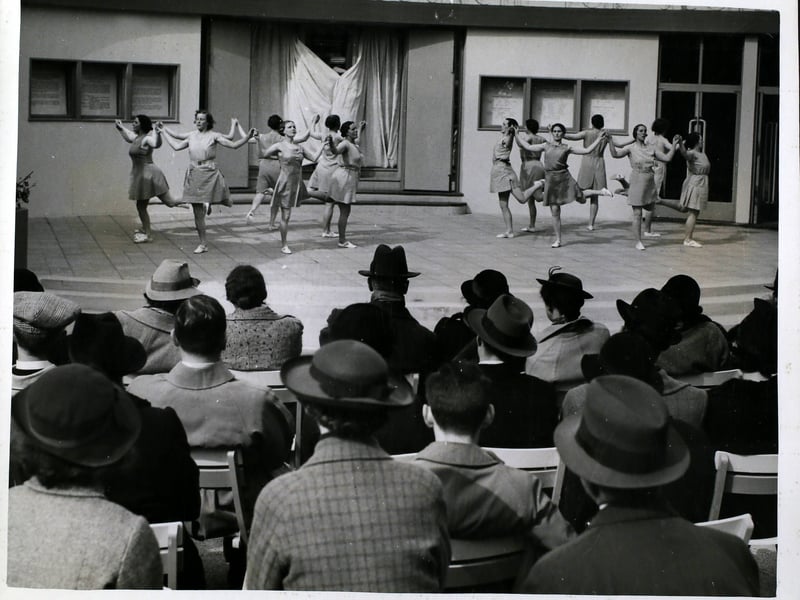
4. Keep-Fit
Keep-Fit at the Empire Exhibition, Open-air demonstrations of modern keep-fit exercises are given at the National Fitness pavilion at the Empire Exhibition. | Getty Images