

Glasgow in the 1800s saw a period of exceptional urban growth for the city. Building of infrastructure, warehouses, grand civic buildings and the expanding thoroughfares set out the template for modern Glasgow. Many of the streets have changed utterly since then, some retain their character from the 19th Century. These photographs and images of street scenes capture a time of change for the city.
The nineteenth century was a period of remarkable transformation for Glasgow, turning it from a regional town into one of the world's leading industrial cities. During the 1800s, Glasgow became known as the "Second City of the British Empire" because of its economic importance and rapid growth. The city benefited from expanding trade networks, technological innovation, and industrial development, which together helped shape its identity and influence.
One of the key factors behind Glasgow's growth was the Industrial Revolution. Industries such as shipbuilding, engineering, textiles, and coal mining expanded rapidly, creating thousands of jobs and attracting workers from across Scotland, Ireland, and beyond. The River Clyde became one of the busiest shipbuilding centres in the world, producing vessels that were exported across the globe. Glasgow's factories and workshops generated immense wealth, making the city a major centre of commerce and manufacturing.
However, the rapid expansion of Glasgow also created serious social challenges. As the population increased dramatically, many workers were forced to live in overcrowded tenement housing with poor sanitation and limited access to clean water. Disease, poverty, and harsh working conditions affected large sections of the population, particularly in the city's poorest districts. While industrialists and business owners often enjoyed great wealth, many ordinary workers faced long hours and difficult living conditions.
Despite these problems, the nineteenth century laid the foundations for modern Glasgow. New public buildings, educational institutions, and transport systems reflected the city's growing confidence and ambition. Glasgow became a centre of innovation, culture, and industry, influencing developments throughout Britain and beyond. By examining Glasgow in the 1800s, it is possible to understand how industrialisation transformed not only the city's economy but also the daily lives of its people, leaving a lasting impact that can still be seen today.
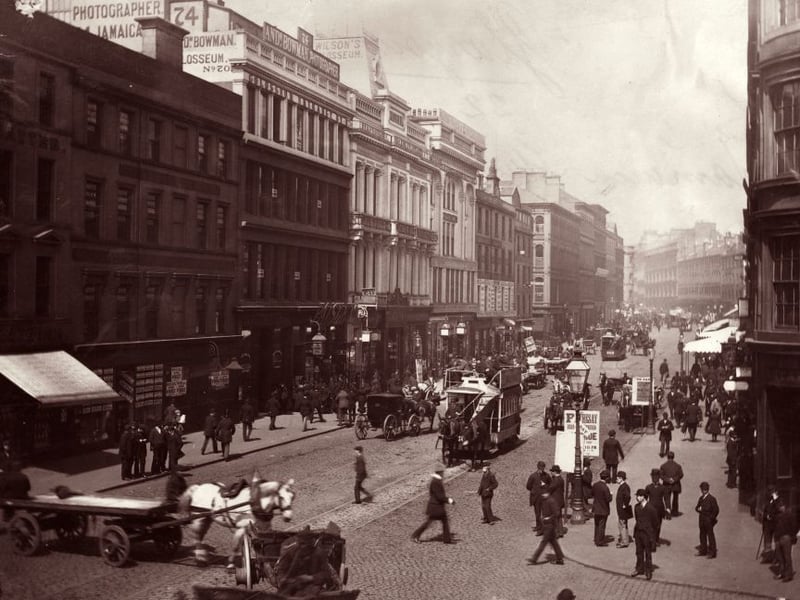
1. Jamaica Street
Circa 1895: Passers-by and horse-drawn traffic in Jamaica Street. | Getty Images
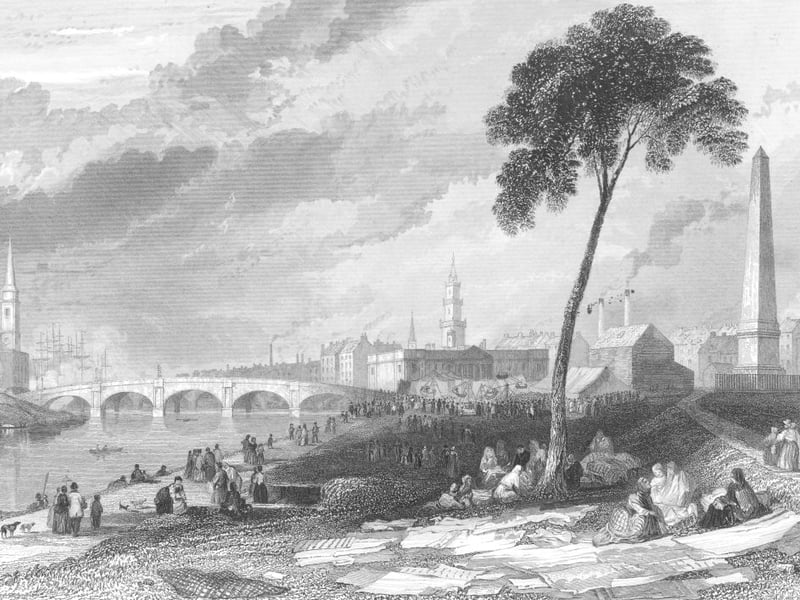
2. Hutcheson Bridge
Circa 1860: Women drying their linen near a fairground beside the Hutcheson Bridge over the River Clyde, a masonry arch bridge, designed by Robert Stevenson, grandfather to the author Robert Louis Stevenson. It was demolished in 1868 and replaced by the Albert Bridge, that still stands today. An engraving by T A Prior after a sketch by T H Haine from a painting by W Hervey. | Getty Images
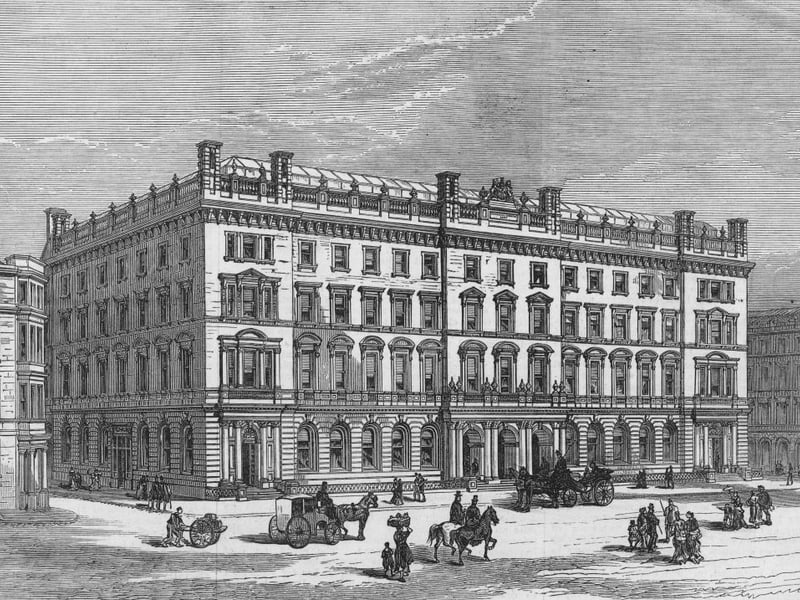
3. GPO Building
The new General Post Office buildings in Glasgow city centre, circa 1880, with an Italianate facade by Robert Matheson. The foundation stone was laid in 1876 by the Prince of Wales at the time, who later became Edward VII. | Getty Images
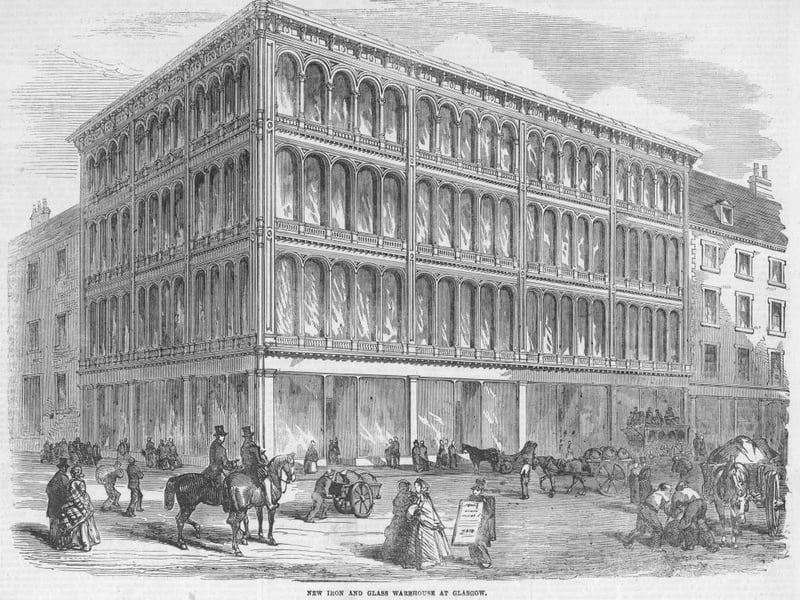
4. 15th March 1856: An iron and glass warehouse
Gardner's Warehouse on Jamaica Street from March 1856. It is the oldest completely cast iron fronted commercial building surviving in the UK, better known as the Crystal Palace bar. | Getty Images