

Perched on a hill beside Glasgow Cathedral, the Glasgow Necropolis is one of the most striking Victorian cemeteries in Europe. With more than 50,000 burials, 3,500 monuments, and sweeping views across the city, it stands as both a monumental graveyard and a record of Glasgow’s rise during the Industrial Revolution. Often described as a “city of the dead,” the Necropolis reflects the ambitions, wealth, and spirituality of nineteenth-century Glasgow.
The Necropolis was conceived during a period of urban growth in Glasgow. By the early nineteenth century, the city’s overcrowded churchyards had become both unsanitary and insufficient for a rapidly expanding industrial population. Inspired by the great garden cemeteries of continental Europe, especially Père Lachaise Cemetery in Paris, Glasgow’s merchants and civic leaders envisioned a modern burial ground that would combine beauty, order, morality, and commercial practicality.
The land originally formed part of the Wester Craigs estate and later became known as Fir Park, an arboretum overlooking the cathedral precinct. In 1831, the Merchants’ House of Glasgow formally backed the creation of the cemetery. John Strang, Chamberlain of the Merchants’ House, argued that the site would become a dignified and sanitary burial place “respectful to the dead” and beneficial to the living.
Architectural and landscape competitions were held, and the project ultimately evolved into a landscaped Victorian cemetery with winding paths rather than rigid grid lines. The design deliberately used the dramatic topography of the hill: grand monuments climb upward toward the summit, where the towering John Knox monument, which predates the Necropolis, dominates the skyline. The cemetery officially opened in April 1833.
The famous Bridge of Sighs, designed by David Hamilton and completed in 1836, connected the cathedral precinct to the Necropolis. Funeral processions crossed the bridge on their way to burial, giving it its evocative name.
The Glasgow Necropolis was intended as a monumental sculpture park. Wealthy merchants, industrialists, politicians, architects, and ministers commissioned elaborate tombs designed in Gothic, Classical, Egyptian, and Celtic Revival styles.
The cemetery’s monuments reflected Victorian attitudes toward death and remembrance. Angels, broken columns, urns, Celtic crosses, and allegorical figures symbolised grief, resurrection, hope, and eternity.
The cemetery also contains memorials to war dead, nurses from the Glasgow Royal Infirmary, and victims of industrial disasters.
One especially significant feature is the early Jewish burial ground established in 1832. At the time, Jewish burials were prohibited in Christian graveyards, making this section an important part of Scottish Jewish history.
The dramatic Gothic atmosphere of the Necropolis has made it a popular filming location. Its steep pathways, imposing statues, and skyline views create a cinematic setting.
Most famously, the Necropolis appeared in The Batman starring Robert Pattinson. The cemetery doubled as Gotham City in scenes involving Batman and Catwoman near the end of the film. Motorcycle sequences were filmed around the Necropolis and the Bridge of Sighs.
Today the Glasgow Necropolis is maintained by Glasgow City Council with support from The Friends of Glasgow Necropolis, a preservation charity founded in 2005. The organisation conducts restoration work, historical research, and guided tours.
Here are some of the famous Glasgow figures that are buried in the cemetery.

1. Hugh Tennent
Hugh Tennent Tennent the great-great-grandson of the founder of the Wellpark Brewery (now known as the Tennent's brewery) is buried in Necropolis, along with his family. | Contributed
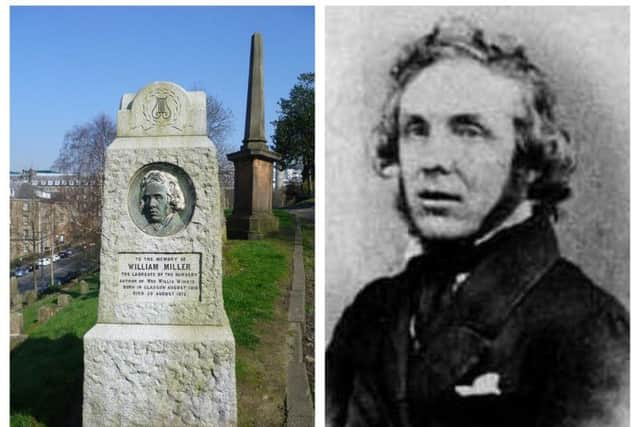
2. William Miller
William Miller, the writer of popular childrens poem 'Wee Willie Winkie', is buried in an unmarked plot in the Necropolis, though a memorial stands commemorating him today. | Contributed
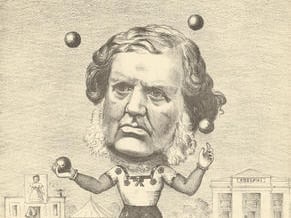
3. David Prince Miller
David Prince Miller, founder of Adelphi Theatres across Glasgow, Dumbarton and Lanarkshire. He invented the idea of reduced Shakespeare plays, and ran shows that lasted 20 minutes. | Contributed
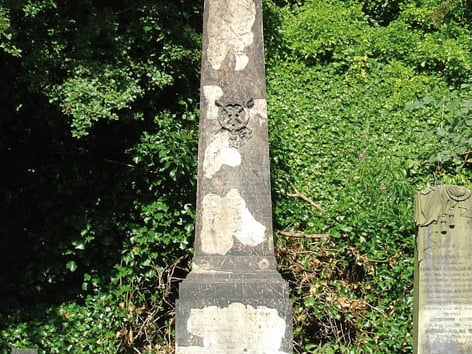
4. Francis Foucart
Francis Foucart settled in Glasgow as a veteran of the Napoleonic Wars. He was a fencing master and teacher - going on to educate students in the art of gymnastics at the University of Strathclyde. | Contributed