

For more than a century, the name Springburn was closely linked with locomotive production, heavy industry and skilled engineering, helping to shape not only the economy of Glasgow but also the identity of the local community itself.
Before the arrival of the railways, Springburn was little more than open countryside dotted with farms, cottages and small workshops. Its transformation began during the nineteenth century, when Glasgow was expanding rapidly as a centre of trade and manufacturing.
The growth of the railway industry created huge demand for engineering works, and Springburn’s location beside major rail routes made it an ideal site for development. By the late Victorian era, enormous locomotive works dominated the district, including the famous North British, Caledonian and St Rollox railway works. Thousands of men were employed in constructing engines that would be exported across Britain and throughout the world.
The rise of industry also transformed the social character of Springburn. Workers and their families arrived from many different parts of Scotland and Ireland in search of employment and stability. Rows of tenements were built to house the growing population, while churches, schools, libraries and community halls became central to everyday life. Despite often difficult living and working conditions, strong community bonds developed, creating a district known for its resilience, political awareness and working-class pride.
During the twentieth century, however, Springburn experienced major economic and social change. As Britain’s railway industry declined, many of the great engineering works closed or reduced operations, leading to unemployment and population loss. Urban redevelopment altered much of the district’s appearance, and many traditional industries disappeared altogether.
Today, reminders of Springburn’s industrial heritage can still be seen in surviving buildings, museums and community projects dedicated to preserving its past. The story of Springburn is the story of generations of ordinary people whose labour, ambition and determination helped shape modern Glasgow and left a lasting mark on Scotland’s industrial history.
Have a look at these photographs capturing moments from Springburn’s past.
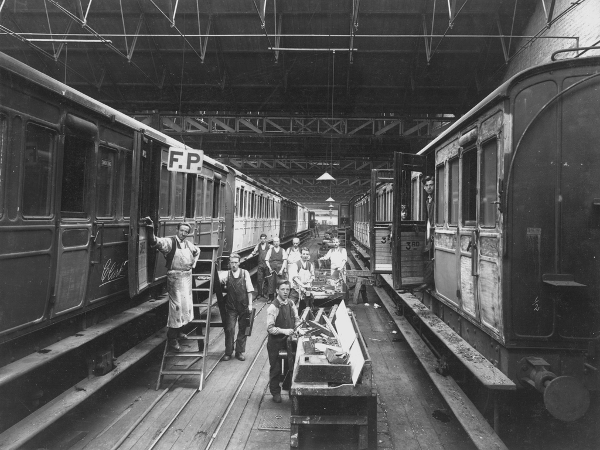
1. Cowlairs, 1921
Men at work at Cowlairs Locomotive Works in Springburn | Virtual Mitchell
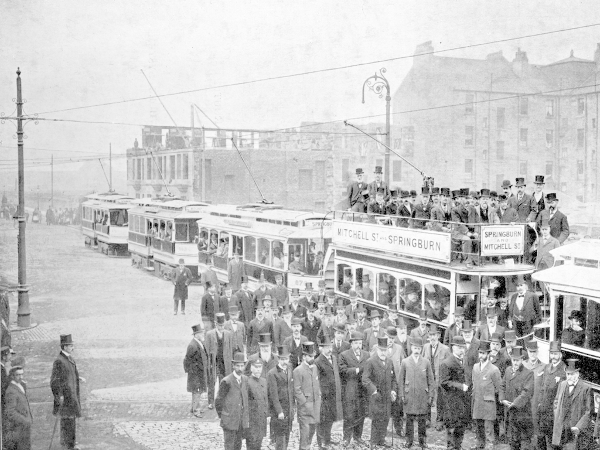
2. Electric trams, 1898
The opening day of the electric tramcars, members of Glasgow Corporation and esteemed guests board the new cars | Virtual Mitchell
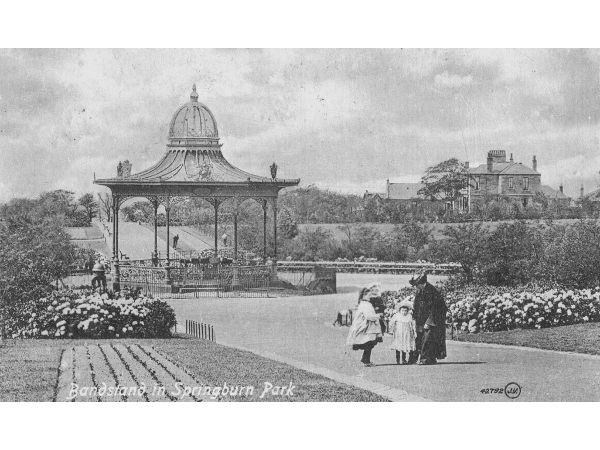
3. Bandstand, c1910
The bandstand at Springburn Park in the early 20th century | Contributed
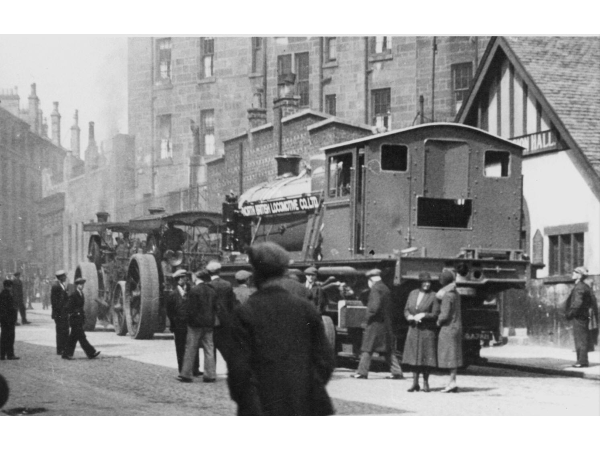
4. You can't park there mate, Springburn, 1930
A North British Locomotive engine being transported through the streets of Springburn | Contributed