

Glasgow’s first tram route opened on 19 August 1872, running between St George’s Cross and Eglinton Toll. Under the provisions of the Glasgow Street Tramways Act 1870, Glasgow Corporation owned the tracks but was not permitted to operate tram services directly. Instead, services were provided by the Glasgow Tramway and Omnibus Company using horse-drawn trams. Over the following two decades the network expanded steadily, connecting growing residential and industrial districts across the city.
A major change occurred on 1 July 1894 when Glasgow Corporation took over operation of the system, creating Glasgow Corporation Tramways. The municipal takeover made Glasgow one of the first cities in the UK to own and operate its urban transport network directly. At the time, the system was already carrying tens of millions of passengers each year.
The next significant development was electrification. An experimental electric route between Springburn and Mitchell Street opened on 13 October 1898 and proved successful. The Corporation subsequently converted the network from horse traction to electric power, with the final horse-drawn services withdrawn by April 1902. Electrification increased speed, capacity and reliability, allowing the tramway to expand further.
By the early twentieth century Glasgow possessed one of Europe’s largest tram systems. By 1922 the network exceeded 100 route miles and was served by more than 1,000 municipally owned trams. The distinctive Glasgow trams became a familiar feature of the city’s streets and an important means of transport for workers, shoppers and visitors.
After the Second World War, however, transport policy increasingly favoured buses and trolleybuses. Route closures began in 1948, and the network gradually contracted. The final tram services operated on 4 September 1962, with the system officially closing. Glasgow thereby became the last city in the UK to abandon its traditional tramway network. Large crowds gathered to witness the final procession of trams through the city.
Although the trams disappeared from Glasgow’s streets, preserved vehicles survive in museums, and former tramway buildings, including the Coplawhill workshops, continue to serve the city in new roles.
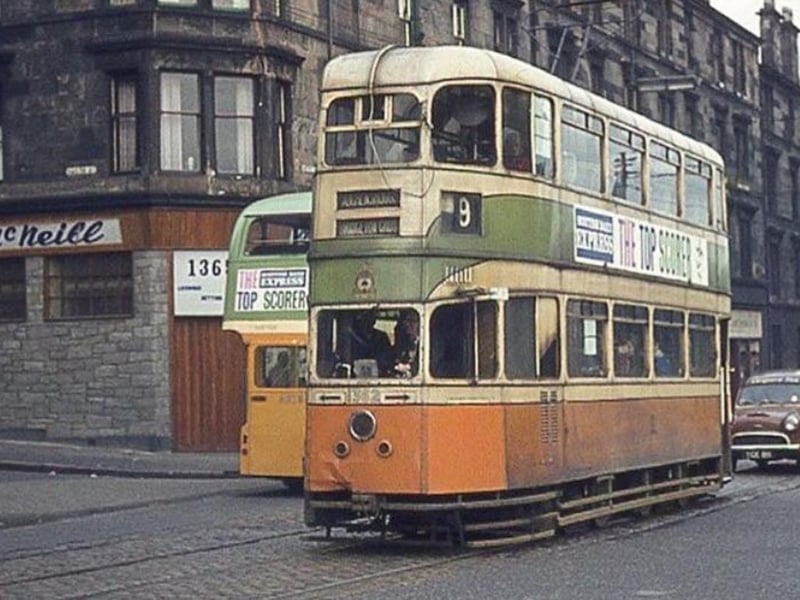
1. Glasgow trams
For many Glaswegians the Glasgow trams are still remembered with pride. | Supplied
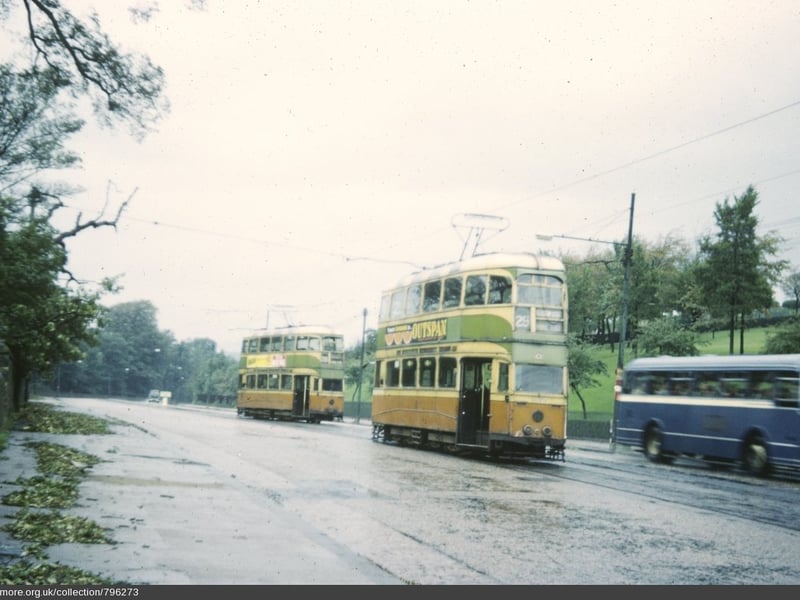
2. Maryhill Road
Glasgow Corporation tramcar in Maryhill Road. This view from the south-south-east, taken on 17 September 1961, shows two tramcars operating on the No 29 service from Maryhill to Tollcross. | © Copyright: HES (Reproduced courtesy of J R Hume)
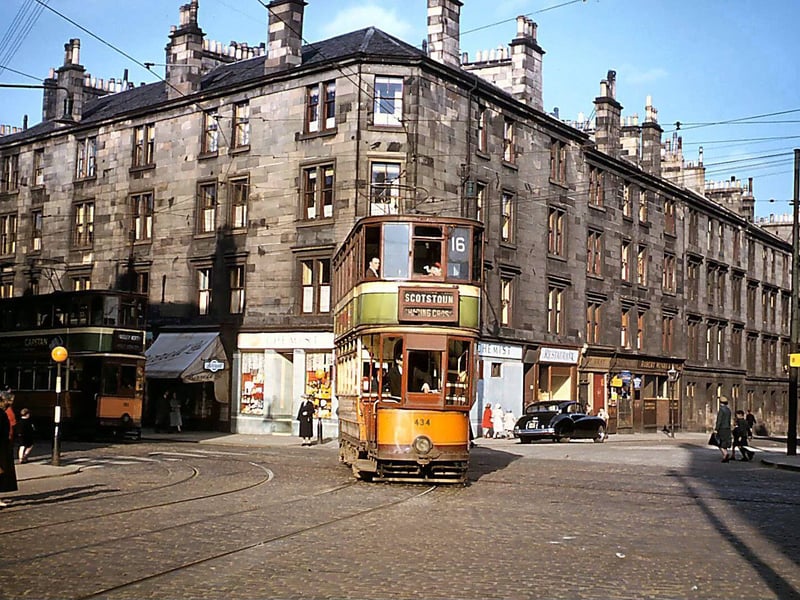
3. Glasgow Trams
Tramlines were a familiar part of Glasgow streets. | Ian Semple
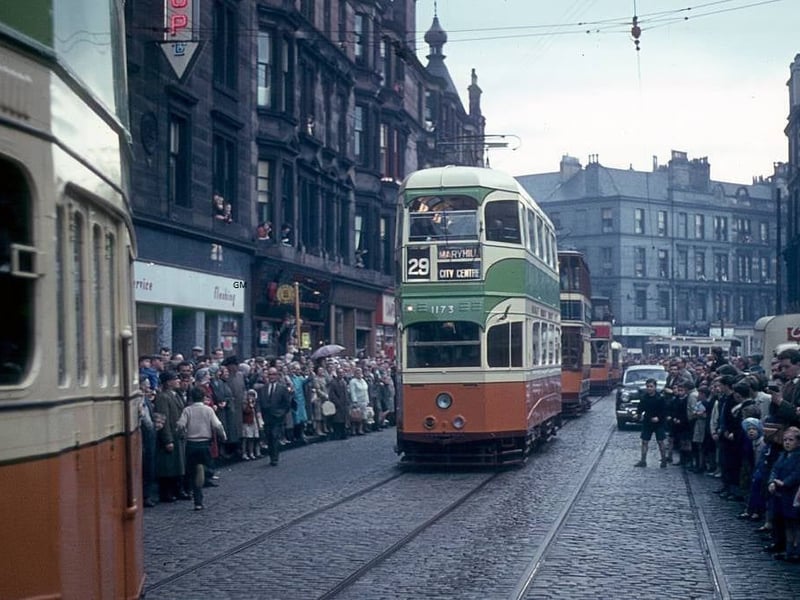
4. Bridgeton
Some of the last Glasgow trams in Bridgeton in 1962 | Glasgow Corporation Trams