

The origins of Trongate date back to medieval Glasgow, when the street was known as “St. Thenew’s Gait,” meaning “the way to St. Thenew’s.” St. Thenew was the mother of St. Mungo, Glasgow’s patron saint. During the late fifteenth and early sixteenth centuries, the street became associated with the “tron,” a public weighing beam used to measure goods entering the burgh for taxation and trade. From this device came the name “Trongate,” combining “tron” with the Scots word “gait,” meaning road or way.
As Glasgow developed into a major mercantile centre, Trongate became one of the city’s principal commercial streets. Merchants, traders, and craftsmen established businesses there, helping transform Glasgow into an important trading hub. By the eighteenth century, elegant townhouses, taverns, and shops lined the street, reflecting the wealth generated by transatlantic trade, particularly the tobacco trade with Virginia. Contemporary sketches from the 1770s show a bustling thoroughfare crowded with carts, pedestrians, and merchants conducting business.
One of the street’s most recognisable landmarks is the Tron Steeple, situated near Glasgow Cross. Originally part of the Tron Church founded in 1525, the steeple survived a devastating fire in 1793 that destroyed much of the church itself. The rebuilt church later evolved into the modern Tron Theatre. The steeple remains a visible reminder of the city’s medieval and religious heritage.
During the nineteenth and twentieth centuries, Trongate adapted to the changing city. Tramlines once ran along the street, linking the eastern districts with the city centre until the tram system closed in 1962. Entertainment venues also flourished there, most notably the Britannia Music Hall, later known as the Britannia Panopticon. Opened in the 1850s, it is recognised as one of Britain’s oldest surviving music halls and hosted generations of performers and audiences.
In recent decades, Trongate has become closely associated with Glasgow’s cultural revival. Regeneration of the Merchant City area transformed former warehouses and neglected buildings into apartments, galleries, cafés, and arts venues. Developments such as Trongate 103 now house creative organisations including galleries, photography studios, and performance spaces.
Take a wander through Trongate’s history in the pictures below.
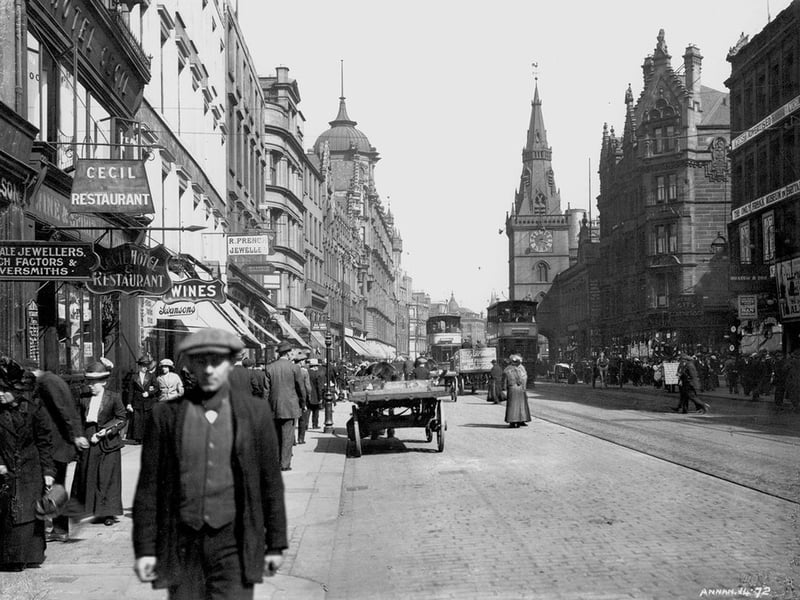
1. A view of Trongate (1914)
A busy day on Trongate | Glasgow City Archives
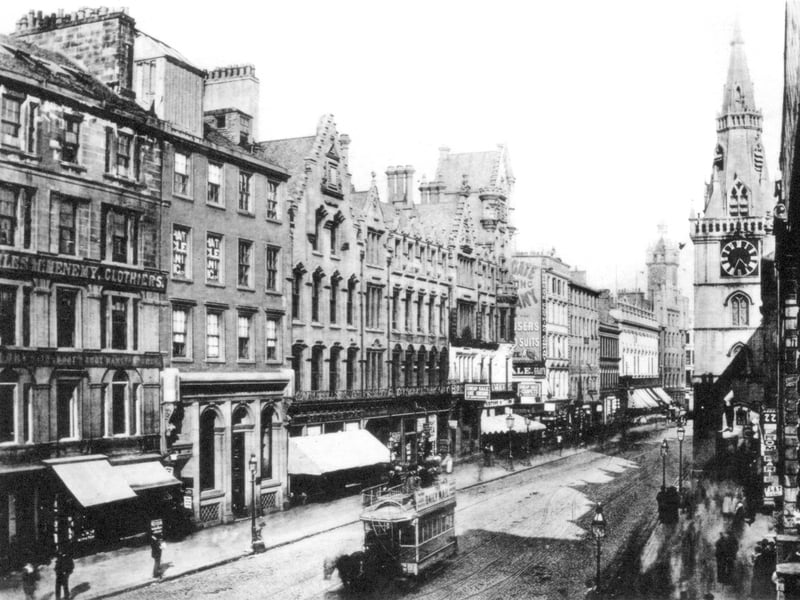
2. Trongate
Trongate in the 1890s | Contributed
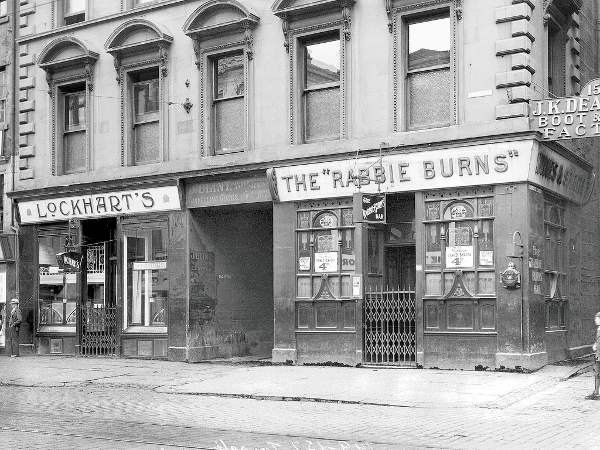
3. The Rabbie Burns (1938)
The Rabbie Burns on 121-189 Trongate. | Virtual Mitchell

4. Trongate
April 1935: A view of the Trongate in April 1935 with the clock tower still standing. | Getty Images