
EU EES: What the EU's new border system could mean for travellers from Glasgow Airport

Travellers flying from Glasgow Airport might be faced with increased wait times when visiting Europe as border changes come into force.
Anyone planning to swap the dropping temperatures in Glasgow for some autumn or winter sun may be faced with changes in how they cross the border. Here’s what the introduction of the EU’s new Entry Exit System could mean if you’re jetting off this weekend.
What is EES?
EES is the EU Entry Exit System. It was launched officially on October 12 after a series of delays between 2022. The system will be phased in over a period of six months, with the hope that it will be fully operational by 10 April 2026.
It will register travellers from non-EU countries, including the UK, each time they cross the border into or out of the EU and four Schengen area states (Norway, Iceland, Switzerland and Lichtenstein).
It records the person's name, travel document data, biometric data (fingerprints and captured facial images) and the date and place of entry and exit. All of this is seen as a means to replace in-person border stamping.
It is thought that it will allow an automatic detection of travellers who have exceeded the maximum duration of their authorised stay.
When did it come into effect?
The EES was officially launched on October 12, but the roll out will take place over the course of the next six months. Different airports are taking different approaches to the roll out, with some waiting until closer to the April deadline to fully implement the system, while others, such as Croatia, will increase the number of hours they collect data throughout the coming months.
With so many different approaches, it’s worth checking out exactly when your destination plans to implement the change.
Some EU/Schengen area countries are exempt however, namely Cyprus and Ireland.
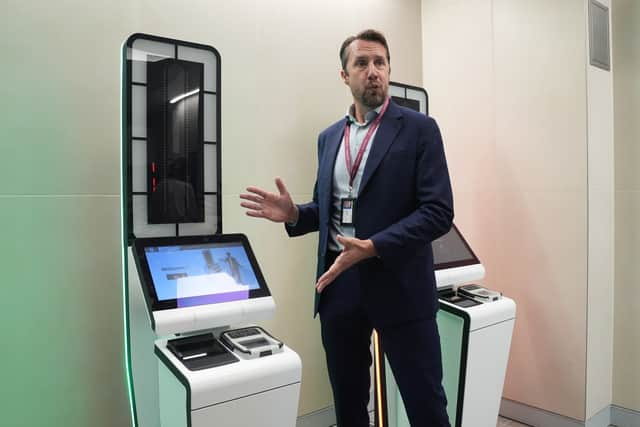

How does it work?
Travellers who have ever gone through the electronic passport gates at Glasgow Airport will be met with a fairly familiar sight.
When you’ve arrived at your destination, or are leaving, you will be greeted with an EES Kiosk terminal. You will place your passport face down and you’ll have your picture taken. What’s different though is that you will then have your fingerprints scanned.
You’ll also need to answer a series of questions about your travel. You’ll be asked whether you have proof of accommodation, a return, you have sufficient “means” to cover your stay and whether you have medical insurance.
Children under 12 will not be fingerprinted, however they will be photographed and their digital records created.
The EU Border Agency, Frontex, has developed a smartphone app which they say will help reduce some of the expected disruption. The roll out of the app is limited though.
The first confirmed go-live will take place in Arlanda Airport Sweden this year. Further pilots are planned for selected major Dutch, French and Italian entry points in 2026. Portugal and Greece and Hungary have expressed interest in the implementation of the app.
The data gathered will be deleted three years after the last trip to a country using the EES system.
What could it mean for travellers?
Travellers are being warned that they could experience longer wait times. But UK ministers say they are confident that investment in ports and operators will see the infrastructure and systems in place before full roll out.
Minister for Border Security and Asylum, Alex Norris, said: “We recognise that EES checks will be a significant change for British travellers, which is why we have worked closely with our European partners to ensure the rollout goes as smoothly as possible.
“The UK and EU have a shared objective of securing our borders and these modernisation measures will help us protect our citizens and prevent illegal migration.”
Minister for Aviation, Maritime and Decarbonisation, Keir Mather, said: “We’ve backed our ports and operators with £10.5 million to help them get ready for the EU’s new Entry/Exit System, ensuring they have the infrastructure and systems in place to manage the changes.
“Our priority is to minimise disruption for travellers and hauliers, particularly at our busiest border crossings. We’ll continue working closely with European partners and local resilience forums to keep traffic flowing and journeys smooth.”