
Postcard Records: The story of the Glasgow record label that transformed the UK's DIY music scene

The story of a small DIY label that would shape the Scottish music scene for decades to come.
- It had a meteoric rise and then a sudden fall, owing to its own incredible success.
- In the early 1980s, Postcard Records rewrote some of the rules when it came to running a DIY record label.
- Decades later, the influence of the label is still being felt by up-and-coming artists carving out their own careers - without mainstream help.
The world of music is an odd one - constantly in flux and constantly the source of both a means of soothing a savage beast, while other times causing nothing but a toothache/heartache for such a beast in question.
It should be simpler, right? You write a good song, you release a good song, that song gets played on the radio and naturally, to quote Fang, the “money will roll right in”. But it’s far from that simple, and for those chasing down the allure of mainstream success, so much more than just the right song.
It’s the aesthetic - from the packaging to the “aura” (as the kids call it these days) of an act, be it their demeanour, their fashion choices or simply what they have to say on a matter, good or bad.
Then it’s also good luck, finding an unearthed gem from a local music scene and seeing something no one else seems to see, be it not their kind of music or, on odd occasions, “not what we’re looking for at this stage,” owing to those earlier-mentioned fluctuations in music trends and interests.
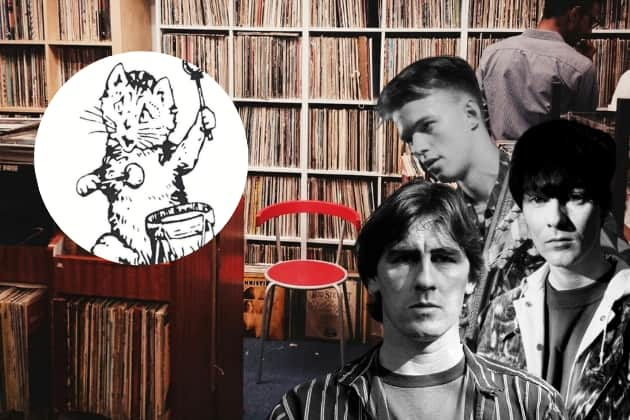

So what do you do if you’re banging your head against the proverbial wall with musicians you think deserve more attention than they are/were currently getting? Well, you start a record label, of course - I did it, Alan McGee has done it, and then there is the curious case of Glasgow’s Postcard Records.
Who, a younger audience may ask? Firstly, ask an older family member. They are the label who gave us the likes of Josef K and Orange Juice, influenced the fashion at the time that infiltrated south of the border, and in a brief amount of time shut up shop; victims of their own A&R successes and perhaps not wanting to take the love of the music they released to another level - that of long term contracts and all the “fun” that comes with signing to a major label.
This is the story of one of DIY’s most important labels in the UK music scene, not just Scotland, and it all started as things usually start - apathy towards the current music scene.
Forming Postcard Records
Postcard Records was founded in 1979 by Alan Horne, an ambitious young Glaswegian who was not a musician himself but was a fervent music fan and aspiring impresario - as is so often the case with an independent record label (I speak from experience.) They famously ran the business out of Horne's "tenement bedroom," and he stored all the business paperwork in a sock drawer, by many accounts.
The label was a collaborative project with Edwyn Collins, the lead singer and co-founder of the band Orange Juice, which became an act of rebellion against the prevailing music scenes of the time. Horne and Collins wanted to create a distinct sound that was an "antidote" to punk's bleakness and the slickness of New Romanticism; their vision was a more intellectual, guitar-driven pop sound inspired by artists like The Velvet Underground.
Horne saw his role not as a label executive, but as a "punk rocker" and a "fan first" who wanted to create a label that felt accessible and authentic. The label's ethos was deliberately anti-establishment, with a self-aware, witty, and chaotic charm.
This righteous energy for some was considered arrogance, but for a former associate of Horne, Paul Morley, the “arrogance comes from a love for pop music and its importance," while Horne himself stated that the label’s music was an attempt to recapture “an optimism gone from popular music and culture in general since the end of the nineteen-sixties."
The first release, Orange Juice's ‘Falling and Laughing’ in 1980, was a joint effort, with Horne and the band members financing it themselves. To get the record noticed, Horne and Collins would ambush journalists and DJs in London, shoving the records into their hands.
This audacious, hands-on approach was a core part of their identity and one that many aspiring labels would attest was a means to justify the ends. Again, I talk from experience...
Postcards From The Top - the success of Postcard Records
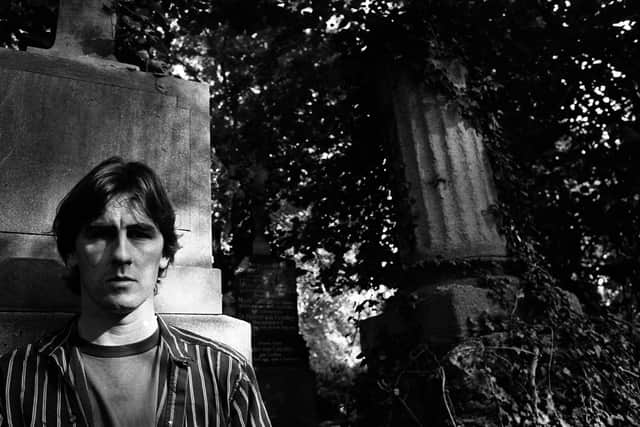
Postcard Records' success was as immediate as it was surprising. In just a year and a half, the label went from a bedroom operation to a national tastemaker, a testament to its unique vision and the sheer quality of its releases. While the label was active, its core roster consisted of just four main bands, but this small group created a sound and aesthetic that would become the blueprint for indie pop for decades to come.
They became somewhat the “accidental” architects of a movement; acts like Orange Juice, Josef K, Aztec Camera, and The Go-Betweens from Australia became either household names or those types of acts that were on the cusp of mainstream acceptance.
Postcard's artists pioneered a new sound that was a direct counterpoint to the music of the time. While others embraced the loud aggression of punk or the polished synths of New Romanticism, Postcard's bands championed a unique style that was both jangly and melodic.
The "Postcard Sound", as it came to be known, was a fusion of '60s pop sensibilities and '70s post-punk edge. Orange Juice, for instance, combined a Velvet Underground-esque guitar jangle with a soulful, disco-infused bassline. Josef K offered a darker, more jarring sound, while Aztec Camera introduced a more heartfelt, intricate pop style.
This variety showed that "The Sound of Young Scotland" was far from one-note, with the label’s output full of witty, intellectual lyrics and a sense of optimism that was missing from much of the British music of the era.

But their influence wasn’t just on record; it was also in their aesthetic. The bands rejected the punk uniform for a more dapper, intellectual style—think floppy fringes, sailor shirts, and suede boots. This "indie look" was a defiant statement in itself and was soon emulated on campuses across the UK.
The label's ethos also had a massive impact, with its joyful, non-conformist movement that helped reinvent Glasgow's reputation as a cultural hub. It proved that a label could be successful without a major corporate machine, relying instead on creativity and a genuine passion for pop music. As one commentator put it, the label effectively "invented what would become indie in the 1980s."
The label’s influence on the C86 movement is undeniable, so much so that the term "jangly guitars" is now synonymous with the genre. The C86 cassette, a compilation given away by the British music magazine NME in 1986, became shorthand for a new wave of bands who directly inherited Postcard's sound and DIY aesthetic.
Bands from this era, like The Pastels and an early version of Primal Scream, were listening to Orange Juice and Josef K. The C86 movement, which was celebrated for its lo-fi, melodic pop, was a direct continuation of the sound Postcard had pioneered years earlier.
Postcards from the Edge - the decline of Postcard Records
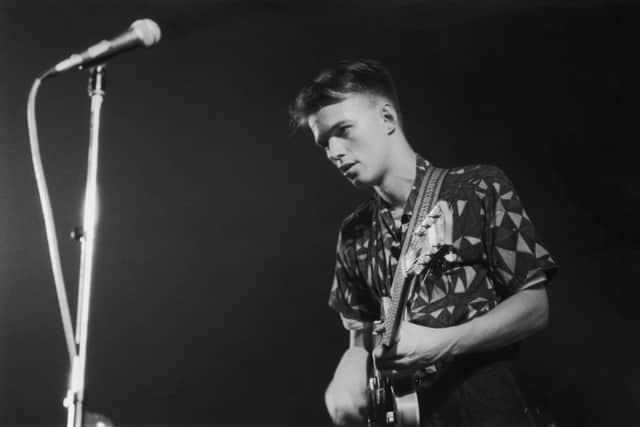
But their downfall was as swift and dramatic as its rise, and the reasons for its demise are ironically linked to its very success. After just 18 months, the legendary label had effectively imploded, leaving behind a brief but unforgettable legacy.
The central reason for the label's collapse was that its biggest bands were too good to stay small. The massive critical acclaim and buzz surrounding Orange Juice and Aztec Camera quickly attracted the attention of major record labels in London. While Alan Horne had grand ambitions, he also had a confrontational personality and a laissez-faire attitude toward business. This friction with distributors and other industry figures made it difficult to handle the growing demand.
In 1981, Orange Juice left Postcard for a major deal with Polydor, and Aztec Camera soon followed, leaving the small independent label without its flagship artists. This proved that a label built on a DIY ethos and a passionate fanbase could not compete with the lure of commercial success and wider distribution offered by the music establishment.
Compounding the loss of its star bands were the internal issues and artistic friction within the roster.
Josef K, for example, recorded their debut album but then decided they weren't happy with it and shelved the release. By the time it was finally put out, the band had already broken up. This kind of creative chaos was part of the label's charm, but it was also a major reason for its instability. The lack of record sales and income was also a significant factor, as Paul Haig from Josef K pointed out, critical acclaim doesn't pay the rent."
The label was built on an idealistic vision, but that vision was ultimately unsustainable in the face of commercial realities and the personalities involved.
Postcard's original run officially ended in 1981, with Alan Horne later starting a new, equally short-lived label called Swamplands. Despite its failure as a commercial enterprise, the label's influence did not die.
The "Postcard ethos" of artistic control, DIY spirit, and unique aesthetic has continued to inspire Scottish musicians and independent labels for decades
What are some of Postcard Records' most important releases in their lifetime?
Some of Postcard Records' most important releases in its lifetime are a handful of singles and one album that became cult classics and defined the indie-pop sound. These releases are now highly sought-after by collectors and are seen as foundational to the entire British indie music movement.
Orange Juice - Falling and Laughing (1980)
This is arguably the most important release as it was the label's very first single. It established the signature "Postcard Sound"—a mix of jangling guitars, witty lyrics, and a pop sensibility that was a direct rebellion against the punk and post-punk trends of the day.
The release, which Horne and Collins initially financed themselves, immediately gained critical acclaim and set the tone for the label's brief but influential run.
Orange Juice - Simply Thrilled Honey (1980)
Another seminal single from the label's flagship band, this song is considered a perfect example of Orange Juice at their "rattling and heart-breaking best." It went on to be one of the label's best-selling singles and further cemented their reputation as pioneers of a new, melodic style.
Josef K - The Only Fun in Town (1981)
Although a difficult album to record and initially shelved by the band, it is the sole full-length album released during the label's initial run. It is considered a cult classic of the post-punk era, showcasing the label's darker, more angular side and proving it was not a one-trick pony.
The album's release came after the band had already broken up, making it a poignant final statement.
Aztec Camera - Just Like Gold (1981)
This single showcased the immense songwriting talent of a 16-year-old Roddy Frame. The release quickly gained attention and led to the band's signing with a major label, demonstrating Postcard's knack for spotting and nurturing emerging talent.
The Go-Betweens - I Need Two Heads (1980)
This release is important for demonstrating the label's international reach. Horne, after hearing the Australian band on the radio, sought them out and released their first UK single, playing a key role in launching the career of a band that would become indie rock legends.
Were you a fan of Postcard Records during its heyday, or were there other smaller labels in Glasgow or Scotland that you’d like to see us focus on? Share your thoughts and memories by dropping the writer of this retrospective an email.