

The Royal Conservatoire of Scotland is Glasgow’s star factory, a performing arts school with a history that stretches back to the mid-19th century and a global reputation that ranks it consistently among the world’s top .
The story of the Royal Conservatoire begins in 1847, when it was founded as the Glasgow Athenaeum on Buchanan Street. The Athenaeum was established with a broad educational mission: to provide “mental cultivation, moral improvement and delightful recreation to all classes.” Initially, its focus was primarily on music education, but it rapidly became a vital cultural and educational hub in the city. Notably, the author Charles Dickens delivered the inaugural address at its opening, underscoring its early cultural significance.
By 1886, drama had been introduced into the curriculum, expanding the Athenaeum’s artistic remit. In 1929, its music programme was reorganised as the Scottish National Academy of Music, a turning point that marked its rise in national prominence. The institution received royal recognition in 1944 when King George VI granted it permission to become the Royal Scottish Academy of Music.
A formal College of Dramatic Art was established in 1950, cementing drama training as a core part of its mission. Over the ensuing decades, the Academy continued to grow, winning degree-awarding powers in 1993, the first conservatoire in the UK to do so, and later broadening its degree offerings to encompass research and postgraduate study.
In 2011, the institution adopted its current name, the Royal Conservatoire of Scotland, to better reflect its interdisciplinary breadth - now covering music, drama, dance, production, and film.
The Royal Conservatoire of Scotland is one of the world's top ten institutions for performing arts education according to the QS World University Rankings.
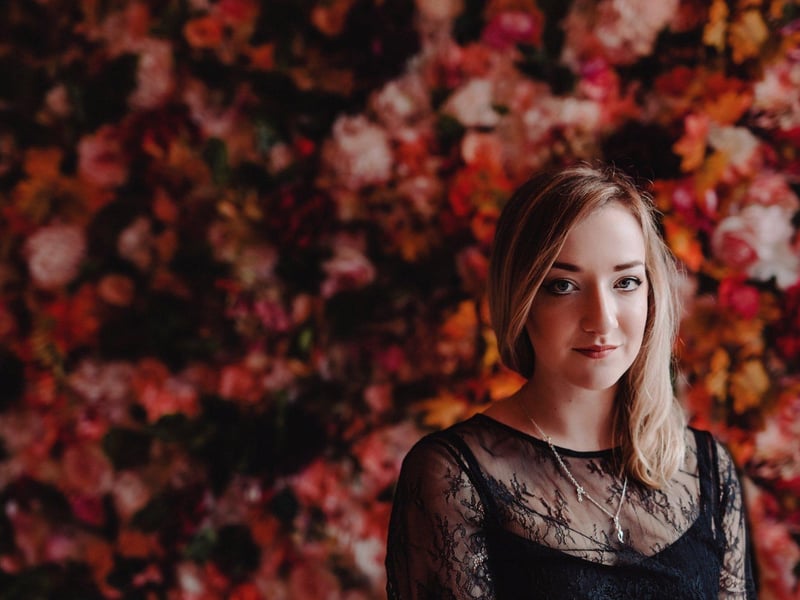
21. Iona Fyfe
Iona Fyfe, the Scottish folk singer, graduated in 2019. Fyfe is a National Director of the Traditional Music and Song Association. Photo: Elly Lucas