

The University of Glasgow was founded in 1451 by a papal bull issued by Pope Nicholas V, at the request of King James II of Scotland. Established initially to train clergy and scholars in theology, law, medicine, and the arts, it began its life in the heart of medieval Glasgow, near the city’s cathedral and High Street.
Like other European universities of the period, Glasgow followed a continental model, emphasising classical learning and scholastic philosophy. Despite political turbulence and religious upheaval during the Reformation, the university redefined its mission, shifting toward a broader curriculum.
The seventeenth and eighteenth centuries marked a transformative era. As Scotland entered the Age of Enlightenment, the University of Glasgow became a leading centre for philosophy, economics, and scientific inquiry. Professors emphasised empirical reasoning, moral philosophy, and public engagement, principles that shaped modern academic practice.
Among the most influential figures of this period was Adam Smith, who served as Professor of Moral Philosophy from 1752 to 1764. His ideas, later published in The Wealth of Nations, laid the foundations of modern economics and continue to influence global economic thought.
By the nineteenth century, industrial growth and rising student numbers rendered the original city-centre campus inadequate. In 1870, the university relocated to its current site at Gilmorehill in the city’s West End. The new campus, designed by Sir George Gilbert Scott, introduced the neo-Gothic main building that remains one of Glasgow’s most recognisable landmarks.
This period also saw significant advances in science and engineering. William Thomson, later known as Lord Kelvin, held a professorship at Glasgow for over 50 years. His work on thermodynamics and electrical theory cemented the university’s international scientific reputation; the Kelvin temperature scale bears his name.
During the twentieth century, the University of Glasgow expanded rapidly in both size and scope. New faculties, research institutes, and programs emerged, and the campus in the West End expanded as the university attracted students and academics from across the world.
Read about some individuals associated with the university who have
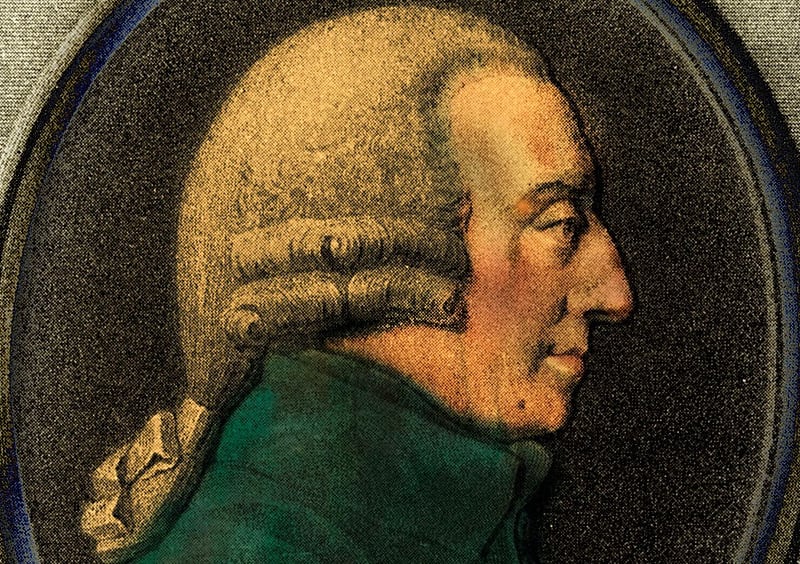
1. Adam Smith
Adam Smith, the Scottish moral philosopher and a pioneer of political economics. Author of 'The Wealth of Nations' in 1776, considered his magnum opus and the first modern work of economics. He studied at the University of Glasgow, starting in 1737 at age 14, where he was influenced by philosopher Francis Hutcheson. He later returned to the University as a professor of logic in 1751 and held the Chair of Moral Philosophy | Getty Images
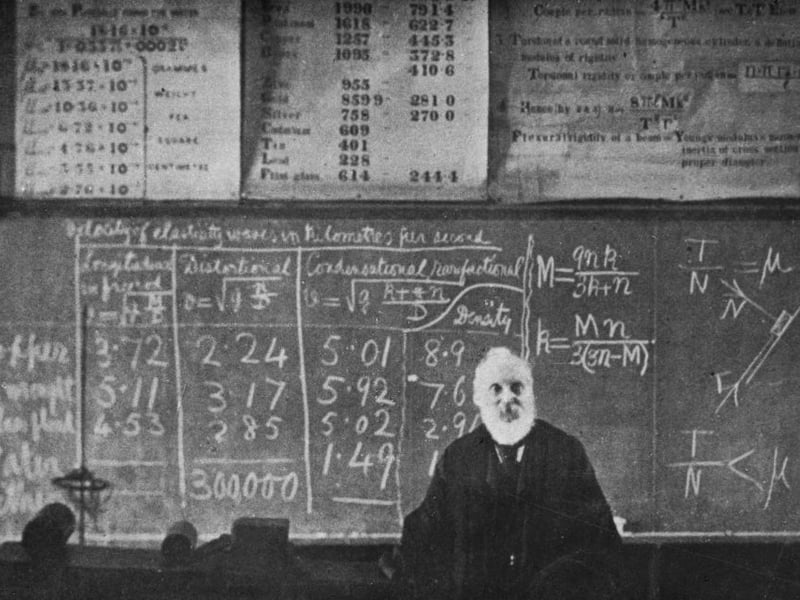
2. Lord Kelvin
Lord Kelvin, mathematician and physicist, in 1899. Born William Thomson, Lord Kelvin was educated at Glasgow and Cambridge universities. He was Professor of Natural Philosophy (Physics) at the University of Glasgow for 53 years, and is shown here delivering his last lecture. Kelvin was a pioneer of thermodynamics and electromagnetic theory and devised the temperature scale that bears his name. He also directed work on the first transatlantic cable telegraph, which gave him considerable wealth. | Print Collector/Getty Images
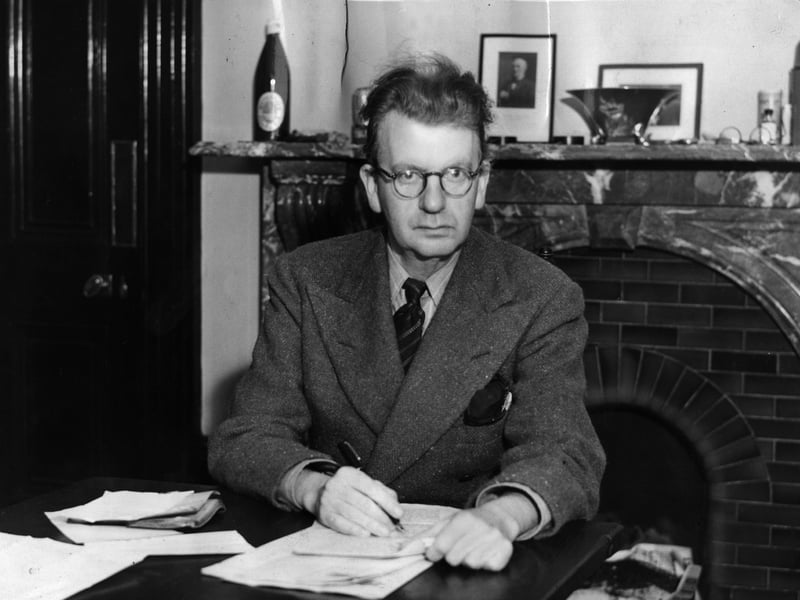
3. John Logie Baird
Scottish electrical engineer and inventor John Logie Baird was born in Helensburgh and studied at Glasgow University. Baird worked as an engineer at Clyde Valley Electric Power Company but retired due to ill health. He used his time to conduct experimental research into the transmission of images and gave a successful public display of his television system in London on 27th January 1926. In 1929 his mechanically scanned system was adopted by the BBC and he provided an improved system five years later. Baird also helped pioneer colour television and stereophonic sound. | Getty Images
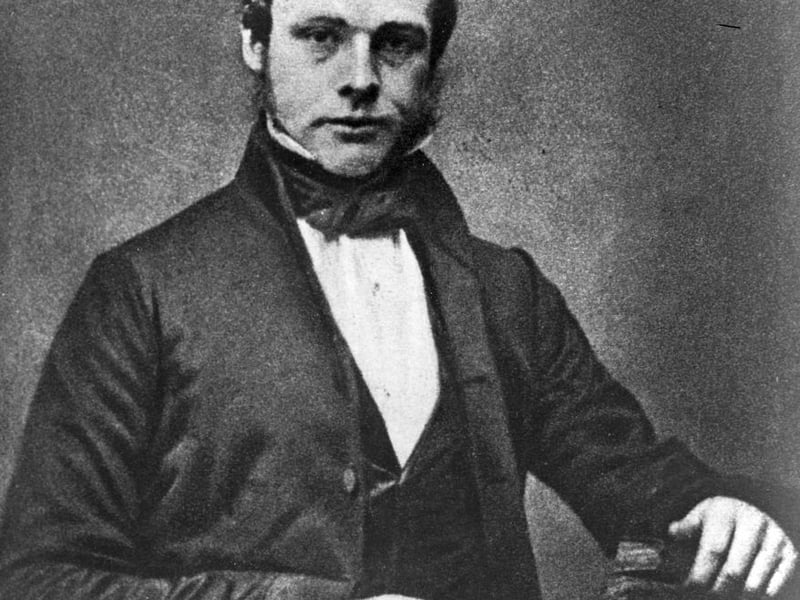
4. Joseph Lister
Joseph Lister spent eight years as the Regius Professorship of Surgery at Glasgow University. It was during this period, when he was also a surgeon at the Glasgow Royal Infirmary, that he carried out his pioneering work in the field of antiseptics. His discoveries about the nature and prevention of post operative infection forms the basis of modern surgery and dramatically reduced post surgical mortality. | Getty Images