
Busting pet myths: Common myths tricking Glaswegians
A new survey by Petplan, polling over 2,000 UK adults—including insights specific to Glasgow—has uncovered a surprising truth: while many pet owners feel confident in their knowledge, persistent myths continue to mislead them.
A new survey by Petplan, polling over 2,000 UK adults—including insights specific to Glasgow—has uncovered a surprising truth: while many pet owners feel confident in their knowledge, persistent myths continue to mislead them.
From wagging tails to cat-dog rivalries, these long-held misconceptions influence how we care for our beloved pets.
The Most Common Pet Myths in Glasgow:

The survey revealed that half of Glasgow respondents (50%) still believe that a wagging tail always means a happy dog. While it’s true that dogs wag their tails when they’re excited, they can also wag them when anxious or nervous.
Another widespread myth is that pets licking their wounds helps to keep them clean, with 33% of respondents holding believing this. In reality, excessive licking can actually slow healing and introduce bacteria, increasing the risk of infection.
Are Cats and Dogs Really Enemies?
The age-old assumption that cats and dogs are natural enemies remains prevalent, with 1 in 3 Glaswegians believing this myth. While some cats and dogs may not get along, many can form close bonds if introduced correctly. Proper socialisation and patience can lead to lifelong friendships between these two popular pets.

How Myths Impact Pet Care
The study highlights that myths aren’t just harmless misunderstandings—they directly affect how people care for their pets. Almost a third (29%) of Glasgow pet owners admitted they had changed their pet care routines based on a myth, only to later find out the truth. Some misconceptions even influence diet choices, with 17% of respondents avoiding certain foods unnecessarily.
Confidence in mythbusting vs. Reality
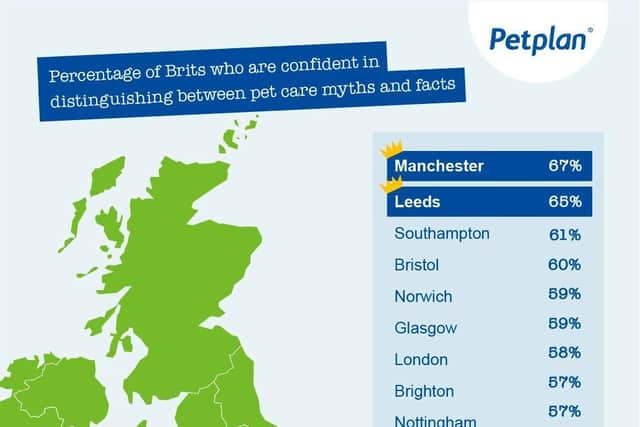
Despite these myths, confidence remains high. A striking 59% of Glasgow pet owners are confident in identifying pet myths—though the survey results suggest that confidence doesn’t always equal accuracy.
Encouragingly, nearly half (49%) say they would change their pet care practices if they discovered their current approach was based on misinformation. This willingness to adapt is a positive sign for pet welfare.
“There are so many myths about pets that it's easy to see why people might be confused. From interpreting a wagging tail to understanding their nutritional needs, these misconceptions can impact how we care for our animals.
“It's essential to look beyond the myths and really get to know our pets as individuals, understanding their behaviours and what these mean in specific circumstances. And while some myths may seem harmless, others can turn out to be costly mistakes, which is why having the right support, like pet insurance, can offer peace of mind. The more informed we are, the better we can respond to their needs and ensure their happiness and well-being.” says Petplan vet expert Dr. Brian Faulkner.
For further information, please read: https://www.petplan.co.uk/pet-information/blog/mythbusters/