
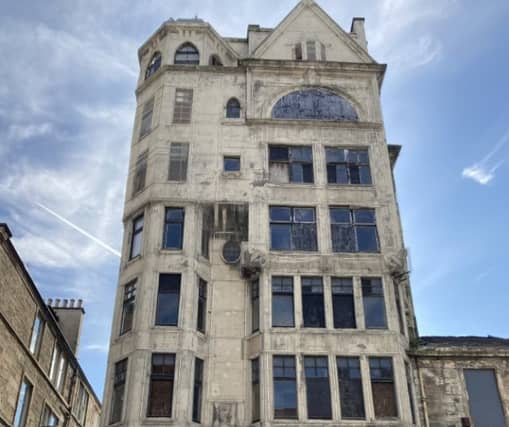


You can see the changing face of Glasgow through examples of Art-Deco, Gothic and Victorian architecture in different parts of the city alongside distinctive tenements and grand stone constructions.
The buildings at risk register is populated by important buildings that have been neglected and ignored for too long. It's time for city authorities, owners, planners, architects, developers and the local community to take the necessary steps to ensure these important buildings are restored and returned to being a functioning part of the city rather than monuments to intransigence and decay.
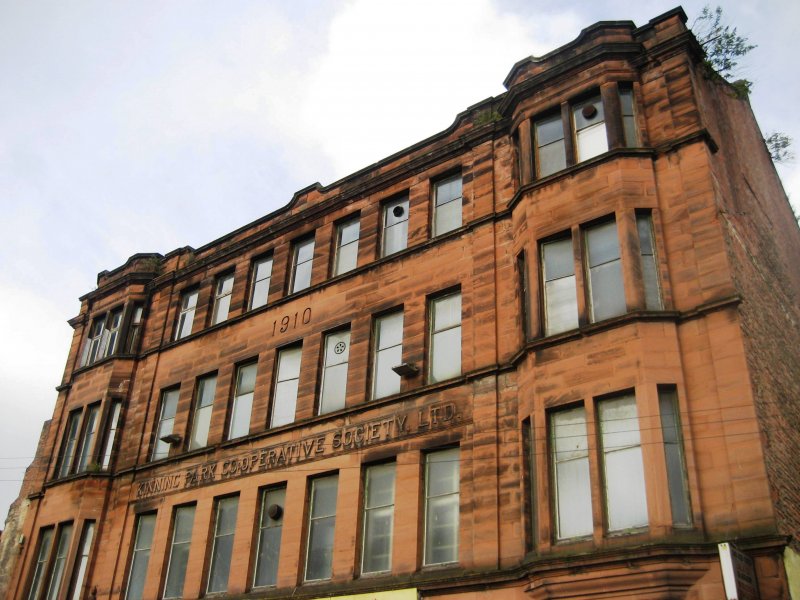
5. Kinning Park Co-operative Society (Former), 12-20 Coburg Street
Kinning Park Co-operative Society can be found on Coburg Street in Laurieston. The building dates back to 1910 having been designed by architects Bruce & Hay. A recent update found that the building has continued to deteriorate. The ground floor continues to be occupied. | Historic Environment Scotland
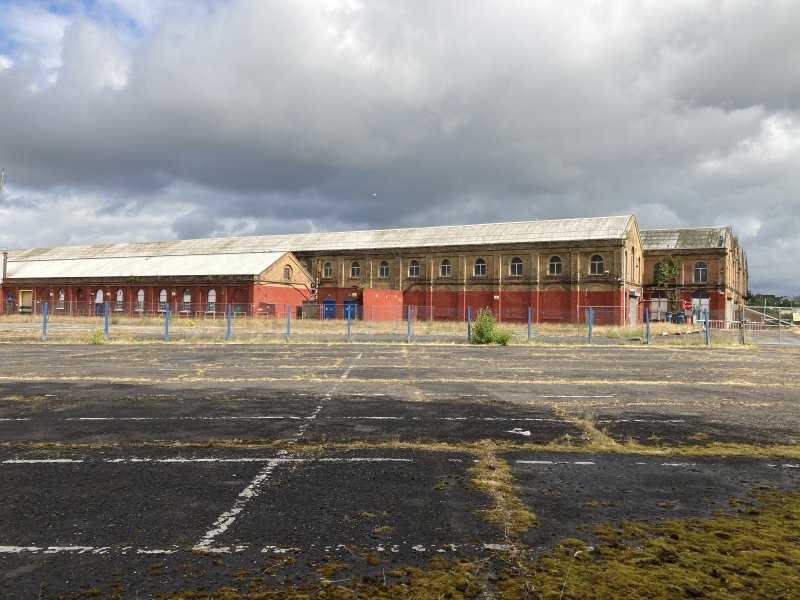
6. St Rollox Locomotive Works, 130 Springburn Road
St Rollox Works is a substantial range of adjoining and interconnected former railway locomotive workshops located in Springburn. A recent visit in July 2023 said: " External inspection finds the site to be vacant. Assessment of the south and east of the site is limited due to access. The visible sections of roof appear to be intact with some weathering and a patchwork of previous repairs. The vent stacks and chimneys appear to be stable. There are some signs of cracking of joints in the brick masonry at the southwest corner of the workshops facing onto Springburn Road. There is vegetation growing in the brick masonry, especially on south and west elevations." | Historic Environment Scotland
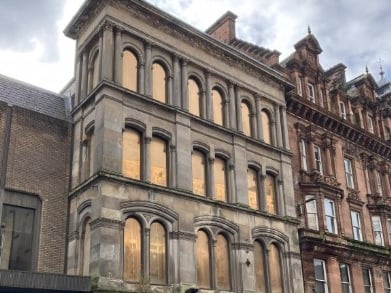
7. 18 Cambridge Street
The Venetian-style commercial building on Cambridge Street dates back to 1884 and was designed by architect Duncan McNaughtan. Speaking about the current state of the building, Historic Environment Scotland said: " There are signs of damp in the masonry, primarily concentrated around horizontal courses between floors. Salts and discolouration are visible around much of the horizontal masonry, however it appears to be worse on the ground and first floors where algae and vegetation growth is also visible. The finish above the arched entry on the right is peeling and there are signs of stone decay. There are also areas where the stone is beginning to decay under the windows of the first floor and along the masonry affected by damp." | Historic Environment Scotland
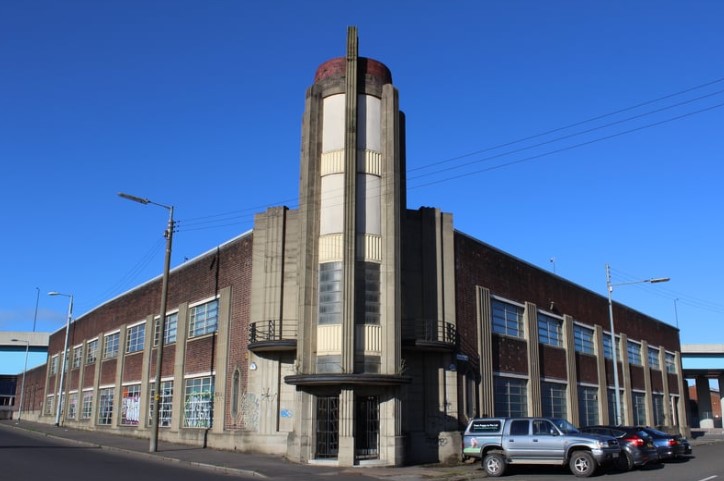
8. Leyland Motor Company Building
Built for Leyland Motor Co (address 5 Mauchline Street), there from 1922-1955. List excludes garages to rear with the building being an example of art deco Glasgow. The most recent external inspection said: "The building appears to remain vacant and suffering from vandalism and antisocial behaviour. Panels on the front entry tower are damaged. The lower openings are now covered or secured with roller shutters, but are heavily graffitied along with much of the walls." | Contributed