
Number of Glasgow primary school children being 'excluded' from class more than doubles over five years
The number of Glasgow primary school children being “excluded” from class has more than doubled over the last five years.
A Freedom of Information (FOI) request submitted to the council by councillor Paul Carey and shared exclusively with the LDR service shows that the number of primary school children excluded in Glasgow in 2021/22 sat at 74 and rose to 166 by 2025/26.
There were 79, 119 and 164 exclusions in 2022/23, 2023/25 and 2024/25 respectively.
Meanwhile the number of children excluded from their secondary school classes rose from 434 in 2021/22 to 495 in 2022/23. The numbers dropped slightly to 460 in 2023/24 before rising to 468 and 529 in 2024/25 and 2025/26.
Glasgow City Council has confirmed that it does not use the term “suspension” but an equivalent measure is recorded as an “exclusion” which are all temporary.
The local authority has also provided the following statistics to show a “more meaningful comparison” between local authorities of different sizes.
Further information shows exclusion rates per 1000 primary school pupils for 2025/26 sat at 4.2 and 17.2 per 1000 secondary school pupils.
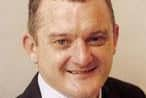
Councillor Paul Carey (BEM) says Scotland’s schools need answers and not excuses.
Councillor Carey said: “Something is happening in Scotland’s schools that politicians can no longer afford to ignore.
“There are clear links between exclusions and some of the wider pressures facing children and families.
“If we want to understand exclusions, we need to understand those underlying pressures.
“A classroom is a shared environment. Persistent and serious disruption does not only affect the pupil displaying the behaviour. It can affect every other child in that classroom.
“Every time a teacher has to stop a lesson to deal with serious disruption, other pupils can lose valuable learning time.
“Over time, lost teaching time can affect the whole classroom and potentially the wider school environment.
“The pupil struggling with behaviour deserves support. But the pupil sitting quietly, working hard and trying to achieve good results deserves support too.

“I am not suggesting these figures prove that exclusions caused attainment to fall but if persistent disruption is reducing teaching time, what impact is that having on attainment?
“If teachers are spending more time managing behaviour, how much learning is being lost?
“And if some young people are reaching the point of exclusion because their needs have not been addressed early enough, could better intervention improve both behaviour and educational outcomes?
“Teachers and school staff are dealing with increasingly complex challenges.
“Many of the factors behind difficult behaviour cannot be solved by a teacher standing in front of a classroom.
“We can protect vulnerable young people while also protecting the rights of every other child in the classroom.
“If we are serious about improving educational outcomes, we need to understand those connections and make sure the system around schools is working effectively.
“Every child deserves the opportunity to succeed, regardless of their background or circumstances.”
A council spokeswoman said: “Exclusions in our schools have reduced over the years due to the commitment of teachers and school staff to use nurturing and restorative principles to target the individual needs of our children.
“Exclusions always remain one of the options for young people to understand that there are consequences for certain types of behaviour.”