
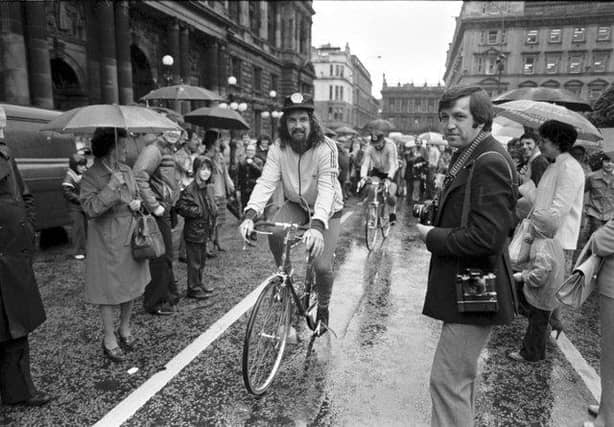

The city’s industrial landscape was being rapidly altered. Defunct and disused docklands and shipyards littered the banks of the Clyde, while Clydebank’s world-famous Singer sewing factory, once a major employer in the Greater Glasgow region, also finally closed its doors following years of uncertainty.
In sport, frustrations boiled over towards the end of the 1980 Scottish Cup Final between Celtic and Rangers at Hampden Park. A riot broke out with dozens of supporters injured in violent scenes as mounted police struggled to quell the chaos. The shameful incident resulted in the permanent banning of alcohol at all Scottish football stadia.
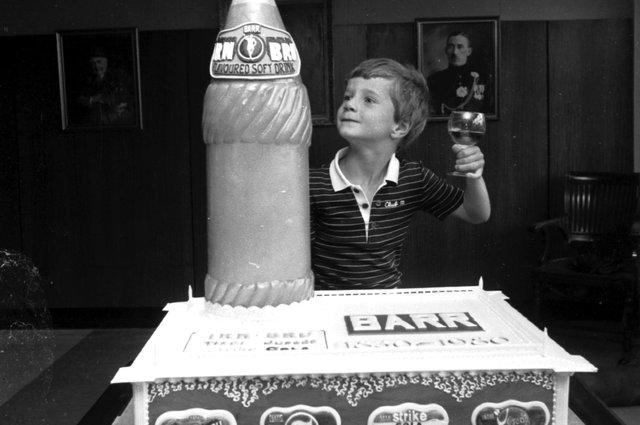
But it wasn’t all doom and gloom. The city had a world lightweight boxing champion in Bridgeton-born fighter Jim Watt, local fizzy drinks legends Irn-Bru were celebrating their 150th birthday, while Glaswegians also enjoyed a revamped underground system with fancy new trains.
9. Glasgow in 1980
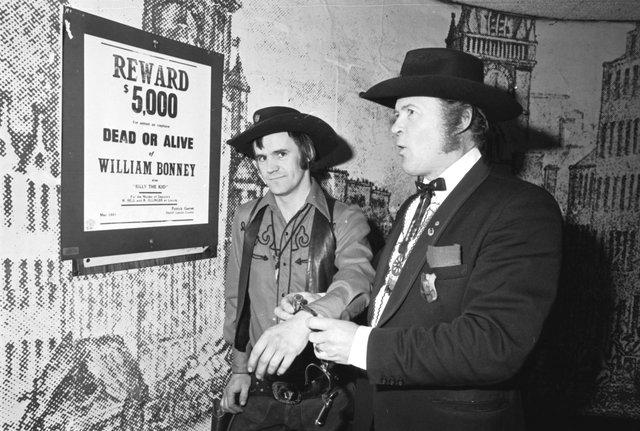
Dressed as cowboys and Western characters Dick Gilmour (as Marshall Dillon) 'arrests' Jim Webb (as Billy the Kid) ina Paisley Road West club, Glasgow, November 1980 Photo: tspl
10. Glasgow in 1980
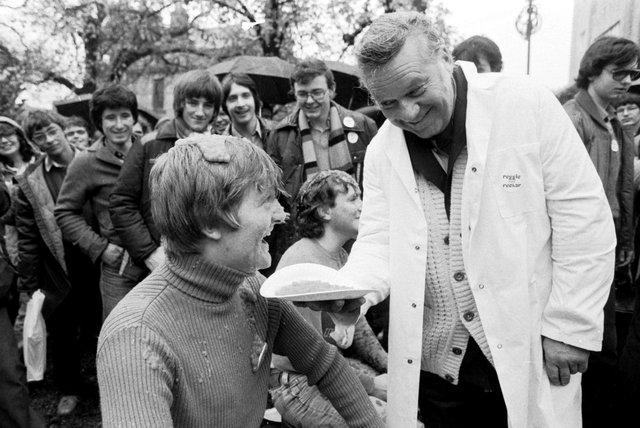
Future leader of the Liberal Democrat party, Charles Kennedy was president of the Glasgow University Student Union when broadcaster Reginald Bosinquet (right) conducted his campaign to become rector in October 1980. Photo: tspl
11. Glasgow in 1980
Graham Barr raises a glass beside a cake to celebrate the 150th anniversary of the Irn-Bru company in Glasgow in August 1980. Photo: tspl
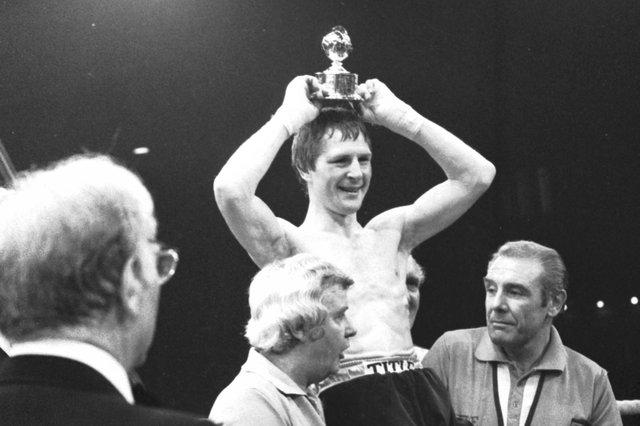
12. Glasgow in 1980
Jim Watt beat Charlie Nash for the World Lightweight boxing title at the Kelvin Hall in Glasgow, March 1980 Photo: tspl