
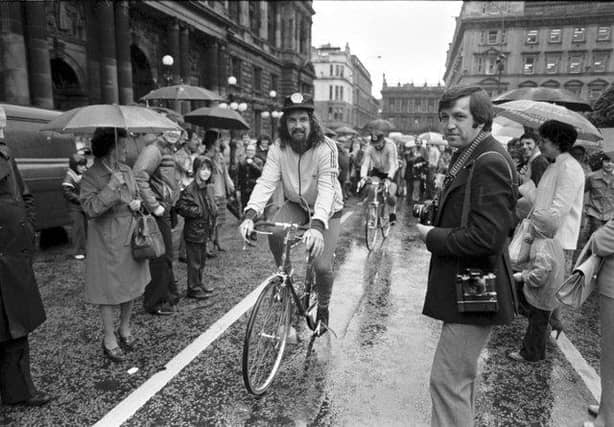

The city’s industrial landscape was being rapidly altered. Defunct and disused docklands and shipyards littered the banks of the Clyde, while Clydebank’s world-famous Singer sewing factory, once a major employer in the Greater Glasgow region, also finally closed its doors following years of uncertainty.
In sport, frustrations boiled over towards the end of the 1980 Scottish Cup Final between Celtic and Rangers at Hampden Park. A riot broke out with dozens of supporters injured in violent scenes as mounted police struggled to quell the chaos. The shameful incident resulted in the permanent banning of alcohol at all Scottish football stadia.
But it wasn’t all doom and gloom. The city had a world lightweight boxing champion in Bridgeton-born fighter Jim Watt, local fizzy drinks legends Irn-Bru were celebrating their 150th birthday, while Glaswegians also enjoyed a revamped underground system with fancy new trains.
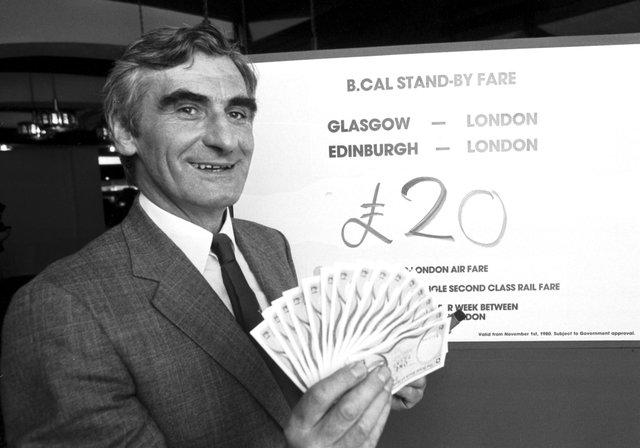
13. Glasgow in 1980
Managing director Alastair Hugh announces a £20 stand-by fare from Edinburgh/Glasgow to London on British Caledonian Airways in August 1980. Photo: tspl
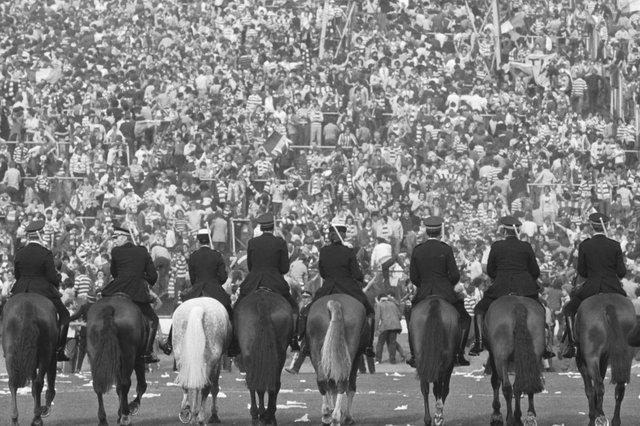
14. Glasgow in 1980
Mounted police face the fans before crowd trouble broke out after the Old Firm Scottish Cup Final at Hampden in May 1980, which Celtic won 1-0. Photo: tspl
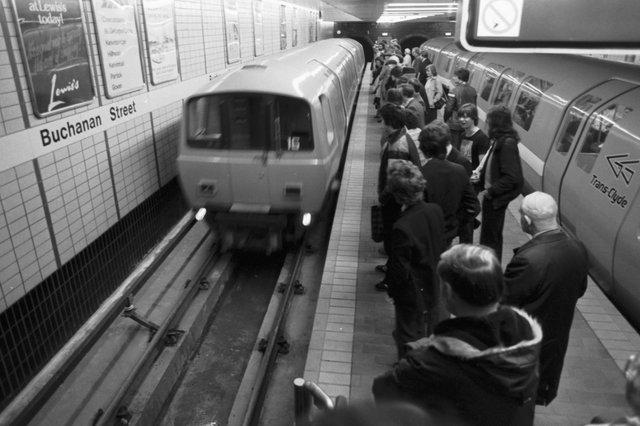
15. Glasgow in 1980
Passengers wait as the underground train arrives at Buchanan Street station in Glasgow - the new system was opened to the public in April 1980. Photo: tspl
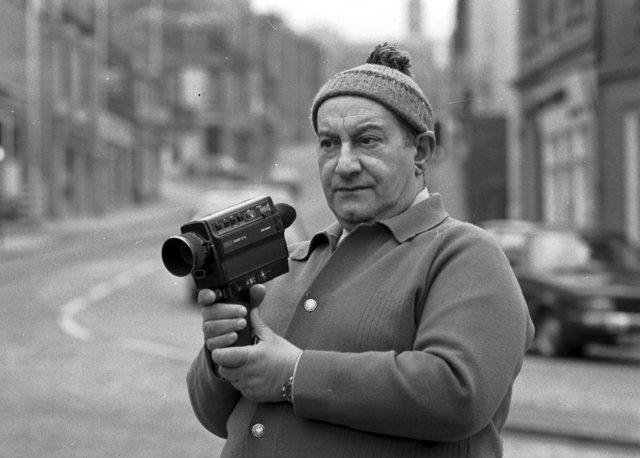
16. Glasgow in 1980
Scottish documentary film-maker Enrico Cocazza in Glasgow, March 1980. Photo: tspl