
‘Second Hampden’ could be latest addition to list of nationally important historic sites

Historic Environment Scotland is seeking views on proposals to designate the former football ground at Cathkin Park as a scheduled monument
Historic Environment Scotland (HES) is looking to gather views from the public on its proposals to designate the remains of the football ground in Cathkin Park as a scheduled monument, a site which features prominently in the story of how football developed in Scotland.
Situated in Glasgow’s Southside, the site was first used as a football ground by Queen’s Park in 1883-4. It was initially known as Hampden Park, named after the original Hampden (now the site of Hampden Bowling Club). As Hampden, the site was the venue for Scottish Cup finals between 1885 and 1899.
When Queen’s Park’s success saw them set their sights on a new ground (the third and current Hampden) in 1903, the site then became the home of Third Lanark, who alongside Queen’s Park were one of the eight founding member clubs of the Scottish Football Association (SFA). An entirely new stadium was built on the site in 1904, which was then renamed New Cathkin Park. The club continued to play at Cathkin until their demise in 1967.
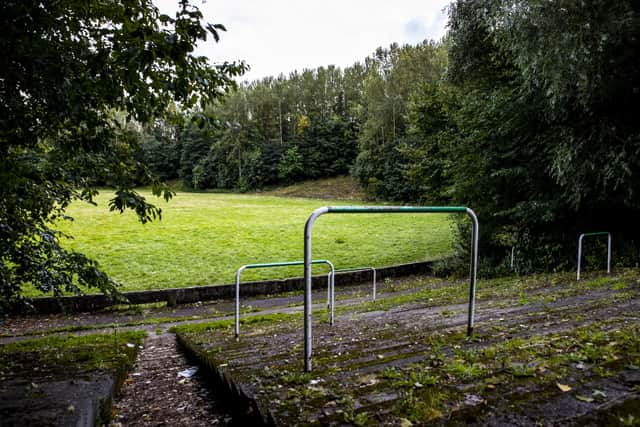

Cathkin Park is significant as a rare example of a late 19th-early 20th century football stadium, with its surviving terracing and embankments. No other major football ground from the period survives in as complete a form. The site aids understanding of how modern football grounds developed in Scotland, serving as a physical reminder of a time when tens of thousands of supporters would have stood in packed out terraces across the country.
It is currently the home of the Jimmy Johnstone Charitable Trust who have used the pitch since 2009.
Dara Parsons, Head of Designations at HES, said: “Scheduling is a way of ensuring that nationally important historic sites are recognised and protected, and that their importance is taken into account in decisions about their management
“Scotland is recognised as a pioneering nation in the development of football. Cathkin Park, as the recognised home of one of Scotland’s most historically important football clubs, played a key part in that story.
“We would encourage anyone with views on the site’s significance, or any information that may help inform our final decision, to review our report and take part in our consultation”
The consultation will be open for submissions until 19 June.