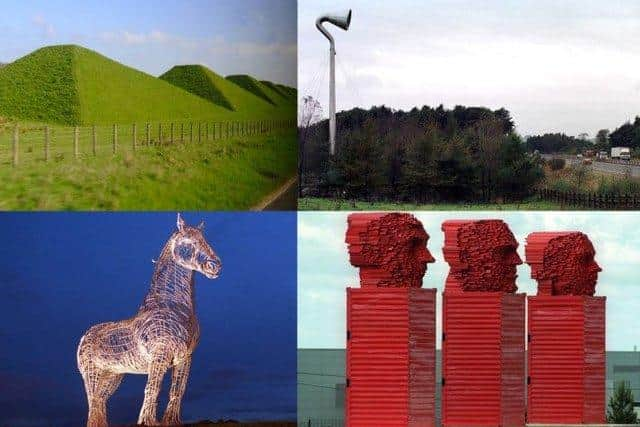
Motorists who use the M8 motorway between Edinburgh and Glasgow will be familiar with the numerous sculptures dotted along the route, but why were they commissioned?
Construction on the 60-mile long M8 was completed in 1965, designed to replace the A8 as an alternative for travel to Edinburgh.
The M8 artworks have been around since the 90s.
It wasn’t until 1991 that a group was set up with the intention of creating an ‘art corridor’ on the motorway, designed to brighten the route up and turn it into a talking point.
Here we take a look at the various artworks, and find out when and why they were installed.
The scheme was the first ever substantial commitment to environmental motorway public art in Britain and sealed Scotland’s place as the European leader in the field. The Scottish Office supported the project in the early Nineties and had already been involved in environmental improvements to the tune of £700,000 comprising newly-planted trees and landscaping. One provision of the project was that artworks would have to be clearly visible and allow drivers and passengers to see them without causing alarm or risking a safety hazard.
A version of this article first appeared on our sister site, The Scotsman
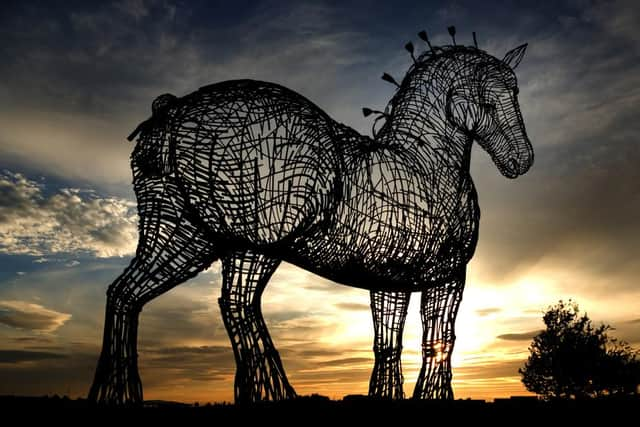
Situated in the Glasgow Business Park is the Heavy Horse. Designed and crafted from galvanised steel by Andy Scott (who also created the famous Kelpies sculpture), the Heavy Horse is a wirework sculpture of a Clydesdale, and has become the symbol of the Baillieston business park.