

Coatbridge boasts a rich history and heritage that locals can take great pride in. Today, we’re diving into the town’s story during its industrial heyday.
Although Coatbridge rose to prominence during the Industrial Revolution, the area’s history stretches much further back. Evidence shows that people have lived here long before the Romans, with settlements dating back to the Mesolithic era over 3,000 years ago. One fascinating discovery was made in 1852, when a circle of Bronze Age coffins was unearthed at Drumpellier Estate.
The name "Coatbridge" itself comes from a bridge that once carried the old Edinburgh-Glasgow road over the Gartsherrie Burn, at what is now Coatbridge Cross. The earliest reference to it appears in a 1755 survey, where it’s listed as "Cottbrig," part of the broader Coats estate. The name "Coats" likely originates from the Scots word "cot(t)," meaning "cottage," though some believe it may be linked to the Colt family, who owned land here from the 13th century onward.
By the late 18th century, the area transitioned from a scattered collection of hamlets into the town of Coatbridge. Its growth and transformation were closely tied to the technological advancements of the Industrial Revolution. In the 19th century, Coatbridge became a powerhouse of ironworks and coal mining, earning the title of the "industrial heartland of Scotland" and the "Iron Burgh."
Some of these images were supplied via CultureNL - to find more pictures and stories about your local history, heritage, and more, visit the CultureNL collections.
Here are 15 old photographs that capture the changing face of Coatbridge and everyday life in the town throughout the years.
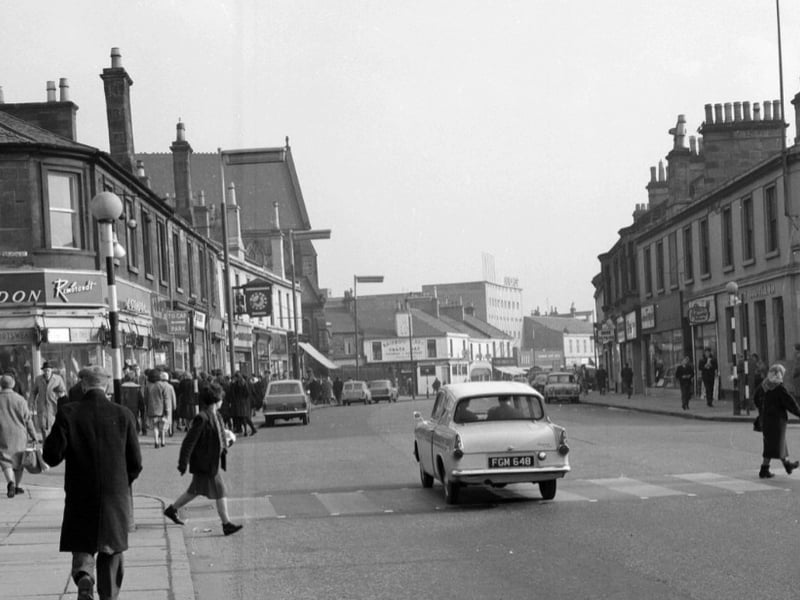
1. Coatbridge
A snapshot of Coatbridge. | The Scotsman
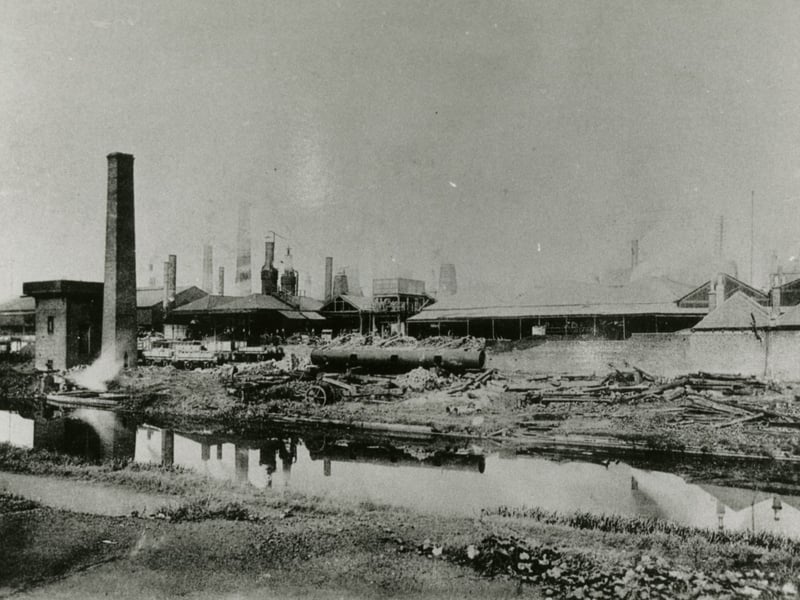
2. The Phoenix and Clifton Ironworks (Late 1800s)
This photograph of two of Coatbridge’s malleable ironworks shows just how heavily developed the canal banks were in urban areas.The open-sided sheds by the canals probably contained rolling mills and steam hammers whereas the bulidings with lots of chimneys contained puddling furnaces where the iron was processed before being rolled and hammered. The site of the Phoenix Iron Works on the right is now a McDonald’s car park and the area in the centre of the photo is now a traffic roundabout. | CultureNL
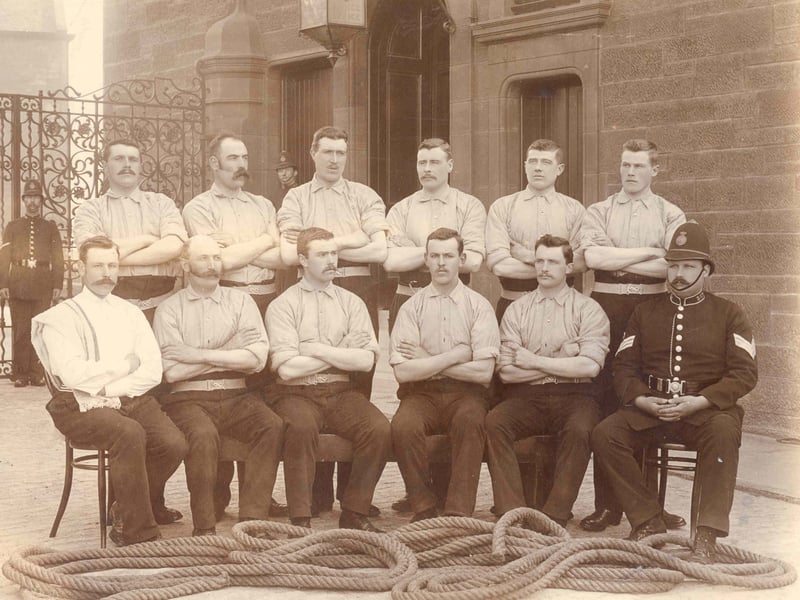
3. Coatbridge Burgh Police (1895)
The Police Tug o’ War team (note the forearms on these fellas) are pictured with their rope in the courtyard of the Coatbridge Municipal Buildings, which housed the Burgh Police Station. | CultureNL
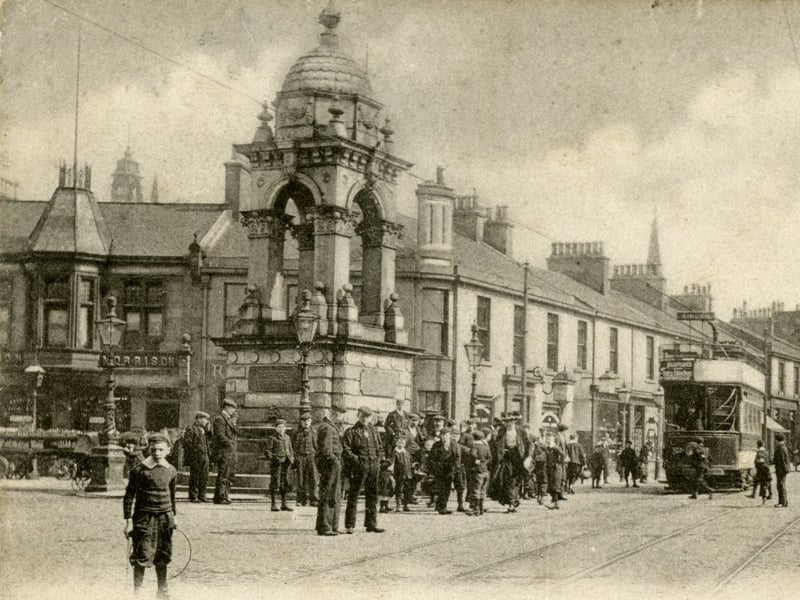
4. The Fountain on Main Street (1904)
This picture postcard, posted in 1904 shows the Whitelaw Fountain at the bottom of Main Street. The fountain has been moved several times over the years. | CultureNL