
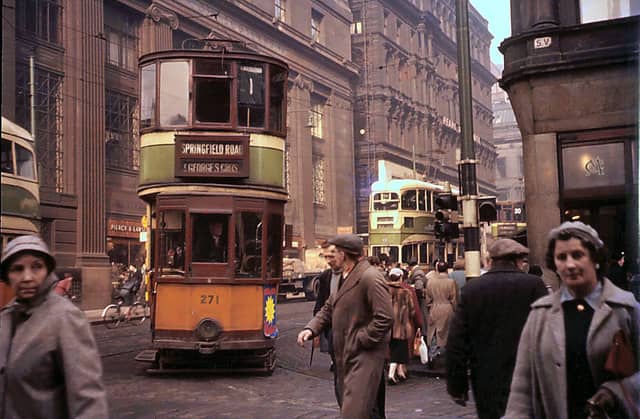


Glasgow in the 1950s was a city emerging from the long shadow of the Second World War. Although bombing damage was less severe than in some British cities, years of austerity shaped daily life, with rationing continuing until the mid-decade.
Heavy industries such as shipbuilding, engineering, and manufacturing still dominated the economy, providing work for thousands along the River Clyde, even as signs of industrial decline were beginning to appear.
The city’s housing conditions were a major challenge during this period. Overcrowded tenements, many lacking basic amenities, were common, particularly in inner-city areas like the Gorbals. In response, large-scale slum clearance programmes were planned, laying the groundwork for new housing schemes and “new towns” that would soon reshape Glasgow’s population and skyline. While these changes promised improvement, they also disrupted long-established communities.
Despite the hardships, 1950s Glasgow was marked by strong community spirit and cultural vibrancy. Neighbourhood life revolved around close-knit families, local shops, cinemas, and dance halls, while football and music played a central role in social life. The decade captured a city balancing tradition and change—rooted in its industrial past yet on the brink of transformation that would redefine Glasgow in the decades to come.
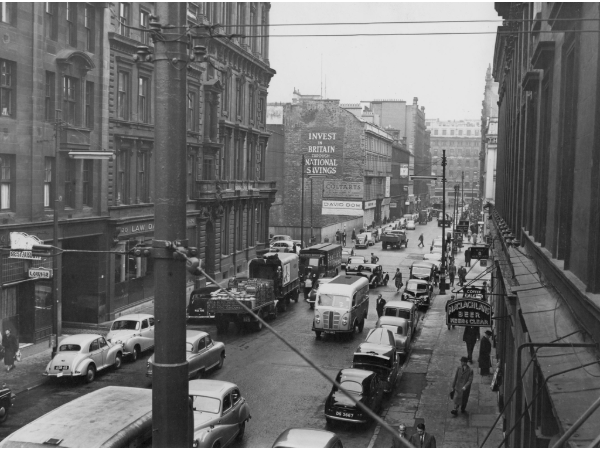
9. Queen Street (1950)
A bustling Queen Street pictured back in 1950 looking down towards Lewis's. | Glasgow City Archives
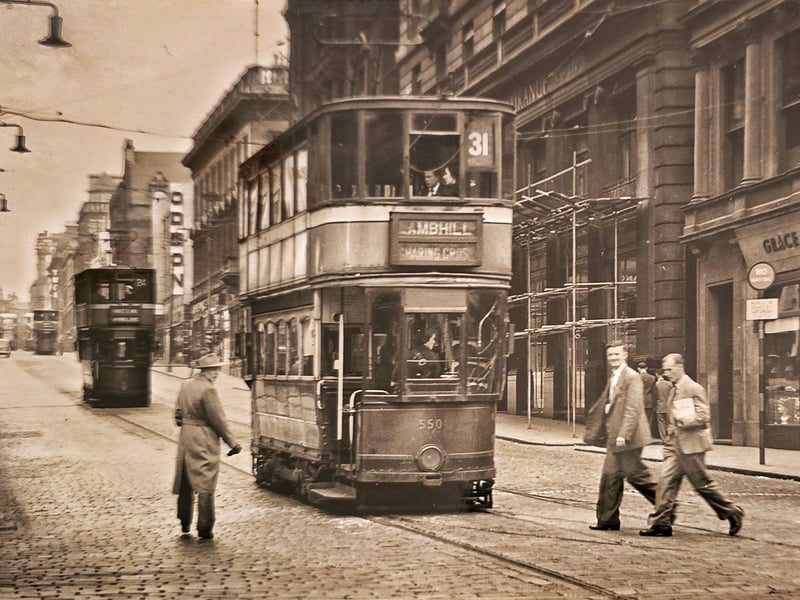
10. Renfield Street (1953)
Looking north up Renfield Street in the early fifties. | R.B. Parr
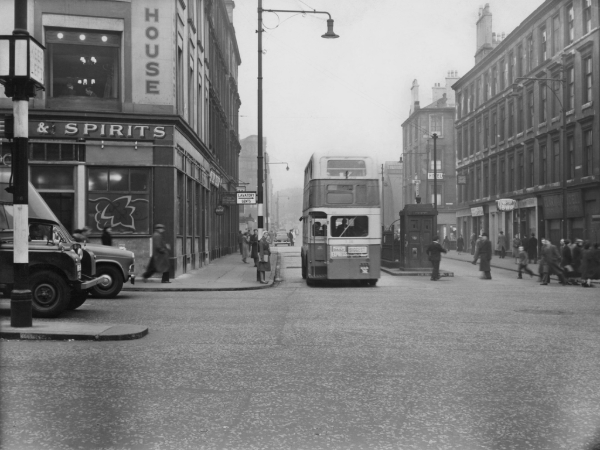
11. Buchanan Street (1950)
Looking north from Bath Street on Buchanan Street back in 1950. | Glasgow City Archives
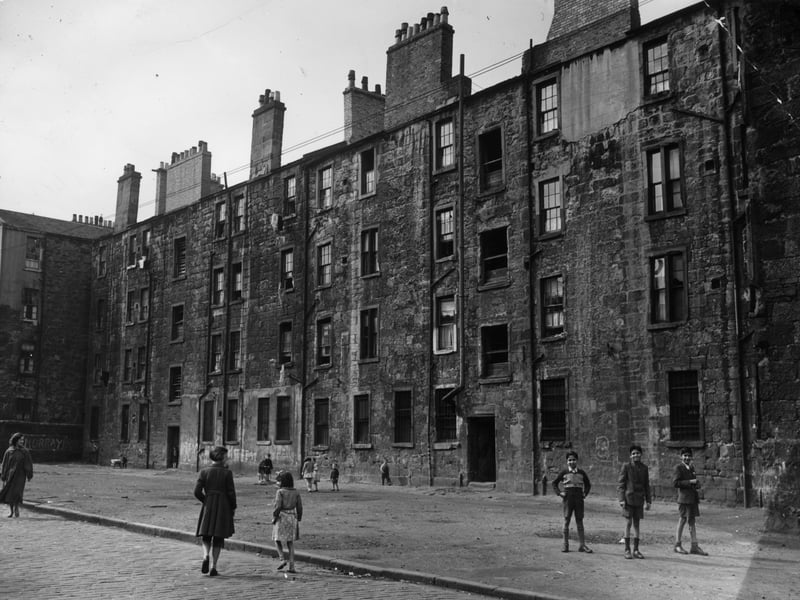
12. Gorbals (1956)
Children play in a yard in Coburg Street, in the Gorbals area of Glasgow. The Gorbals tenements were built quickly and cheaply in the 1840s, providing housing for Glasgow's burgeoning population of industrial workers. Conditions were appalling; overcrowding was standard and sewage and water facilities inadequate. The tenements housed about 40,000 people with up to eight family members sharing a single room, 30 residents sharing a toilet and 40 sharing a tap. By the time this photograph was taken 850 tenements had been demolished since 1920. Redevelopment of the area began in the late 1950s and the tenements were replaced with a modern tower block complex in the sixties. | Getty Images