
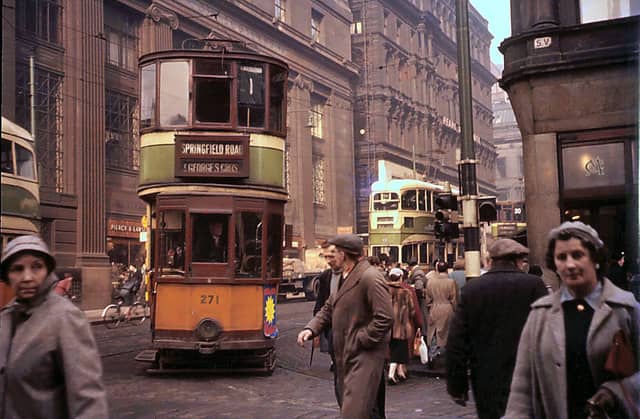


Glasgow in the 1950s was a city emerging from the long shadow of the Second World War. Although bombing damage was less severe than in some British cities, years of austerity shaped daily life, with rationing continuing until the mid-decade.
Heavy industries such as shipbuilding, engineering, and manufacturing still dominated the economy, providing work for thousands along the River Clyde, even as signs of industrial decline were beginning to appear.
The city’s housing conditions were a major challenge during this period. Overcrowded tenements, many lacking basic amenities, were common, particularly in inner-city areas like the Gorbals. In response, large-scale slum clearance programmes were planned, laying the groundwork for new housing schemes and “new towns” that would soon reshape Glasgow’s population and skyline. While these changes promised improvement, they also disrupted long-established communities.
Despite the hardships, 1950s Glasgow was marked by strong community spirit and cultural vibrancy. Neighbourhood life revolved around close-knit families, local shops, cinemas, and dance halls, while football and music played a central role in social life. The decade captured a city balancing tradition and change—rooted in its industrial past yet on the brink of transformation that would redefine Glasgow in the decades to come.
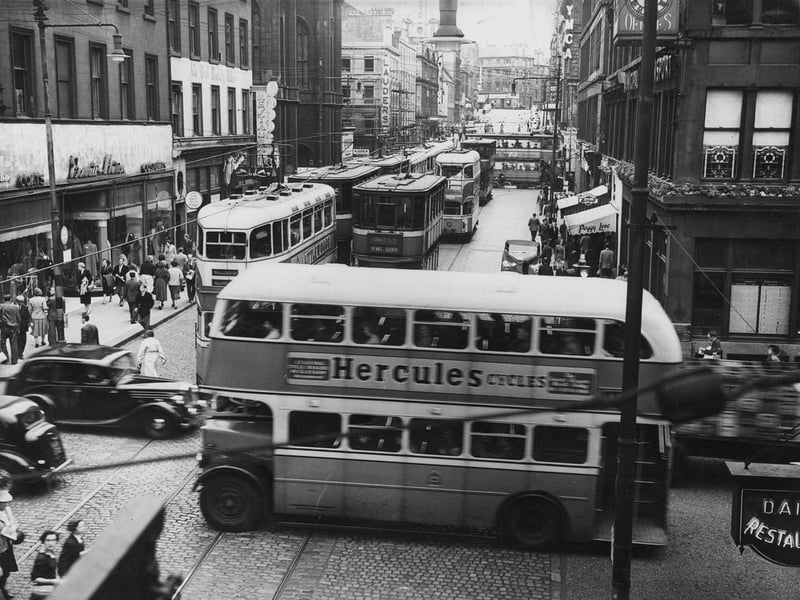
13. Renfield Street (1950)
Renfield Street looking north from Bath Street, around 1950. | Glasgow City Archives
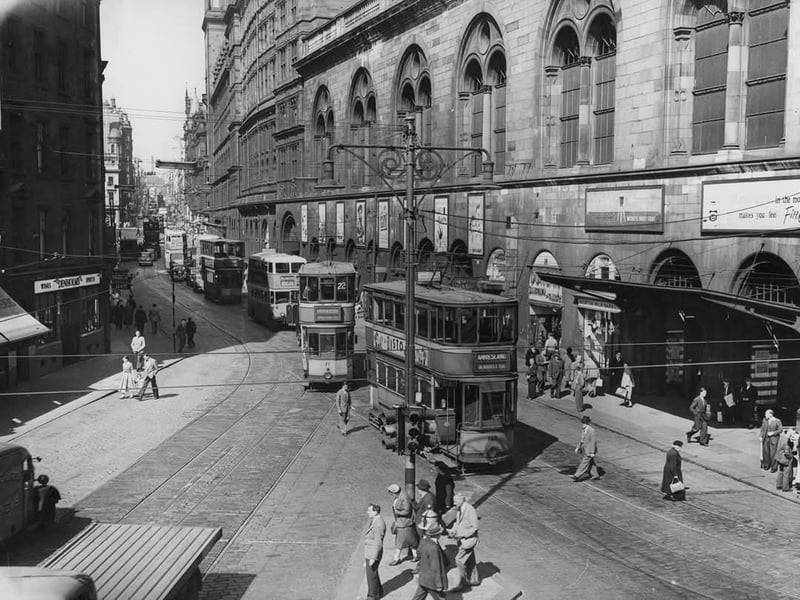
14. Hope Street
A view up Hope Street around 1950. | Glasgow City Archives
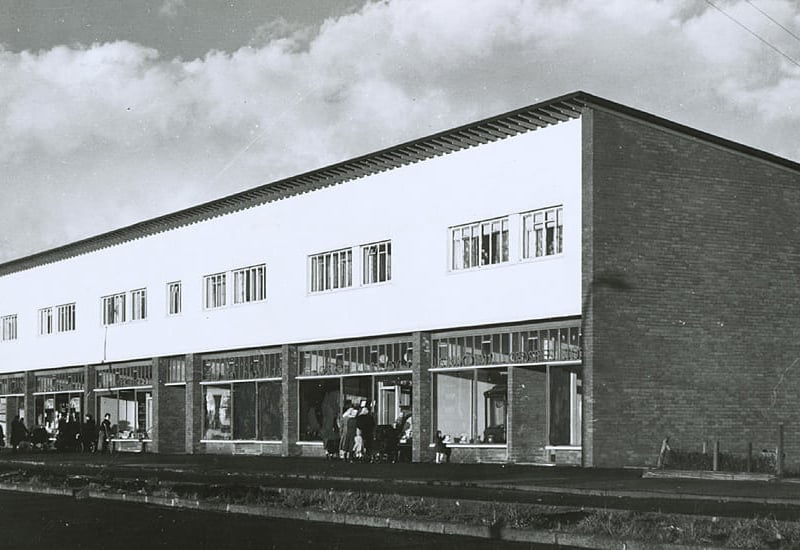
15. Pollok (1950)
New shops and flats built by Glasgow Corporation Housing Department at Levernside Road in Pollok,1950. | Glasgow Libraries
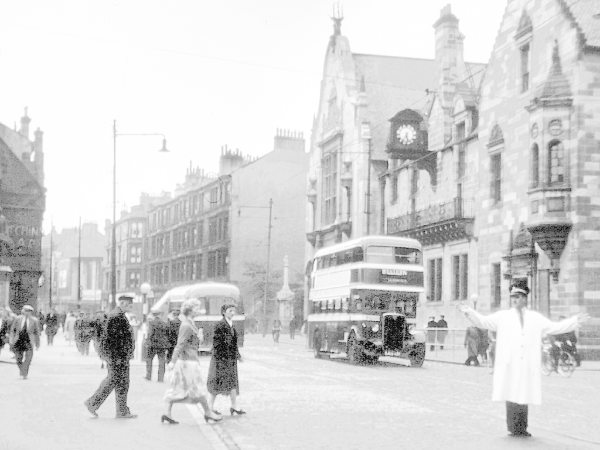
16. Govan Cross (1955)
Govan Cross pictured back in 1955. | Glasgow City Archives