
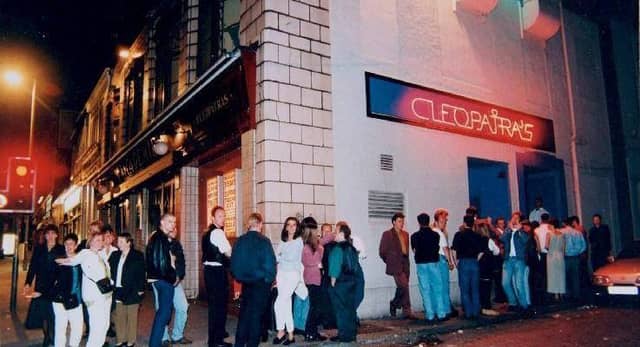


To understand Glasgow in the 1980s is to encounter a city suspended between the gravity of its industrial past and the necessity of reinvention.
It was a decade of sharp contrasts: severe economic hardship alongside a growing cultural self-belief, crumbling urban landscapes set against ambitious new visions, and a population negotiating daily struggle with an unshakeable pride in place. For those who lived through it, Glasgow was never just a setting — it was a presence: hard-edged, energetic, and alive.
The collapse of heavy industry struck Glasgow with particular force. Shipyards that had once embodied world-leading engineering fell quiet, steelworks shut their doors, and unemployment rose dramatically. Entire communities bore the weight of this upheaval, with social tension woven into everyday life. Yet even in uncertainty, Glaswegians held on to the humour, solidarity, and resilience that outsiders often fail to fully grasp. Neighbours leaned on one another, and wit became a form of shared defence.
At the same time, the 1980s marked the early stages of Glasgow’s contemporary transformation. Regeneration efforts — imperfect and often contentious — began to reshape the city’s physical and cultural landscape. Art, music, and design gained fresh momentum, nurturing creative movements that would leave a lasting imprint. The foundations were being laid for milestones such as the Glasgow Garden Festival and the city’s later recognition as European City of Culture, even if the future remained unclear to those living it.
Here are 80 nostalgic pictures offering a fascinating glimpse of Glasgow in the 1980s.
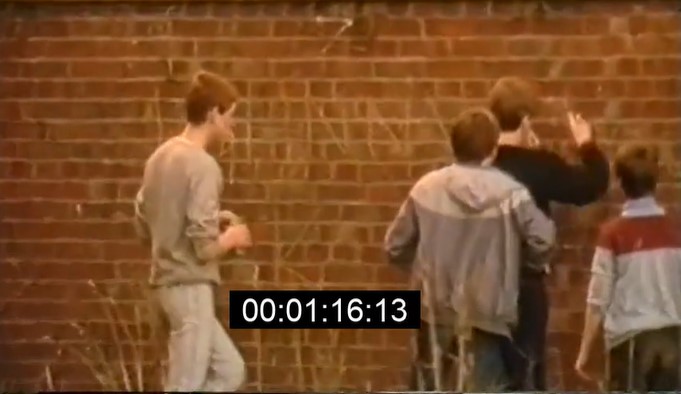
37. Council kids in the 1980s
A capture from some home-film from the KinoLibrary caches some young pals getting up to no good scrawling some graffiti on the back streets of a council estate in Glasgow | Kinolibrary
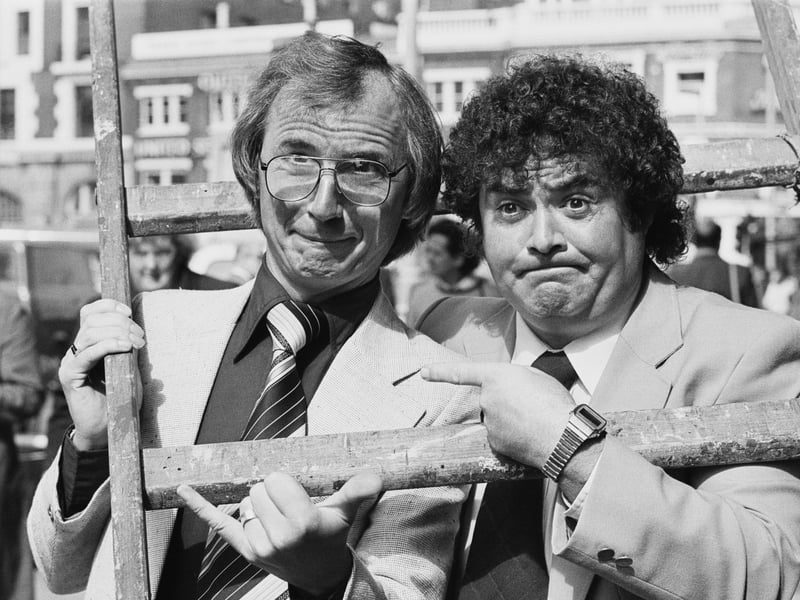
38. Eddie Large
Alongside funnyman Syd Little, Eddie Large made up one of Britain’s most beloved comedy duos throughout the 1970s and 1980s. Although born in Glasgow and raised in Manchester he later moved to Portishead which became his and his wife Patsy’s home until he passed in 2020. | Getty Images
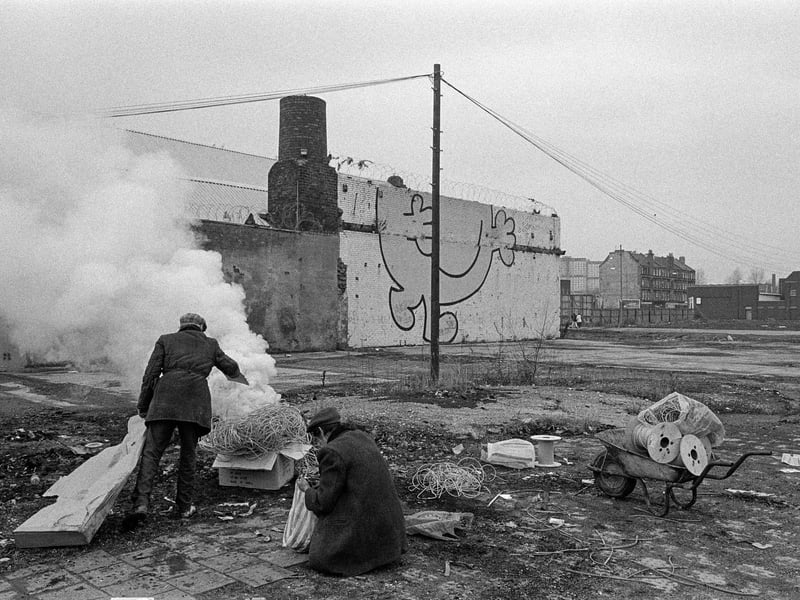
39. Mining for copper after the death of industry
Burning scrap wire in The Gorbals to retrieve the expensive copper within with ‘Glasgow’s Miles Better’ iconic logo on the wall behind. This was a profitable pass-time for many families affected by post-industrialisation in Glasgow, as they pilfered the graveyards of factories, shipyards, and other brownfield sites to sell on copper wiring and scrap. Photo: Jeremy Sutton Hibbert
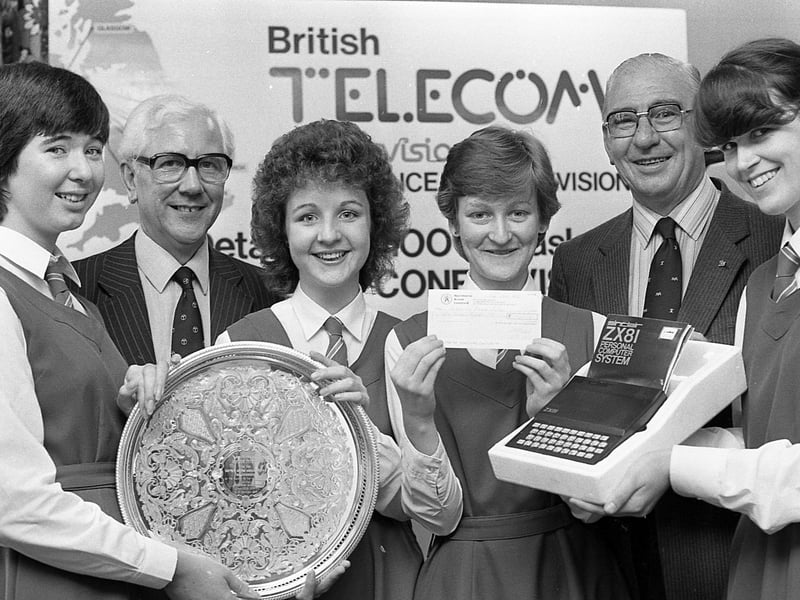
40. Management-Information Technology 1982 schools competition
Four Ballynahinch pupils beat off sixth form opposition in Manchester and impressed experts in Glasgow to win the British Institute of Management-Information Technology 1982 schools competition - without even leaving Northern Ireland. The Convent of the Assumption Grammar School, Ballynahinch team, Brenda Cavanagh, left, Carmel O’Reilly, Martina Dunlop and Ursula O’Neill are pictured receiving their prizes in September 1982 from Mr Brian Millar, second left, British Telecom planning services controller and Mr Archie McCulloch, chairman (Northern Ireland) British Institute of Management. British Telecom had setup a three-way telecommunications “miracle” to stage the United Kingdom finals of the schools competition. The transmission, from Churchill House, Belfast, inaugurated British Telecom’s Confravision system. Photo: News Letter archives