
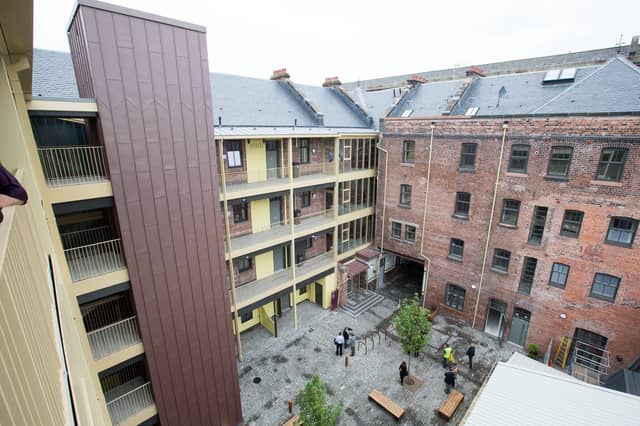


Historic buildings are everywhere in Glasgow. They’re what give the city its unique character which draws visitors from all over the world. They tell the city’s story and chart the social and cultural changes that have taken place over decades and centuries.
Giving these buildings a new lease of life when their original purpose comes to an end can bring lots of benefits, from retaining a strong sense of place and local identity to providing a boost for tourism and investment.
These buildings also have an important part to play in helping achieve net zero. In our daily lives, we know that cutting down on waste and doing more with less can help reduce our impact on the planet. The same principle also applies to our built environment. By retaining and reusing the buildings we already have, instead of building new, we can use resources more efficiently and cut down on the carbon emissions which are the key contributor to global warming.
Historic Environment Scotland (HES) champions the reuse of historic buildings by providing advice and guidance for planners and developers on how this can be done sensitively. We’ve picked eight inspiring examples of creative reuse which show how our historic environment can contribute to a vibrant, greener Glasgow.
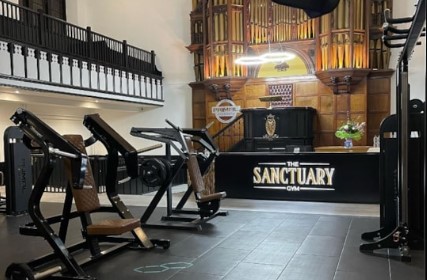
5. St Kenneth's Church
Many say that your body is a temple, but rarely is that taken as seriously as it is by Sanctuary Gym, located in an old red sandstone church in Govan. St Kenneth’s Church was an Arts & Crafts style church designed by James Millar in 1899, which was given a category B-listing in 1989. It now hosts one of Glasgow’s most innovative exercise spaces. Sanctuary Gym took over the building several years after the church closed and made minimal alterations to the building. Inside the gym, stained glass windows light the space under the original arched ceiling, while the distinctive horseshoe balcony has been retained and reused as part of the gym space. | Contributed
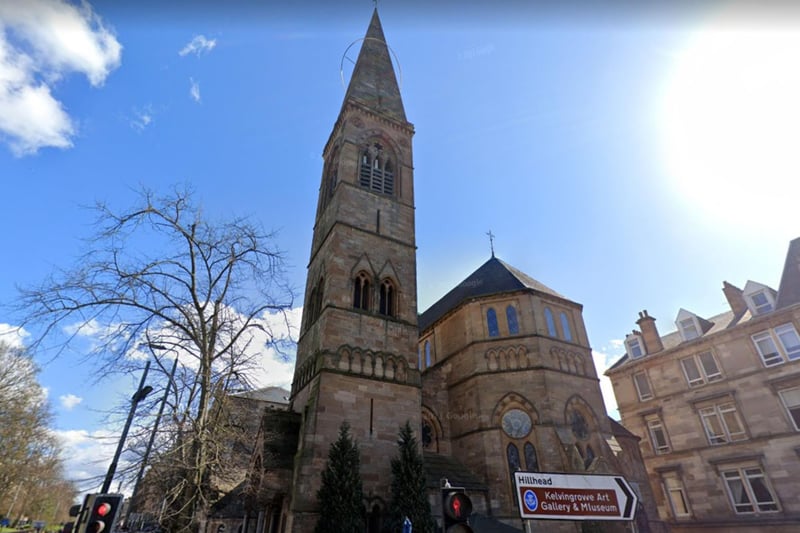
6. Oran Mor
Òran Mór (which is gaelic for 'big song', fun fact) is now a pretty institutional arts venue - but before then it was the Kelvinside Free Church, a parish church of the Church of Scotland. The foundation stone was laid on September 4 1862, and the church was built in the Neo-Gothic style. It later merged with Hillhead Parish Church leaving the building derelict from 1978 until it reopened as Òran Mór in 2004. | Google Maps
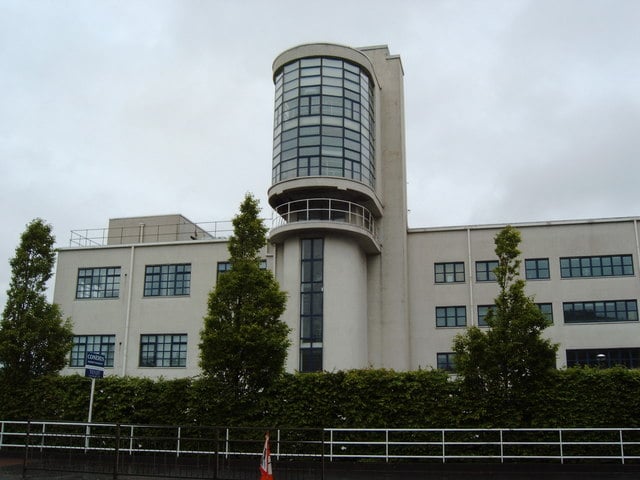
7. Luma Tower
Formerly a lightbulb factory, the design for the building is based off an art-deco headquarters for Luma in Sweden built in the 1930’s. This replica sits in Govan, built in 1938 it was the peak era for Art Deco architecture - the glass lighthouse-like structure was actually used to test lightbulbs above their brightness level to see how resilient they were. The tests would be extremely bright and would project massive beams of lights from the panoramic bay windows. After it’s lifespan as a factory, it was used for a range of purposes, including as a caravan showroom, before being restored from dereliction in the 90’s and transformed into housing. | Contributed
8. Templeton’s Carpet Factory
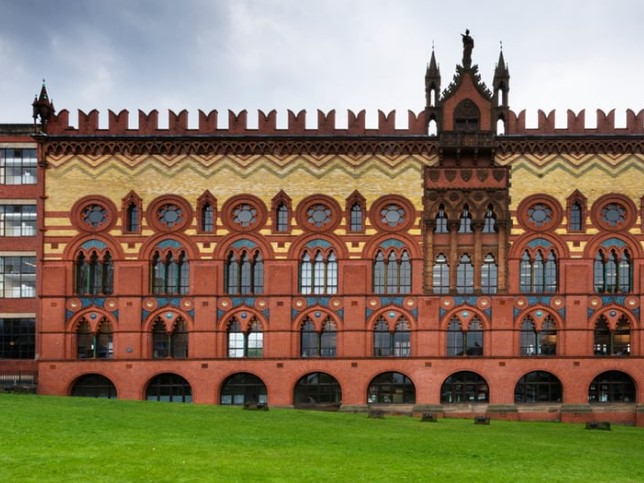
Templeton’s Carpet Factory (or Templeton on the Green as it is now known) was a purpose-built carpet factory which looks incredibly different to the industrial estate carpet factory’s you see today. It was meant to display opulence, which was a tricky thing to get right in reserved Victorian Society who preferred the imposing majesty of Gothic Revival architecture. After repeated design proposals had been rejected by the Glasgow Corporation, Templeton hired the famous architect William Leiper to produce a design that would be ‘so grand it could not possibly be rejected’, so William Leiper modelled the building on the Doge’s Palace in Venice, which was constructed in the alternative Venetian Gothic style. In 2005, the building was extensively modified in a £22 million regeneration project to form a mixed use ‘lifestyle village’. This includes 143 new apartments, accommodation for Sportscotland (the Scottish Institute of Sport), Front Page (a creative design studio) and the WEST brewery, bar and restaurant, which takes up the ground floor of the main building. | Contributed