

Glasgow 100 years ago was a very different city - it was just seven years after the First World War, and the effects were still being felt across the city.
The shipbuilding industry was still going strong, and the city was in the process of a massive upheaval. The coming decades would see major changes in the layout of Glasgow and the life
The very first council housing had been constructed in Govan, Drumoyne, Craigton and Mosspark just three years prior in 1922 as ‘homes fit for heroes’ for veterans from WW1. This would set the standard for new schemes that would begin to rapidly expand the city in the coming decades.
Major events in Glasgow that happened in 1925 include:
- The original Kelvin Hall burned down
- The birth of former Archbishop Thomas Winning
- Partick Thistle player, the Firhill Flyer, John McKenzie was born
- Tram use hit its peak. There was 200 miles (320 km) of tramlines and 1100 trams in and around Glasgow
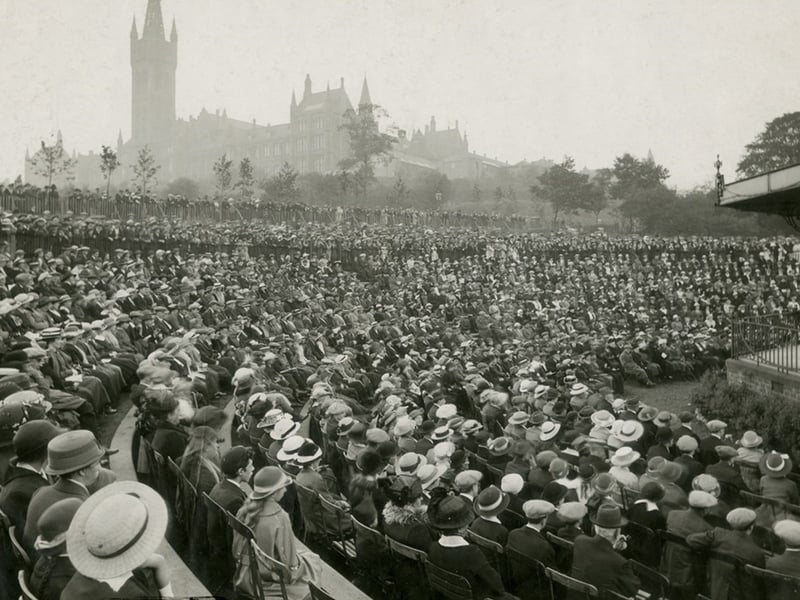
1. Kelvingrove Bandstand (1925)
It was decided that the old Victorian style of bandstand in the park was too small and no longer suited to the more theatrical performances which were being staged there. In August 1923 a proposal was put to the Council to build a new ‘super bandstand’ with seating for 4,500 and standing room for another 15,000. Although this was rejected, a scheme to build what was to become the bandstand that we have today was approved. Construction of the bandstand began in 1924 and it was officially opened in May 1925. The first concert appears to have been Clydebank Burgh Brass Band on Sunday 17 May. | Glasgow Libraries
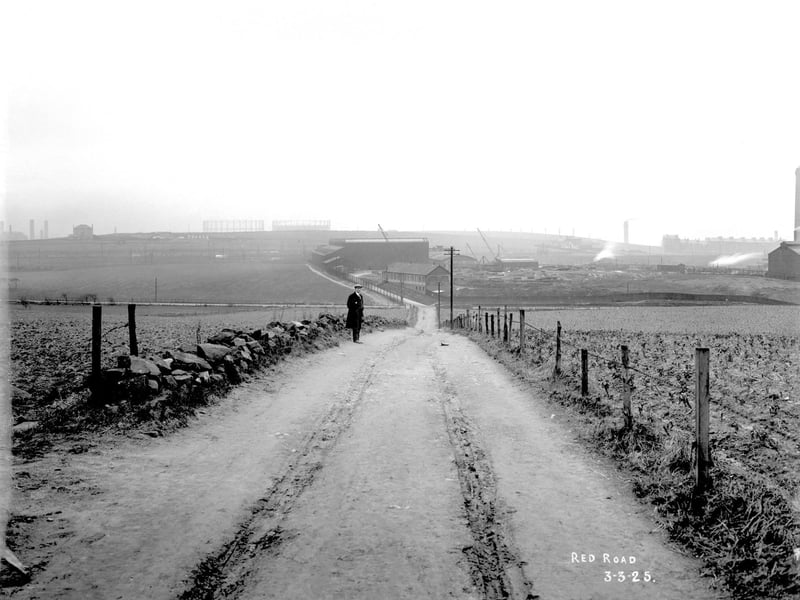
2. Red Road (1925)
View before the development of the new housing scheme in March 1925. | Glasgow City Archives
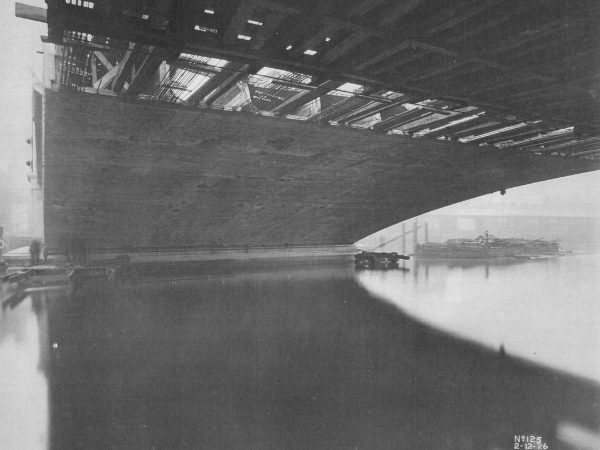
3. King George V Bridge (1925)
The King George V Bridge that connects Glasgow City Centre to Tradeston was commissioned in 1914 but construction was delayed by the First World War. The bridge was completed and opened in 1928. | Virtual Mitchell
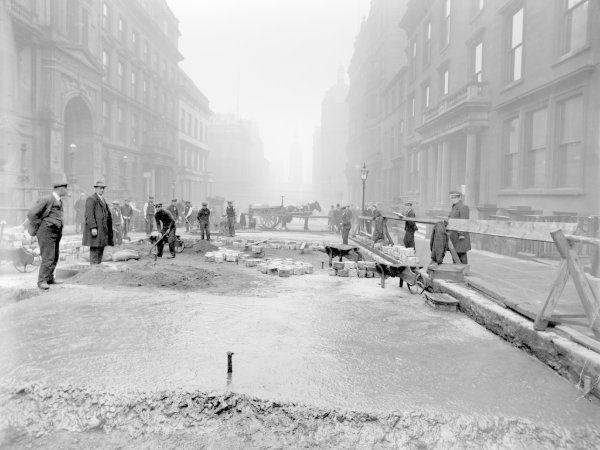
4. West George Street (1925)
Men at work laying paving on West George Street | Virtual Mitchell