
The story of Gil Heron: Celtic's trailblazing first black footballer who shook up Scottish football

Dubbed the ‘Black Arrow’, the tale of legendary jazz musician Gil Scott-Heron's father is an extraordinary one
Gil Scott-Heron left behind a special legacy when he passed away in 2011. Widely regarded as “the Godfather of rap”, he was a master of jazz, blues and soul and an activist during the Civil Rights movement.

The response to Gil’s untimely death was momentous, with leading figures from across the world of rap and hip hop were not shy in citing the Chicago-born artist as being a major influence on their work.
It is rather extraordinary to discover the remarkable story of Scott-Heron’s father, Gil Heron; a trailblazer in the most unlikely of places - Scottish Football.

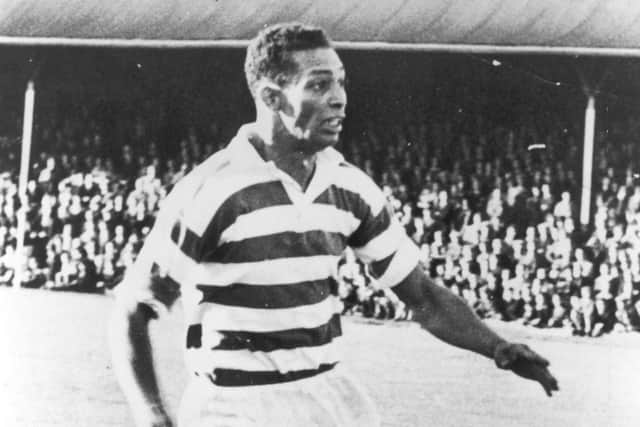
Born in Kingston, Jamaica, Gil Heron - dubbed the ‘Black Arrow’ on account of his lighting pace - joined Celtic as a striker in 1951 after a largely successful spell in the United States and a stint in the Canadian armed forces during the war.
‘Glasgow Celtic was the greatest name in football to me’
Aged 29 at the time, Heron had been scouted by the Hoops while on a tour in America and quickly impressed during a trial game at Parkhead, scoring twice. For Heron, the chance to play for Celtic was a dream come true.
“Gee, I was tickled,” he told a Scottish newspaper. “Glasgow Celtic was the greatest name in football to me.”
Manager Jimmy McGrory was quick to award the 6ft-tall forward a contract. As the 1951/52 season began, Celtic’s new signing made an instant impact, scoring on his debut in a 2-0 League Cup tie against Greenock Morton at Celtic Park in August 1951. He was described in a newspaper as “Scottish football’s Golden boy,” adding “Fifty thousand supporters hail him as the greatest thing seen at Celtic Park since goalposts!”
In addition to getting on the score sheet, Gil Heron had made history as the first-ever black player to pull on the green and white hoops. Official club records appear to back up this claim.
Off the pitch, supporters were also impressed by Heron’s slick Caribbean dress style, consisting of sharp, tailored suits and trilby hats.
Despite an impressive start, Heron’s Celtic career ultimately proved short-lived. The striker managed just a year in Glasgow’s East End, playing four first-team games and scoring two goals, before transferring to lowly Third Lanark after a spell in the reserves. It was claimed that Celt felt Heron wasn’t robust enough for the Scottish game due to its physicality.
Heron later returned to the United States, playing out the remainder of his football career with Detroit Corinthians. With a family to support, he took a job on the assembly line at the Ford Motor Car Company to ensure any dreams he had of a career football were over.
Upon his father’s death in 2008 at the age of 86, Gil Scott-Heron revealed that his dad had always looked out for Celtic’s results. Gayle Heron, one of his four children, maintained her father was not bitter he received so little recognition, admitting: “he knows he was a pioneer.”
A pioneering icon of Scottish football
To this day, Gil Heron remains one of the most prominent black pioneers throughout this history of this great sport we call football. He made a groundbreaking impact on the game, not just in Scotland but across the globe.
His contribution to football demonstrates the spirit, dedication and excellence inherent in the highest echelons of the sport. Not only did he deliver some memorable performances but he also served as a role model.